
Fear is experienced in the mind, but often strongly felt in the body as it prepares to keep us safe from harm. Panic attacks are an exaggerated physical response to situations that cause us to feel fearful, stressed, or even excited – and they can be very sudden and overpowering.
It can be difficult to predict when a panic attack will happen, but it is possible to prepare ourselves by making a plan for managing anxiety when a panic attack strikes. Doing so allows us to manage them effectively and regain control.
If you or someone you know is regularly experiencing panic attacks to the extent that they’re affecting your daily life, this article can help. It covers:
- What panic attacks are
- Why overcoming panic attacks is important
- Tips for managing panic attacks
- Treatment options for panic attacks
- When to seek help for panic attacks
What Are Panic Attacks?
Researchers believe that panic attacks are a type of physical “false alarm” where our bodies’ survival systems in response to fear are either too active or too intense – or both. They can come on very suddenly, feel highly intense, and, often, can happen without any clear trigger or obvious danger.1
When someone experiences a panic attack, they tend to feel like they’re losing control and might even assume that they’re having a major health issue, such as a heart attack. While many people might experience one or two panic attacks over their lifetime, others may have regular, uncontrollable panic attacks that affect their quality of life – a condition known as panic disorder.2
The following signs of a panic attack may help you determine if they’re something you experience.
Signs of a Panic Attack
When panic attacks strike, they can be very frightening as they often manifest as emotional and physical symptoms such as:3
- Intense feelings of fear and anxiety
- A sense of impending doom
- Fears of “going crazy” or of dying
- A rapid heartbeat
- Pain (such as tightness) in the chest or abdomen
- Feeling flushed or cold
- Increased sweating
- Trembling sensations in the extremities
- Difficulties breathing
- Withdrawal from surroundings (feeling dissociated from what’s happening)
Panic attacks are not considered life-threatening, but they can affect your ability to lead a fulfilled and meaningful life. However, the good news is that panic attack treatment and management are very achievable with the right understanding and information.
7 Tips for Managing Panic Attacks

The following techniques can help you cope with panic attacks in the short and long term:1,4,5
1. Learn About Panic Attacks
One of the best ways of coping with panic attacks is to understand what they are and why you or someone you care about experiences them. Reading up about potential triggers, warning signs, recent research, and potential treatment options can help reduce the fear that lack of awareness can create – and increase a sense of control.
2. Identify What You’re Feeling and Why
Another way of increasing awareness and a sense of control is to pinpoint what you’re feeling and why. You can do this by paying attention to the emotions and sensations in your body. Try writing down a name for what you feel, for example, “scared,” “nervous,” or “overwhelmed.” Then, think about when you first noticed these feelings; where were you, who were you with, and what was said?
In time, recognizing these fears and triggers can help you better understand them and where they come from – as well as how to start coping with them.
3. Communicate How You Feel
Often, when we’re overwhelmed by fear or anxiety, it can be difficult to put words to how we feel. Yet taking the time to talk to someone you trust can help reduce panic attacks as it can increase a sense of emotional support, validate how you feel, and provide practical assistance.
If speaking to someone about your panic attacks feels daunting, you can prepare for the conversation ahead of time by creating and practicing a few simple script lines. For example, “I’ve been feeling really overwhelmed and scared at times, and it’s making me feel like I’m not in control. It would really help to know that I have your understanding and support.”
4. Practice Acceptance
Attempting to deny or ignore a panic attack could make the situation worse. Even though it may seem contradictory, accepting that you’re experiencing a panic attack can actually reduce the severity of its symptoms and allow you to regain control. The next time you feel the mental and emotional effects of fear or panic, acknowledge that you’re feeling this way, accept that it is happening, and remind yourself that your body is trying to protect you from harm.
In time, you’ll likely notice that your fears and worries reduce, lessening the number of panic attacks you experience and leaving you better able to cope when they do.
5. Manage Panic in the Moment
Once you get used to accepting the fact that you’re having a panic attack without feeling the need to immediately respond to it, you can learn how to cope with your fear or panic in the moment.
One useful way of doing this is to use your understanding of the sensations in your body to prevent fear from taking over entirely. Mindfulness techniques and deep breathing exercises are good ways of resetting the mind and body – and they can be practiced anywhere, at any time.
The 4-7-8 Breathing Technique is especially effective for managing panic attacks as it calms the nervous system and pulls your attention from a trigger or fear to your breathing. To practice this technique, simply find a comfortable position, inhale for four seconds, hold the breath in for seven seconds, and release it slowly for a count of eight. Repeat the technique around four times (or until you feel your body start to relax). After you’ve finished the technique, try to notice how you feel emotionally and physically in comparison to before you practiced it.
6. Keep Practical Reminders With You
Another useful method for managing fear in the moment is to keep a list of prepared statements or affirmations with you (either as a physical list or in the “Notes” app on your phone). For maximum effectiveness, make these statements meaningful to you. For example:
- “I have felt like this before and it passed.”
- “I am safe and in control.”
- “I feel fearful, but I can manage today one step at a time.”
- “I am doing my best, and that is enough.”
Statements such as these can help counteract the negative thoughts that often lead to or worsen a panic attack.
7. Know When to Seek Support for Panic Attacks
Panic attacks, while not considered life-threatening, can still seriously affect your quality of life. They can be very difficult to manage on your own, and, if left unmanaged over time, can get worse. Trained mental health professionals can help you understand the source of and how to lower your anxiety, as well as assist you in regaining control.
Additionally, as panic attacks often mimic the symptoms of physical health conditions such as heart attacks, it’s important to see a doctor to rule out any other risks.
Panic Attack Treatment
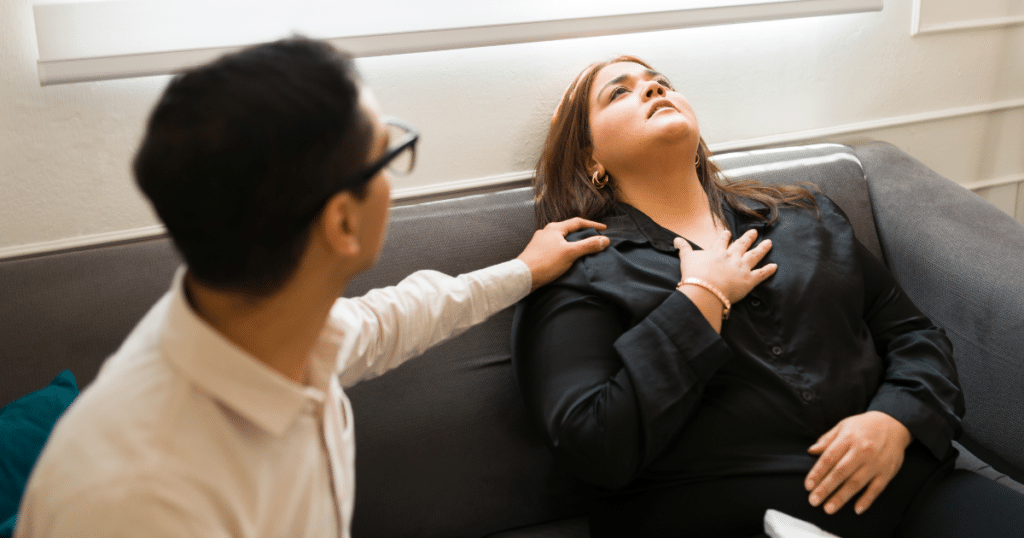
If panic attacks are a regular occurrence for either you or a loved one, it’s advisable to seek treatment and support as they can worsen without management. Both talking therapies and panic attack medication have proven to be very effective in managing panic attacks.
Panic Attack Therapy Options
Therapists trained in understanding and managing panic attacks can help people understand the root causes of their fears, identify triggers, challenge core beliefs, and put coping methods into place.
Some of the most effective panic attack therapy options include:
- Exposure therapy: Exposure therapy can help you manage panic attacks by confronting your fears in a gradual way. Through this process you can learn that your assumptions about what will happen aren’t correct, reducing your fear response.
- Cognitive behavioral therapy (CBT): CBT is based on the idea that what we think, feel, and do is all connected. A therapist trained in CBT can help you identify thoughts and how they lead to certain feelings and actions – and how to challenge these. CBT for panic attacks can also differ depending on the source of your fears, for instance, treatment for anxiety arising from social scenarios would be different from fears caused by past trauma.
- Acceptance and commitment therapy (ACT): ACT can help you reduce the impact of panic attacks by focusing on accepting them rather than fighting against them. By doing so, you can become more empowered and act in ways that align more with your goals rather than avoiding them.
Panic Attack Medication Options
After a discussion with your doctor, you may both decide that medication for getting your panic attacks under control may be a good course of action.
Some of the most effective medication options for managing panic attacks include the following:
- Selective Serotonin Reuptake Inhibitors (SSRIs): SSRIs are forms of antidepressants that are commonly used to manage the symptoms of anxiety. These medications are often considered the “first line” treatment for panic attacks.
- Serotonin-Norepinephrine Reuptake Inhibitors (SNRIs): If SSRIs don’t produce a beneficial response, your doctor may discuss the suitability of SNRIs as they simultaneously block the reuptake of norepinephrine as well as serotonin.
- Other medications for panic attacks: Based on your symptoms and needs, your doctor may discuss treatment using tricyclic antidepressants, benzodiazepines, and beta-blockers.
It’s important to recognize that while medication helps to manage the problem in the short term, panic attacks are a symptom of an underlying problem. For long-term success in coping with panic attacks, therapy is advisable.
When to Seek Help for Panic Attacks
If you or someone you know is struggling with panic attacks to the extent that it’s affecting your mental health and daily life, support and guidance is available. Overcoming panic attacks can help you regain control over your life, reduce your anxiety, and contribute to a happier, more fulfilled life.
At Mission Connection, we offer comprehensive, flexible, and diverse care to suit any schedule and need. Our team of licensed, empathetic practitioners can help you understand and improve any mental health issue that is affecting your well-being – increasing a sense of control, fostering better resilience, and achieving long-term success and fulfillment.
Reaching out is the first step towards better health, and Mission Connection is here to help. Call us today for support and guidance.
References
- National Institute of Mental Health. (n.d.). Panic disorder: When fear overwhelms. U.S. Department of Health and Human Services. Retrieved January 21, 2025, from https://www.nimh.nih.gov/health/publications/panic-disorder-when-fear-overwhelms#:~:text=Some%20researchers%20think%20panic%20attacks,re%20having%20a%20heart%20attack
- National Institute of Mental Health. (n.d.). Panic disorder: When fear overwhelms. U.S. Department of Health and Human Services. Retrieved January 21, 2025, from https://www.nimh.nih.gov/health/publications/panic-disorder-when-fear-overwhelms
- American Psychiatric Association. (2013). Diagnostic and statistical manual of mental disorders (5th ed.). American Psychiatric Association
- Healthline. (n.d.). How to stop a panic attack. Healthline. Retrieved January 21, 2025, from https://www.healthline.com/health/how-to-stop-a-panic-attack
- NHS Inform. (n.d.). How to deal with panic and anxiety. NHS Inform. Retrieved January 21, 2025, from https://www.nhsinform.scot/healthy-living/mental-wellbeing/anxiety-and-panic/how-to-deal-with-panic-and-anxiety