
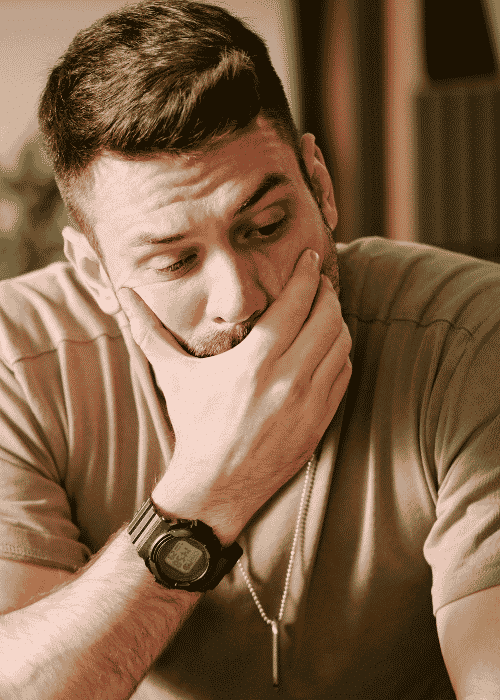
Trauma is not an uncommon experience in military and veteran populations. According to research, military trauma is one of the most common mental health problems that military personnel experience.[1] The U.S. Department of Veterans Affairs reports that seven out of every 100 veterans will have PTSD.[2]
Active military and veteran mental health can impact people in many ways. As a service member, you might find it hard to return to civilian life. Loud noises may put you on edge. You might always feel alert for the next threat. Or crowded spaces might feel like too much, and you might be struggling to sleep or reconnect with your loved ones.
Military trauma affects active-duty personnel and veterans in many ways that don’t always begin and end with combat, which is why this page will explore:
- What military trauma is.
- What experiences can contribute to military-related trauma.
- The common signs and symptoms of military PTSD and trauma.
- Trauma treatment options that support long-term recovery.
What Is Military Trauma?
“Military trauma” refers to the psychological and emotional distress that comes from stressors related to military service. Military trauma can affect:
- Active-duty service members.
- Veterans.
- Reservists.
- Members of the National Guard.
- People in combat and noncombat positions.
- Military personnel who experienced trauma during training or deployment.
You don’t need to have seen combat to experience military PTSD or trauma. And not everyone who experiences trauma will develop post-traumatic stress disorder (PTSD). But your experiences can still cause trauma-related symptoms without meeting the full criteria for a PTSD diagnosis.
Where Might Military Trauma Come From?
Many people associate military trauma only with firefights, explosions, or battlefield injuries. Although these experiences can contribute to serious psychological distress, military service can expose people to many other forms of trauma. This includes exposure to the following.
Combat Exposure and Life-Threatening Events
Combat trauma happens when service members are exposed to traumatic events like experiencing or witnessing:[3]
- Gunfire.
- Bombings.
- Attacks.
- Serious injuries.
- Death.
Even if no physical injury occurs, living in an environment where danger could happen at any moment can impact how the nervous system responds to stress.[4]
During deployment, staying alert can help keep you and others safe. You may need to scan your surroundings, react quickly, suppress fear, and remain prepared for an emergency. Once you return home, however, your brain may continue using those same survival responses in places that are no longer dangerous.
Loss, Survivor Guilt, and Moral Injury
Losing a friend, fellow service member, or someone under your care can create long-lasting grief. You may also deal with survivor guilt, wondering why you lived when someone else didn’t or believing you should have prevented what happened.
You might also experience moral injury, which occurs when you participate in, witness, or feel unable to prevent something that conflicts with your deeply held values.[5] You may:
- Replay decisions you made under pressure.
- Question whether you did the right thing.
- Feel ashamed about something that occurred.
These feelings may stay with you even when other people tell you that you did things right or had no other choices.
Military Sexual Trauma, Harassment, and Betrayal
Military sexual trauma includes sexual assault or threatening sexual harassment experienced during military service. The specific data on military sexual trauma are not exact, as these incidents often go unreported. However, information from the VA shows that one in three women and one in 50 men report experiencing some form of military sexual trauma.[6]
The effects may become more complicated when the person who caused harm was a colleague, supervisor, or someone you depended on for safety. Trauma can deepen when an institution:
- Fails to protect you.
- Dismisses your concerns.
- Leaves you working alongside the person who harmed you.
Deployment Stress and Returning to Civilian Life
Deployment may involve:
- Long periods away from family.
- Disrupted sleep.
- Limited privacy.
- Unpredictable schedules.
- The constant need to remain prepared.
Even when no single event stands out as traumatic, accumulated combat stress can affect emotional and physical well-being.
Returning home can create another series of difficulties. Military life often lays out clear roles, routines, expectations, and a strong sense of belonging. Civilian life may feel less structured and more difficult to navigate.
Signs and Symptoms of Military Trauma
Symptoms of veteran trauma don’t always appear right after a traumatic experience. Sometimes the symptoms come up when you’re transitioning home or even years after military service has ended. Below, we outline what these emotional, cognitive, behavioral, and physical symptoms can look like.
Emotional Symptoms
You may experience:
- Anger or irritability.
- Persistent fear or anxiety.
- Sadness or hopelessness.
- Guilt, shame, or self-blame.
- A sense of detachment from other people or emotions.
- Feeling uncomfortable when things are calm.
Emotional numbness may initially feel protective. If you had to set your feelings aside to function during service, it may be difficult to reconnect with them once you return home.
Cognitive and Trauma-Related Symptoms
Military trauma may affect the way you think, remember, and interpret your surroundings.[7] The cognitive symptoms of military trauma can include:
- Intrusive memories, nightmares, or flashbacks.
- Difficulty concentrating or gaps in memory.
- Constantly scanning for danger or feeling that nowhere is completely safe.
- Expecting something bad to happen.
- Difficulty imagining a meaningful future.
During a flashback, you may feel as though part of the traumatic event is happening again. In other cases, you may remain aware of your current surroundings but experience intense images, sensations, or emotions connected to the past.
Behavioral and Relationship Symptoms
Trauma can also affect how you act and relate to others.[8] You may:
- Avoid conversations about military service.
- Avoid crowds, fireworks, news coverage, or other reminders.
- Isolate yourself from friends and family.
- Become highly controlling about plans or surroundings.
- Check doors, windows, and exits repeatedly.
- Drive aggressively or feel threatened by other drivers.
- Take unnecessary risks.
- Struggle to accept support.
- Become defensive, irritable, or hostile during conflict.
- Feel emotionally distant from a spouse or partner.
- Lose interest in social activities.
These behaviors are sometimes ways to create safety. For example, avoiding a crowded event might reduce anxiety in the moment, but repeated avoidance can gradually make your world feel smaller and the anxiety worse in the long run.[9]
Physical Symptoms
The body can continue reacting to danger long after the danger has passed.
Physical symptoms may include:
- Insomnia, frequent wakings, or nightmares.
- Exhaustion.
- Headaches and muscle tension.
- Digestive discomfort.
- Rapid heartbeat, sweating, or shaking.
- Being easily startled.
- Feeling unable to fully relax or difficulty sitting still.
These symptoms can overlap with:
- Military PTSD.
- Anxiety.
- Depression.
- Grief.
- Chronic pain.
- Sleep disorders.
- Traumatic brain injuries.
Trauma Treatment for Military Members and Veterans
Trauma treatment and military trauma recovery often involve a comprehensive approach that takes into account your:
- Experiences.
- Symptoms.
- Physical health.
- Goals.
- Previous responses to treatment.
While the approaches vary from person to person, some of the approaches that professionals use for trauma and PTSD treatment include:
Trauma-Focused Cognitive Behavioral Therapies
Research has proven cognitive behavioral therapy (CBT) to be effective in treating trauma and PTSD.[10] CBT can help you understand how thoughts, feelings, and behaviors reinforce one another. For example, if you believe relaxing is dangerous, you’re likely to feel more on edge and exhausted, which can result in feeling more irritable and lashing out at loved ones. CBT can help you examine these beliefs and find more adaptive ways of thinking and behaving without minimizing what you experienced.
There are two other types of CBT that have proven to be effective for trauma:[11]
- Cognitive processing therapy (CPT): Cognitive processing therapy can help you address beliefs about guilt, safety, trust, control, and self-worth.
- Prolonged exposure therapy (PE): Prolonged exposure gradually helps you approach memories and situations you have been avoiding, so they hold less power over your life.
EMDR Therapy
Eye Movement Desensitization and Reprocessing (EMDR) is another evidence-based trauma therapy with research supporting its effectiveness as a PTSD treatment.[12]
During EMDR, you recall aspects of a distressing experience while engaging in bilateral stimulation, which may involve guided eye movements or alternating taps. The goal is to help your brain process the memory so that it feels more connected to the past rather than an immediate threat.
You don’t necessarily have to describe every detail of the traumatic experience aloud. However, EMDR still involves engaging with difficult memories, so preparation, trust, and emotional regulation skills are important.
Mindfulness and Body-Based Support
Trauma also gets held in the body through muscle tension, pain, restlessness, or breathing. Body-based approaches like somatic and mindfulness-based therapy can help your nervous system shift out of survival mode and feel safe again.[13]
Mental Wellness Designed Around Your Life
Mental Wellness, Wherever You Are
Life keeps you moving, and your care should too. Our virtual program gives you access to a wide range of mental health services from the comfort of your own home, office, or anywhere you feel most at ease. It's the same high-quality care, just with more convenience. Available from anywhere in California, Virginia, and Washington!
Virtual ProgramMental Wellness, With a Human Connection
Sometimes, you just want to talk to someone face-to-face. Our in-person program provides a calm, supportive environment where you can connect with our team and focus on your well-being without distractions. Experience personalized care and build a strong relationship with your provider in a space designed for healing.
In-Person ProgramMental Wellness, The Best of Both Worlds
Can't decide between virtual and in-person? You don't have to. Our hybrid program offers the best of both. Mix and match virtual and in-person sessions to create a schedule that's truly yours.
It's the ultimate flexibility, so you can get the care you need, no matter what your week looks like.
Hybrid ProgramFind Support for Veterans Recovering From Trauma at Mission Connection
At Mission Connection, we understand that military service can shape the way you respond to danger, relationships, stress, and support. Our outpatient mental health services specifically for veterans and military personnel help address trauma, PTSD, anxiety, depression, anger, grief, and difficulties adjusting to civilian life.
Our team of licensed mental health professionals goes beyond traditional treatment and provides life-changing care. We don’t just treat your symptoms or define you by a diagnosis. We believe that trauma therapy depends on your needs, goals, and experiences.
Military and veteran counseling with us may combine evidence-based approaches like CBT, trauma-focused therapy, and EMDR with somatic therapies and mindfulness approaches. Through this personalized approach, the goal isn’t to force you to relive the trauma, but to build trust, strengthen coping skills, and support meaningful long-term military trauma recovery.
We offer several options for effective outpatient treatment, including in-person programs at our locations in California, Virginia, and Washington, virtual telehealth, and a hybrid program that combines in-person and virtual care. We also accept most major insurance providers, so that your recovery is not hindered due to financial issues.
Military experiences may always remain part of your story, but they don’t have to control your self-worth, relationships, emotions, or future. Reach out to us online or call us at 866-833-1822 to learn how personalized trauma treatment can help you move toward greater safety, connection, and stability.
Military and Veteran Trauma FAQ
We know that military trauma looks different for everybody and that you may still have questions about its impact. Below, the following answers address common questions about trauma symptoms and military trauma recovery.
What are the most common signs of military trauma?
Common signs of military trauma or combat stress include flashbacks or intrusive memories, nightmares, hypervigilance, sleep problems, and emotional numbness. Some people also experience headaches, muscle tension, concentration problems, or relationship conflict.
Just because these symptoms may be common doesn’t mean everyone who experiences veteran trauma will have the same symptoms. You don’t need to experience all of these symptoms for it to still be considered trauma and affect your life.
What is the difference between PTSD and combat stress?
Combat stress is the physical and psychological reactions to the demands and dangers of military service. These reactions may include exhaustion, anxiety, irritability, poor concentration, sleep problems, and feeling constantly alert. However, combat stress is usually short-term and goes away when not directly under the pressures of combat.
PTSD is a diagnosable mental health condition that involves persistent symptoms related to re-experiencing, increased arousal, or negative changes in mood. To be diagnosed with PTSD, the symptoms need to last more than one month, cause significant distress, and interfere with daily functioning.[14]
Can you have PTSD from military training?
Yes, PTSD can develop during or after military training if you experienced or witnessed a traumatic event involving actual or threatened death, serious injury, or sexual violence. This may include a severe training accident, weapons incident, vehicle crash, physical assault, medical emergency, or the death or serious injury of another service member. While military training is meant to prepare you for intense situations, it doesn’t make you immune to trauma.
How does Mission Connection help with military trauma?
At Mission Connection, we provide outpatient veteran counseling that includes individual therapy, group support, and medication management if needed. Our approach is personalized, meaning we won’t try to provide one-size-fits-all treatment.
We take into account your experiences, needs, medical and mental health history, and goals to develop a plan that works best for you. This treatment plan respects your experiences, preferences, pace, and recovery goals to support long-term military trauma recovery.
References
- Tedla, A., et al. (2024). Post-traumatic stress disorder among military personnel admitted at the northwest command level three military hospital, bahir dar, ethiopia, 2022: an institution-based cross-sectional study. Frontiers in Psychiatry https://doi.org/10.3389/fpsyt.2024.1410630
- U.S. Department of Veterans Affairs (2025). Ptsd: national center for ptsd. U.S. Department of Veterans Affairs https://www.ptsd.va.gov/understand/common/common_veterans.asp
- U.S. Department of Veterans Affairs (2026). Combat exposure. U.S. Department of Veterans Affairs https://www.ptsd.va.gov/understand/types/combat_exposure.asp
- Kühn, S., et al. (2021). The brain at war: effects of stress on brain structure in soldiers deployed to a war zone. Translational Psychiatry https://doi.org/10.1038/s41398-021-01356-0
- Griffin, B. J., et al. (2019). Moral injury: an integrative review. Journal of Traumatic Stress https://doi.org/10.1002/jts.22362
- U.S. Department of Veterans Affairs (2025). Military sexual trauma. U.S. Department of Veterans Affairs https://www.mentalhealth.va.gov/docs/mst_general_factsheet.pdf
- Russell, B., & Mussap, A. J. (2023). Posttraumatic stress, visual working memory, and visual imagery in military personnel. Current Psychology https://doi.org/10.1007/s12144-023-04338-1
- Miller, M. W., et al. (2013). Ptsd and conflict behavior between veterans and their intimate partners. Journal of Anxiety Disorders https://doi.org/10.1016/j.janxdis.2013.02.005
- Hofmann, S. G., & Hay, A. C. (2018). Rethinking avoidance: toward a balanced approach to avoidance in treating anxiety disorders. Journal of Anxiety Disorders https://doi.org/10.1016/j.janxdis.2018.03.004
- Öst, L., et al. (2023). Cognitive behavior therapy for adult post-traumatic stress disorder in routine clinical care: a systematic review and meta-analysis. Behaviour Research and Therapy https://doi.org/10.1016/j.brat.2023.104323
- U.S. Department of Veterans Affairs (2015). Effective treatment for ptsd. National Center for PTSD https://www.pbm.va.gov/PBM/AcademicDetailingService/Documents/Academic_Detailing_Educational_Material_Catalog/66_PTSD_NCPTSD_Provider_Effective_Treatment_for_PTSD.pdf
- De Jongh, A., et al. (2024). State of the science: eye movement desensitization and reprocessing (emdr) therapy. Journal of Traumatic Stress https://doi.org/10.1002/jts.23012
- Kuhfuß, M., et al. (2021). Somatic experiencing – effectiveness and key factors of a body-oriented trauma therapy: a scoping literature review. European Journal of Psychotraumatology https://doi.org/10.1080/20008198.2021.1929023
- Egan, D. (2025). What is posttraumatic stress disorder (ptsd)? American Psychiatric Association https://www.psychiatry.org/patients-families/ptsd/what-is-ptsd