
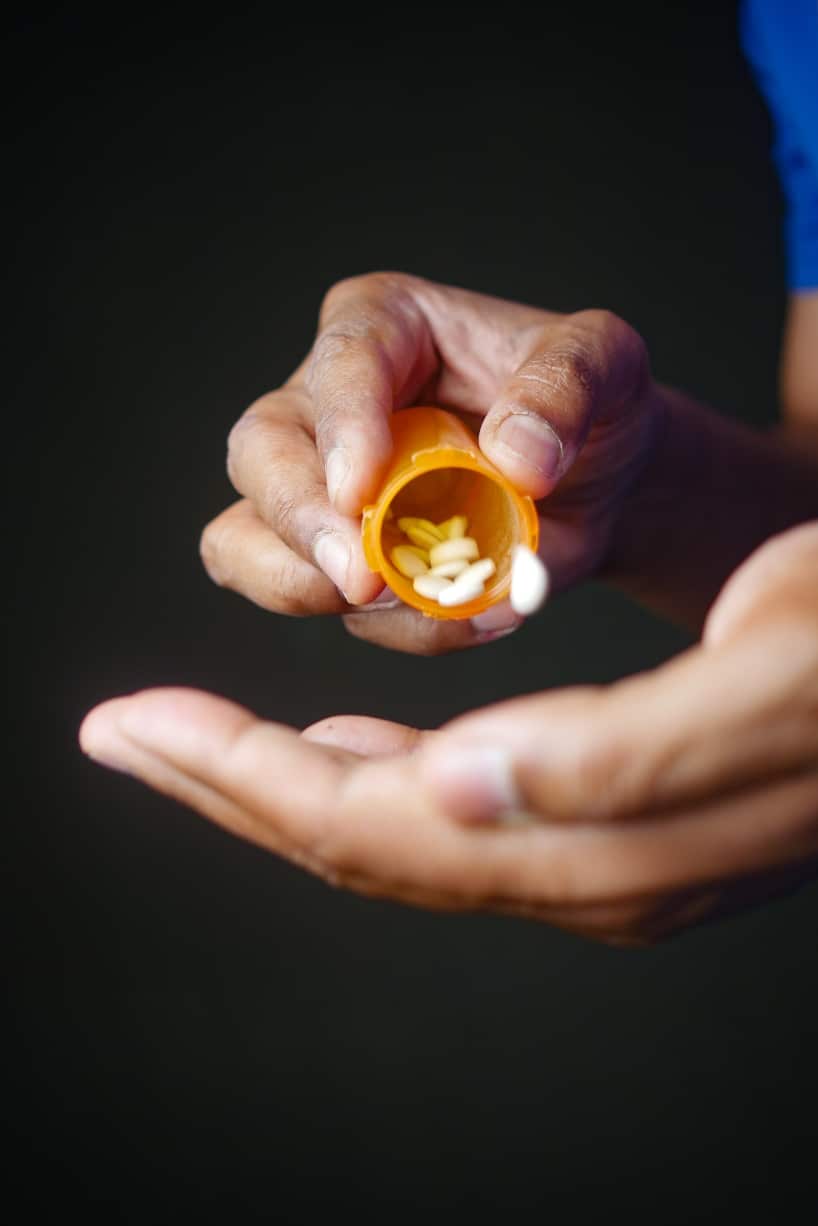
An overdose occurs when someone takes too much of any kind of medication, drug, or substance. Many medicines will cause harmful side effects if you use them incorrectly, and overdoses can sometimes be life-threatening.[1]
Accidental medication overdoses are common, with research finding that almost a quarter of participants would unintentionally take too much acetaminophen.[2] Preventing medication overdoses requires an understanding of both why and how they occur. Educating yourself on safe medication use for mental health is particularly important, as many psychiatric medications carry specific overdose risks.
This article will discuss both accidental overdoses and intentional overdoses by people who feel suicidal. To explain the risks around medication overdose and how they can be prevented, we will cover:
- How overdoses occur, the medications used, and why they happen.
- Safety steps to prevent overdoses.
- The importance of prescription drug safety guidelines.
- How to recognize overdose warning signs in adults.
- Overdose emergency response steps.
Medication Overdose: An Overview
Understanding how overdoses tend to occur is the first step to preventing this type of crisis. This means knowing the drugs people tend to use, how they harm the body, and the other substances they’re taken with.
Overdose risk with mental health medications is significant, which is why medication management for mental health should always include a discussion of safe use and storage.
Medications Most Commonly Associated With Overdoses
First of all, it’s important to know which types of medications are commonly associated with overdoses. From there, we can understand how they’re acquired and which need to be monitored more carefully.[2]
The most common drugs that lead to overdoses are psychotropics, which are a group of medications that include antidepressants, antipsychotics, benzodiazepines, mood stabilizers, and opioid dependence treatments.[3]
In instances of overdose during drug abuse, the most common substances include:[3][4]
- Depressants: Medicines that treat sleep difficulties and anxiety, such as Xanax and Valium.
- Opioids: Drugs used as painkillers, such as codeine and Vicodin.
- Stimulants: Prescriptions for treating ADHD, such as Ritalin and Adderall.
- Antipsychotics: Medications for psychosis (and sometimes depression) such as olanzapine and quetiapine.
The most common drugs seen in accidental overdoses, where medicines are not being abused, are opioids, benzodiazepines, and acetaminophen.[1]
These drugs can cause harm and death by either causing the body to shut down or overstimulating vital systems. For example, overdosing on opioids can cause extreme fatigue and respiratory depression, while overdosing on stimulants results in dangerously high blood pressure and heart rate.[5][6]
Antidepressant overdose symptoms vary depending on the type of medication. Possible effects include:
- Seizures.
- Heart issues.
- Unconsciousness.
- Serotonin syndrome, a potentially fatal condition.
Other Substances Commonly Involved in Overdose
As much as 40% of medication overdoses globally involve the use of alcohol, and almost 60% of overdoses in America in 2023 involved the use of cocaine or other stimulants.[3][6]
If people consume multiple substances, the risk of death is much higher. Healthcare providers need to discuss the use of alcohol and street drugs with patients taking prescription drugs and look out for mixed substances during crises.
Why Do Accidental Overdoses Happen?
Interviews conducted with people who have overdosed intentionally found that many had kept leftover medications from previous treatments, such as medications for sleeping difficulties and anxiety disorders.[3] 85% of these self-poisoning cases involved the person using medication that belonged to them.[3]
But how and why do accidental overdoses happen? Some factors that increase the chances include:[1]
- Taking a combination of different medicines.
- Mixing medicine with other drugs or alcohol.
- Not following the instructions on the medicine information leaflet or those given by a doctor or pharmacist.
- Thinking that two different brand names of the same medication are different drugs.
- Not practicing safe storage for medications at home.
- Having the same medications in different strengths and getting them confused.
Safety Steps to Reduce Overdose Risk
Reducing overdose risk in adults calls for understanding and action from healthcare professionals, family members, and individuals using medication. Some of the most effective medication overdose prevention tips include:
1. Preventing Overdose at Prescription
Drug overdose prevention strategies should first focus on the point at which medications are prescribed.[3] A great deal can be done to prevent overdose by the doctors and pharmacists involved in medication prescriptions. For example:[5][7]
- Offering alternative treatments to people with chronic pain rather than long-term painkillers.
- Encouraging people to return unused medications.
- Checking if the individual has a history of alcohol misuse or illicit opioid use before prescribing drugs with the potential for abuse.
- Discussing a mental health medication safety plan with patients who are prescribed psychiatric medications.
2. Take Safety Precautions
Research into the risks of accidental overdoses of acetaminophen found that almost 24% of people would overdose on acetaminophen when taking one type, and over 45% would overdose when using acetaminophen from two different products.[2]
This research demonstrates how easily accidental overdose can occur simply by misreading or misunderstanding medication safety guidelines. Accidental overdoses can be prevented with safety precautions including:[1]
- Always reading the labels of medication and its accompanying information leaflet.
- Keeping track of what medicines you’ve taken and how much you’ve taken.
- Measuring doses carefully and accurately.
- Only taking medication that has been prescribed to you personally.
- Making sure your doctor and pharmacist know what other medications you take when you’re prescribed something new.
- Finding out from your doctor if the medication will interact with other medicines.
- Asking if it’s safe to drink alcohol with your medication.
3. Know Which Medicines Need Extra Caution
Although all medications call for safety, some medicines are riskier than others. In the U.S., for example, forty people die every day from overdosing on narcotic prescription medications.[4] Learning how to avoid medication overdose involves knowing which medicines carry the most risk.
Opioids and benzodiazepines are very commonly involved in accidental overdoses and require extra caution when it comes to mixing substances. [1]
Opioids such as codeine, fentanyl, and oxycodone are riskier if combined with: [1]
- Alcohol.
- Benzodiazepines.
- Antidepressants.
- Antipsychotics.
- Acetaminophen.
With benzodiazepines, such as diazepam and temazepam, the risk of harm increases if you take them with alcohol, opioids, diabetes medicines, and some over-the-counter medications.[1]
Acetaminophen is one of the most common medications in accidental overdoses. Signs of an acetaminophen overdose include jaundice (yellow eyes and skin) and loss of coordination.[1]
4. Know the Signs of Suicidality
Another important safety step in preventing overdoses is understanding the signs that indicate someone intends to purposely take too much medication.
Often, people who want to kill themselves feel that way because they feel their life situation is impossible to bear. They may feel like suicide will relieve them of feelings of:[8]
- Guilt.
- Shame.
- Victimhood.
- Rejection.
- Loss.
- Loneliness.
Understanding these reasons is crucial because it can inform the way you speak to and support your loved one.
Unfortunately, there aren’t always signs before a suicide attempt. For example, unless the person has obtained a large amount of medication or says they’re going to take an overdose, you can’t know for sure that they’re planning one.
However, there are sometimes indications that can help in preventing suicide by overdose, including:[8]
- Expressing feelings of guilt or hopelessness.
- Giving away belongings or talking about “getting affairs in order.”
- Suddenly experiencing calmness after a period of anxiety or depression.
- Self-destructive behaviors such as self-harm and heavy use of alcohol or drugs.
- Pulling away from people or activities they previously enjoyed.
- Making arrangements for suicide, such as buying a gun or large quantities of medication.
5. Ensure Safe Storage of Medications at Home
Safe storage of medications at home reduces both accidental overdose risk and access to somebody who may use them to harm themselves. Key storage practices include:
- Keeping medications in a locked cabinet or box, especially if there are any children in your home or someone with a history of suicidal thoughts.
- Storing medications in their original containers with their labels and instructions.
- Safely disposing of any medications that are expired or are no longer needed.
- Giving medications to someone you trust if you are at risk of suicide or accidental overdose.
These storage practices should always be a core component of any mental health medication safety plan and should be discussed with your prescriber.
6. Spot the Signs of a Medication Overdose
Finally, individuals, family members, and friends should know the signs of a medication overdose so the right help can be sought quickly. Here are some of the most common overdose warning signs in adults:[1][9]
- Vomiting and nausea
- Diarrhoea
- Stomach pain
- Dizziness
- Going limp or being unresponsive even while awake
- Seizures
- Drowsiness
- Slow or erratic pulse
- Difficulty breathing
- Choking or gurgling sounds
- Deep snoring
- Stopped or very shallow breathing
- Blue lips or fingernails
- Confusion
- Cool and clammy skin
- Small pinpoint-sized pupils
- Loss of consciousness
If you notice any of these signs and suspect someone has taken an overdose of medication or drugs, call for medical support by dialing 911 immediately. When waiting for an ambulance:
- Stay with the person.
- Place them on their side.
- Try to keep them responsive.
- Check their breathing.
In some cases, you may need to perform CPR.[1]
And finally, if you know that someone has overdosed on opioids, make sure you mention this to medical support. One of the most common overdose emergency response steps is to administer Naloxone, which rapidly reverses the effects of an opioid overdose.[9]
Naloxone is available without a prescription in many states for anyone who lives with or cares for someone at risk of opioid overdose.
When emergency responders arrive, tell them what medications the person may have taken, how much, and when. This information can be critical for determining the right course of treatment.
Benefit From Medication Management Services With Mission Connection
At Mission Connection, we offer personalized outpatient treatment tailored to your unique needs. Our expert clinical team provides medication management in conjunction with a range of other mental health treatment approaches.
In addition to standard outpatient care, we also offer more intensive levels of care, such as a partial hospitalization program (PHP) or an intensive outpatient program (IOP). We treat a variety of mental health conditions and are in-network with most major insurance providers.
To find out more about our in-person, virtual telehealth, or hybrid program that combines in-person and virtual care, call us at 866-833-1822. You can also learn more about how to get started with treatment services online.
References
- HealthDirect. (2019, December 10). Accidental overdose of medicine. Healthdirect Australia. https://www.healthdirect.gov.au/accidental-overdose-of-medicines
- Wolf, M. S. et al. (2012). Risk of unintentional overdose with non-prescription acetaminophen products. Journal of General Internal Medicine, 27(12), 1587–1593. https://doi.org/10.1007/s11606-012-2096-3
- Buykx, P. et al. (2010). Medications used in overdose and how they are acquired: an investigation of cases attending an inner melbourne emergency department. Australian and New Zealand Journal of Public Health, 34(4), 401–404. https://doi.org/10.1111/j.1753-6405.2010.00573.x
- American Public Health Association. (n.d.). Prescription drug overdose. American Public Health Association. https://www.apha.org/Topics-and-Issues/Substance-Misuse/Prescription-Drug-Overdose
- World Health Organization. (2025, August 29). Opioid overdose. World Health Organization. https://www.who.int/news-room/fact-sheets/detail/opioid-overdose
- U.S. Centers for Disease Control and Prevention. (2024, May 8). Stimulant overdose. https://www.cdc.gov/overdose-prevention/about/stimulant-overdose.html
- Carpenter, J. E. et al. (2021). A stepwise approach for preventing suicide by lethal poisoning. Federal Practitioner, 38(2), 62–67. https://doi.org/10.12788/fp.0087
- MedlinePlus. (2013). Suicide and suicidal behavior. U.S. National Library of Medicine. https://medlineplus.gov/ency/article/001554.htm
- Better Health Channel. (2023). Overdose - what to do in an emergency. https://www.betterhealth.vic.gov.au/health/servicesandsupport/overdose-what-to-do-in-an-emergency