
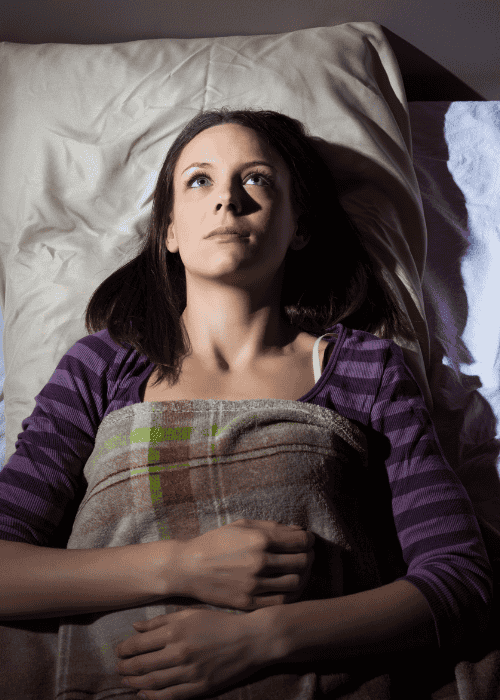
Sleep plays an integral role in many parts of our mental health, affecting mood, thoughts, focus, and energy. Sometimes, sleep happens like clockwork; you might find yourself feeling tired around the same time each evening and rising just before your alarm sounds in the morning. Other times, your sleep-wake cycle may get thrown off balance, making it hard to get consistent, high-quality sleep.
Not only is it frustrating when sleep patterns get disrupted, but it also impacts our mental health. The connection between mental health and sleep patterns is clear: when we consistently get enough quality sleep, it improves our mental health. However, the opposite is also true; in people with mood and anxiety disorders, sleep disruptions can worsen symptoms.
By understanding the science behind circadian rhythms and what can disrupt them, you can learn to sleep soundly again.
This page can help you stabilize your sleep schedule for your mental health. In this guide, we’ll explore:
- What circadian rhythms are.
- The link between mental health and the biological clock.
- How to fix circadian rhythm.
- Where to find professional treatment for sleep cycle disorders.
What Are Circadian Rhythms?
The circadian rhythm is much more than a timer for sleep; it’s the fundamental system that manages our body clock and mood regulation, 24/7. It tells us when to feel awake, when to feel tired, and regulates how our energy and mood shift over the day. It isn’t something we consciously control; it happens automatically in the background, constantly recalibrating and responding to our environment.[1]
When the system is working properly, our daily rhythms – sleep, hormone release, body temperature, mood, and energy – are coordinated and run like clockwork. For instance, it ensures that chemicals in our brain, such as cortisol, melatonin, and serotonin, are released at the right times to keep our emotions stable throughout the day. This means that your circadian rhythm, or your body’s internal clock, is working just as it should.[1]
However, when the circadian rhythm is disrupted, all of these patterns can start to shift, affecting both sleep and mood.[2]
What Is the Link Between the Biological Clock and Mental Health?
Mental health and our biological clock are closely linked because the brain’s timing system doesn’t just control sleep; it helps regulate your mood. What’s more, the link between the sleep-wake cycle and depression goes both ways: a disrupted sleep cycle can trigger symptoms of depression, and depression can cause changes in sleep patterns.[3] To understand why this happens, we need to look at the biological mechanisms that drive these relationships.
The Science of Circadian Rhythm and Mental Health: How the Brain Signals Sleep
We tend to think of sleep as a passive state, but your body is actually performing maintenance to recover from the day’s stress. Since sleep timing and mood are directly influenced by neurotransmitters (the brain’s primary mood-regulating chemicals), fine-tuning your sleep schedule is a powerful tool.
By understanding how your brain works – and which chemicals affect your sleep and moods – you can take actionable steps to stabilize your body clock and regulate your mood.
Melatonin and Cortisol
An area of the brain called the Suprachiasmatic Nucleus (SCN) controls the release of melatonin and cortisol at just the right times to help regulate sleep and mood. However, this brain region can be easily dysregulated by factors such as:
- Vacations in different time zones.
- Stress.
- Excessive blue-light exposure from screens.
These can trick the brain into altering its natural sleep-wake cycle.
When your biological clock is working properly, cortisol spikes when you wake up, and melatonin increases at night to help you sleep. However, if you experience symptoms of depression, this rhythm can be flattened or shifted, leading to fatigue in the morning or feeling “wired” at night.
There is a strong connection between light and your sleep cycle. In the morning, as the sun rises, cortisol levels also increase, getting you ready for the day and revving up your metabolism. While cortisol is often known as the “stress hormone,” it actually helps us balance our energy levels. As sunlight fades at the end of the day, melatonin is released, slowing your metabolism to prepare for important stages of rest, like deep sleep and REM sleep.[4]
When this cycle of cortisol and melatonin is out of balance, our bodies find it difficult to effectively manage our:
- Sleep.
- Focus.
- Emotional regulation.
This can happen in cases of insomnia or other circadian rhythm disorders, where this natural rhythm is disrupted. Many people with mood disorders have flattened cortisol patterns, meaning they don’t feel energized in the morning but also lack the ability to wind down at night.
This can unfortunately become a self-perpetuating cycle, as when you fall asleep later in the evening, it feels harder to wake up in the morning. This can also worsen symptoms of depression like:[4]
- Daytime fatigue.
- Apathy.
- Indecision.
Serotonin and Dopamine
In addition to cortisol and melatonin, your brain also creates chemicals called neurotransmitters, such as serotonin and dopamine. Serotonin is known as a “happy chemical” and is involved in regulating everything from your mood to your heart rate.
Serotonin levels are generally higher during the day, but if you experience a circadian rhythm or mental health disorder, serotonin production can become irregular.[5] This may in turn lead to:
- A depressed mood.
- Irritability.
- Nighttime anxiety.
Dopamine – another brain chemical – is related to reward and motivation, making you feel good when something positive happens.
Since dopamine production is highly dependent on your circadian rhythm, dopamine production can become erratic when your sleep cycle is disrupted. This can make it harder to feel pleasure from things you used to enjoy, which is a symptom of depression called “anhedonia.”[6]
Research has found that even one bad night of sleep can leave us feeling on edge and overwhelmed in situations that would normally feel manageable. This irritability, combined with a lack of motivation due to disruptions in dopamine, can make it feel like you’re lacking the “spark” to do what makes you happy.
As may be evident, your sleep quality can significantly affect your mental health. In a nutshell, poor-quality sleep can make it feel harder to function. On the plus side, this also means that improving your sleep can have a positive effect on your mood. But what can you do to stabilize your sleep?
Resetting Your Sleep Patterns
Treatment for sleep cycle disorders can vary depending on your symptoms, but the first step often involves establishing healthy sleep routines through healthy lifestyle changes.
There are many circadian rhythm reset tips that can help you sleep better, including:
- Having a consistent morning routine: Prioritize waking up at the same time each day and aim to get some sunshine soon after waking.
- Managing your light exposure: There are many strong links between light exposure and the sleep cycle. For instance, artificial light can lower melatonin levels, making it harder to fall asleep.[7] So, you may want to consider reducing screen time when winding down for bed to help you fall asleep more easily.
Alternatively, if you are affected by seasonal affective disorder, you can use a light therapy box (sometimes called an “SAD lamp”) to increase your light exposure early in the day and reset your circadian rhythm.[8] - Limiting caffeine: Caffeine often affects our brain longer than we think it does, so limiting caffeine after noon may help your body to wind down before bed.
- Keeping regular meal times: Meal times play a role in synchronizing circadian rhythms, so having consistent eating schedules may be especially important for shift workers or frequent travellers.[9]
- Getting regular exercise: Regular physical activity can be helpful for both mental health and sleep. However, exercising close to bedtime can make it harder to fall asleep.[7]
- Creating a bedtime routine: The more you can train your body for what to expect, the easier it will be to fall asleep. Try out some calming techniques like:
-
- Using incense.
- Reading.
- Taking a warm shower.
- Doing some calming stretching.
- Setting yourself a consistent bedtime.
-
Find Effective Treatment for Sleep Cycle Disorders
Since mental health conditions can affect sleep, and lack of quality sleep can impact mood, treatment for sleep cycle disorders tends to involve a multi-faceted approach. While the first step often involves implementing lifestyle changes to help reset your circadian rhythm, there may also be other reasons for changes in sleep patterns, such as depression, anxiety, or other mental health challenges.[4] This means that other treatments, such as therapy, may be beneficial overall.
At Mission Connection, we work with you to determine what combination of interventions will best stabilize your internal clock. Cognitive Behavioral Therapy for insomnia (CBT-I) is usually the first treatment considered, as it can be highly effective.[10]
CBT-I focuses on thought patterns that may be keeping your brain in a state of hyper-arousal, leaving you “on edge” and unable to sleep. This might be paired with circadian therapy for mental health, which could include timed light exposure to reset your internal clock.[8]
Our therapists may also work with you to develop your own personal “sleep toolbox” to help you relax and fall asleep. This toolbox might include mindfulness practices, breathing exercises, or medications for when it feels like you aren’t getting enough relief.
The combination of these interventions ensures you aren’t just addressing the sleeplessness, but also any underlying causes that led you to seek treatment.
Mission Connection offers various outpatient treatment options including in-person at our locations, telehealth services, and hybrid programs that combine in-person and virtual care. We accept insurance and are in-network with most major providers.
Reach out to us at 866-833-1822 or get started online to find out what services we offer to help you sleep more easily.
References
- Foster, R. G. (2020). Sleep, circadian rhythms and health. Interface Focus, 10(3). https://doi.org/10.1098/rsfs.2019.0098
- João, K. A. et al. (2018). The impact of sleep quality on the mental health of a non-clinical population. Sleep Medicine, 46, 69–73. https://doi.org/10.1016/j.sleep.2018.02.010
- Yasugaki, S. et al. (2025). Bidirectional relationship between sleep and depression. Neuroscience Research, 211, 57–64. https://doi.org/10.1016/j.neures.2023.04.006
- Chalise, S. et al. (2026). Association between sleep regularity and symptoms of anxiety and depression in middle-aged adults. https://doi.org/10.64898/2026.01.15.26344207
- Ursin, R. (2002). Serotonin and sleep. Sleep Medicine Reviews, 6(1), 55–67. https://doi.org/10.1053/smrv.2001.0174
- Radwan, B., Liu, H., & Chaudhury, D. (2019). The role of dopamine in mood disorders and the associated changes in circadian rhythms and sleep-wake cycle. Brain Research, 1713, 42–51. https://doi.org/10.1016/j.brainres.2018.11.031
- National Heart, Lung, and Blood Institute (NHLBI). (2022, March 24). Circadian rhythm disorders. https://www.nhlbi.nih.gov/health/circadian-rhythm-disorders/treatment
- Terman, M., & Terman, J. S. (2011). Light therapy. Elsevier eBooks, pp. 1682–1695. https://doi.org/10.1016/b978-1-4160-6645-3.00149-3
- Wehrens, S. M. et al. (2017). Meal timing regulates the human circadian system. Current Biology, 27(12), 1768-1775.e3. https://doi.org/10.1016/j.cub.2017.04.059
- Rossman, J. (2019). Cognitive-behavioral therapy for insomnia: an effective and underutilized treatment for insomnia. American Journal of Lifestyle Medicine, 13(6), 544–547. https://doi.org/10.1177/1559827619867677