
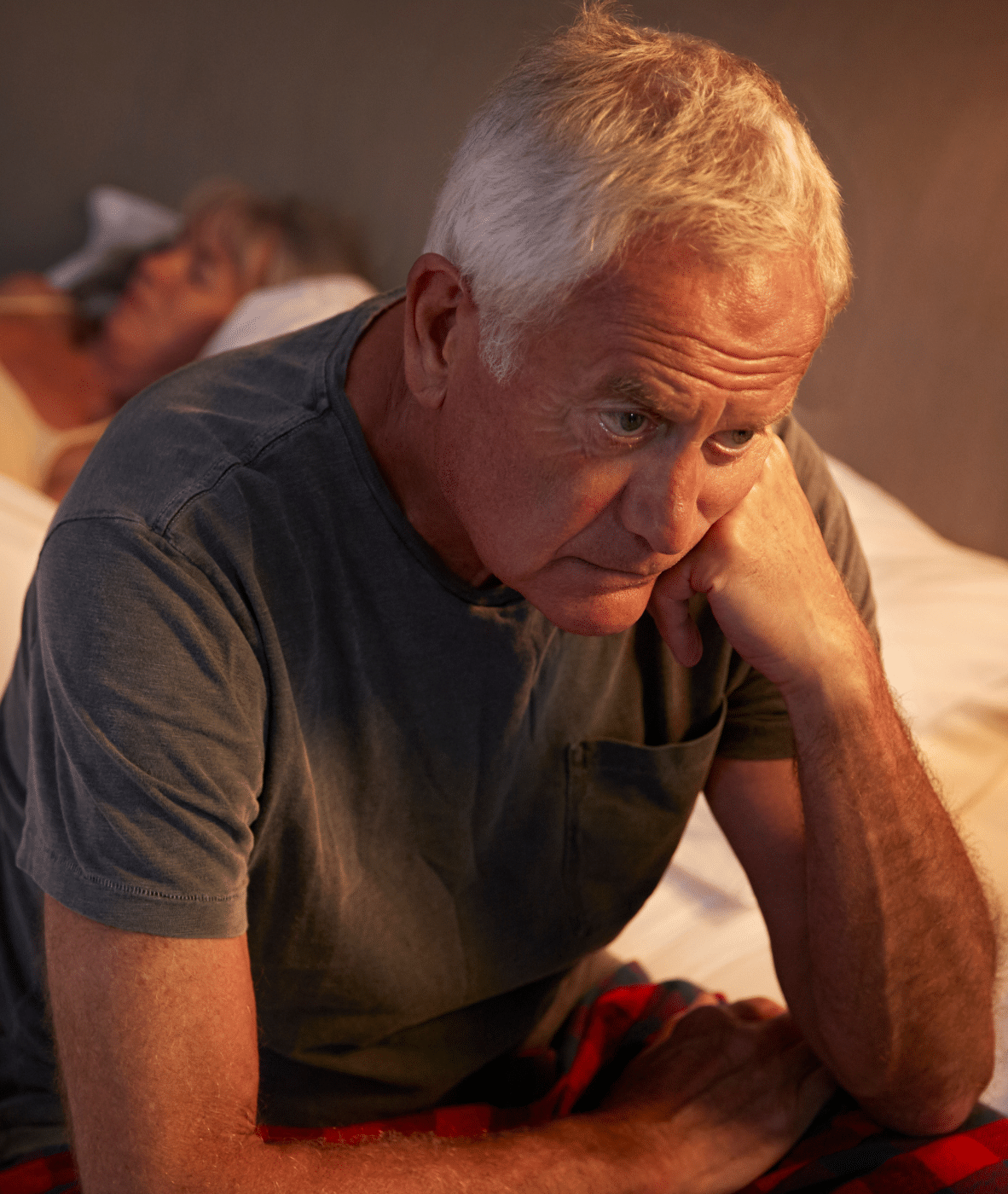
When the brain is deprived of sleep, its ability to regulate mood, process emotions, and manage stress begins to deteriorate. Over time, it can disrupt mental functioning so severely that the mind essentially “shuts down” under pressure. This is what’s sometimes referred to as a “mental breakdown.”
A mental breakdown is a period of intense psychological distress where someone can no longer function in daily life. It can include intense anxiety, emotional instability, cognitive disorientation, or dissociative symptoms. However, it’s important to note that the term “mental breakdown” is not a medical term or an official mental health diagnosis.
On this page, you’ll learn how long-term lack of sleep can drive the mind toward a nervous breakdown, what symptoms to watch for, and how to recover from it. However, if you’re worried about your or a loved one’s mental health, talking to a health professional is advised.
Can Sleep Deprivation Cause a Mental Breakdown?
Yes, sleep deprivation can cause a mental breakdown, and this connection is well-documented in both clinical research and lived experiences.[1]
When the brain doesn’t get enough rest, it struggles to perform functions like emotional regulation, decision-making, memory, and stress tolerance. Over time, the mental strain from not sleeping overwhelms someone’s coping mechanisms and can lead to a full-blown nervous breakdown.
Disruption of the sleep cycle repeatedly or for extended periods also creates a chemical imbalance in the brain. There’s a rise in cortisol levels associated with anxiety and emotional sensitivity. At the same time, serotonin and dopamine, needed for mood stability, become dysregulated.[2]
Cognitive impairments also worsen with chronic sleep loss. People begin to feel disconnected from reality and struggle to think clearly. Lack of sleep can force someone already under stress beyond their emotional limits. What starts as simple exhaustion slowly spirals into burnout, panic attacks, or a complete emotional breakdown.
A nervous breakdown due to sleep deprivation is not a sign of weakness. Rather, it’s a human response to being pushed too far without rest. Sleep is a basic psychological need, and without it, the mind and the body can not function properly.
Signs Your Brain Is Sleep Deprived
Research in sleep medicine and psychiatry suggests the following signs that your brain is sleep deprived:[3]
- Impaired short- and long-term memory
- Difficulty concentrating
- Slower cognitive processing or “sluggish” thinking
- Increased emotional reactivity, irritability, and mood swings
- Increased anxiety and depressive symptoms
- Seeing or hearing things that aren’t there
- Risk-taking behavior
- Brief, uncontrollable lapses in attention lasting a few seconds, where the brain effectively “shuts off”
- Emotional numbness
- Poor coordination when moving around, resembling mild intoxication
How Lack of Sleep Affects Mental Health
Inadequate sleep has multiple effects on the brain. Yet, behavioral and mood changes are the most common effects of sleep deprivation that may lead to a mental breakdown. We discuss these effects in more detail next.
Behavioral Changes
When you don’t get enough sleep, one of the first parts of your brain to suffer is the prefrontal cortex (PFC).[4] The PFC is essential for high-level thinking, planning, decision-making, impulse control, and appropriate social behavior.
Sleep deprivation reduces activity levels in the PFC and its ability to connect to other parts of the brain, so it becomes harder to weigh the consequences of your actions. This can lead to:
- Poor decision-making (think risky behavior, overeating, or substance use)
- Acting without thinking things through
- Trouble with attention, organization, or completing tasks
- Social withdrawal and inappropriate interactions
In addition, sleep deprivation disrupts the default mode network (DMN), a neural network in the brain involved in self-reflection and regulation of internal thoughts.[5] Dysfunction in this region makes it harder for someone to introspect or evaluate their own behavior.
Mood Changes
Sleep plays a vital role in emotional regulation, largely through its effect on the amygdala and its interaction with the medial prefrontal cortex (mPFC).
The amygdala is a brain area responsible for detecting emotional threats and triggering stress responses, while the mPFC acts as a brake. Therefore, the mPFC can help us stay calm and evaluate situations logically.
When someone is sleep-deprived, the amygdala becomes hyperactive, and its connection with the mPFC weakens.[6] As a result, emotional responses become more intense, which explains why sleep-deprived people feel irritable and tearful, even over minor issues.
Additionally, the brain chemicals serotonin, dopamine, norepinephrine, and GABA become imbalanced with sleep deprivation.[1] The following explains how:
- Sleep deprivation reduces serotonin receptor sensitivity, which makes the brain more vulnerable to anxiety and depression
- Dopamine, which affects motivation and reward, is initially increased during sleep loss (which is why some people feel temporarily alert). But over time, this system becomes depleted
- Norepinephrine, involved in arousal and stress responses, remains elevated during sleep deprivation and keeps the brain in a prolonged “fight-or-flight” state
- GABA, the brain’s calming chemical, decreases with sleep loss, so you could experience restlessness, agitation, or emotional overdrive
Additionally, the level of stress hormone cortisol in the body rises and stays elevated when sleep is inadequate. Chronically high cortisol worsens anxiety and keeps the brain in a state of emotional fatigue.
Sleep Deprivation and Serious Mental Health Conditions
Sleep deprivation has been shown to contribute to the development or worsening of serious mental health conditions. Chronic sleep loss with unstable mental health leads to a nervous breakdown, a state of emotional and cognitive collapse that requires immediate help. These states of emotional and cognitive collapse can manifest in the following ways.
1. Psychosis
Sleep deprivation can induce temporary psychotic symptoms – even in people without an underlying psychotic disorder. These symptoms include:
- Hallucinations (visual, auditory, or tactile)
- Paranoia and persecutory thoughts
- Disorganized thinking or speech
- Delusional beliefs
Research shows that 24-48 hours of sleep deprivation leads to perceptual distortions and psychotic-like experiences.[7]
Further, in people predisposed to schizophrenia, poor sleep can trigger relapse and also disrupt medication effectiveness due to dopaminergic dysregulation.
2. Bipolar Disorder
Sleep loss is one of the most well-known triggers for manic episodes in bipolar disorder.[8] Signs of mania include:
- Irritable mood
- Increased energy
- Decreased need for sleep
- Risky or impulsive behavior
- Racing thoughts
- Pressured speech
In people with bipolar disorder, even a single night of poor sleep can be followed by a manic or hypomanic episode.
This is because the brain’s circadian rhythm, tightly linked with mood regulation, is often unstable in bipolar disorder. Sleep deprivation further disrupts it and creates a biochemical environment (including excess dopamine and reduced GABA) that favors mania.
Without sleep restoration, bipolar disorder quickly spirals into mixed episodes, psychosis, or emotional collapse. In other words, these issues present in ways that resemble what people call a “nervous breakdown.”
3. Dissociative Disorders
Studies suggest that sleep loss impairs the blending of sensory, cognitive, and emotional information, which disrupts the continuity of consciousness.
In people vulnerable to dissociative identity disorder (DID) or other specified dissociative disorder (OSDD), chronic sleep disruption can worsen symptoms.
Even in the general population, severe sleep deprivation has been shown to induce temporary dissociative states.[9] A state of confusion, emotional blunting, and a sense of being “unreal” or out of control leads to mental breakdown.
Lifestyle Changes to Prevent Insomnia and Nervous Breakdown
Preventing insomnia and protecting mental health from reaching the point of a nervous breakdown requires consistent lifestyle habits that support healthy sleep. The following are six suggestions for how to do so:[10]
- One of the most effective strategies to prevent sleep deprivation is maintaining a regular sleep schedule. This means going to bed and waking up at the same time each day, even on weekends.
- Limit screen time in the evening, particularly in the hour before bed, as this can also ease insomnia. Blue light from phones, laptops, and televisions suppresses melatonin, the hormone that signals to your body that it’s time to sleep.
- Avoid stimulants like caffeine and nicotine in the late afternoon and evening. Caffeine remains in the body for up to eight hours and interferes with deep sleep, while nicotine is a stimulant that can increase nighttime awakenings.
- Regular physical activity, especially aerobic exercise, has a strong association with improved sleep quality. Studies show that moderate exercise during the day can help people fall asleep faster, sleep more deeply, and feel more alert during the day.
- Create a calm, comfortable sleep environment. The bedroom should be dark, quiet, and cool, ideally around 60-67°F (15-19°C).
- Practice stress management techniques throughout the day. Mindful routines such as journaling, spending time in nature, and engaging in relaxing hobbies have been shown to lower cortisol levels and prevent nervous breakdowns.
How to Recover From Sleep Deprivation
Sleep deprivation can happen to anyone: students under pressure, professionals facing long shifts, parents of newborns, or anyone coping with stress, trauma, or mental health issues. Recovery from sleep deprivation involves restoring healthy sleep patterns and addressing the underlying causes of disrupted rest.
Here are the most common treatment approaches.
Sleep Medications
Prescription sleep medications, such as benzodiazepines (for example, temazepam) or non-benzodiazepine hypnotics (such as zolpidem and eszopiclone), are effective for short-term relief.[11] They are most helpful in people who are acutely sleep-deprived or suffering from severe insomnia.
These drugs boost the activity of GABA, the brain chemical that promotes relaxation and reduces general brain activity, so it is easier to fall and stay asleep.
However, their use must be carefully monitored by a healthcare provider. Research shows that while these medications help in the short term, they come with risks such as:
- Dependence or tolerance
- Daytime drowsiness
- Memory or concentration problems
- Rebound insomnia upon discontinuation
Guidelines from the American Academy of Sleep Medicine suggest that prescription sleep drugs should be used only when non-medication methods aren’t sufficient, and preferably for short durations.[12]
Over-The-Counter (OTC) Sleep Aids
OTC sleep aids include antihistamines like diphenhydramine (Benadryl) and doxylamine (Unisom). They are widely available and often used as a first-line solution by people experiencing difficulty sleeping. OTC sleep aids block histamine receptors, which has a sedating effect.[13]
While these sleep aids may initiate sleep, they can reduce sleep quality, particularly REM sleep needed for cognitive and emotional recovery. Additional common side effects of sleep aids include:
- Morning grogginess
- Dry mouth and constipation
- Cognitive dulling in older adults
There’s also growing use of melatonin supplements, a hormone that helps regulate circadian rhythms. Evidence supports its use for circadian-related sleep disorders (such as jet lag or shift work disorder), but it is less effective for chronic insomnia.
Cognitive Behavioral Therapy for Insomnia (CBT-I)
CBT-I is considered the gold standard for treating chronic insomnia and recovering from prolonged sleep deprivation. Its effects are backed by decades of clinical research and consistently show equal or superior effectiveness to sleep medications, with longer-lasting results.[14]
The core components of CBT-I include:
- Sleep restriction therapy: It limits the time spent in bed to match actual sleep time and strengthens the brain’s sleep drive.
- Stimulus control: It teaches the brain to associate bed only with sleep.
- Cognitive restructuring: You learn to identify and challenge unhelpful thoughts about sleep.
- Sleep hygiene education: You learn behaviors that support sleep, like avoiding caffeine late in the day and establishing a relaxing pre-bed routine.
- Relaxation techniques: These help reduce arousal and quiet the mind. Examples include guided imagery, deep breathing, and progressive muscle relaxation.
Get Help for Sleep Deprivation at Mission Connection
When exhaustion begins to interfere with your ability to think clearly, it’s a signal that your mental health needs support before you risk experiencing a mental breakdown.
At Mission Connection, we offer cognitive behavioral therapy as a powerful, research-backed solution to not only help you recover from sleep deprivation but also prevent future mental health crises.
Our therapists work with you to understand unhelpful thoughts, reset habits that disrupt sleep, and build healthy coping strategies.
Call us today or get started online to regain control of your sleep.
References
- Colten, H. R., & Altevogt, B. M. (2006). Extent and health consequences of chronic sleep loss and sleep disorders. National Academies Press. https://www.ncbi.nlm.nih.gov/books/NBK19961/
- Hirotsu, C., Tufik, S., & Andersen, M. L. (2015). Interactions between sleep, stress, and metabolism: from physiological to pathological conditions. Sleep Science, 8(3), 143–152. https://doi.org/10.1016/j.slsci.2015.09.002
- Krause, A. J. et al. (2017). The sleep-deprived human brain. Nature Reviews Neuroscience, 18(7), 404–418. https://doi.org/10.1038/nrn.2017.55
- Muzur, A., Pace-Schott, E. F., & Hobson, J. A. (2002). The prefrontal cortex in sleep. Trends in Cognitive Sciences, 6(11), 475–481. https://doi.org/10.1016/s1364-6613(02)01992-7
- De Havas, J. A. et al. (2012). Sleep deprivation reduces default mode network connectivity and anti-correlation during rest and task performance. NeuroImage, 59(2), 1745–1751. https://doi.org/10.1016/j.neuroimage.2011.08.026
- Goldstein, A. N., & Walker, M. P. (2014). The role of sleep in emotional brain function. Annual Review of Clinical Psychology, 10, 679–708. https://doi.org/10.1146/annurev-clinpsy-032813-153716
- Waters, F. et al. (2018). Severe sleep deprivation causes hallucinations and a gradual progression toward psychosis with increasing time awake. Frontiers in Psychiatry, 9, 303. https://doi.org/10.3389/fpsyt.2018.00303
- Lewis, K. S. et al. (2017). Sleep loss as a trigger of mood episodes in bipolar disorder: individual differences based on diagnostic subtype and gender. The British Journal of Psychiatry, 211(3), 169–174. https://doi.org/10.1192/bjp.bp.117.202259
- Selvi, Y. et al. (2015). The effects of sleep deprivation on dissociation and profiles of mood, and its association with biochemical changes. Noro Psikiyatri Arsivi, 52(1), 83–88. https://doi.org/10.5152/npa.2015.7116
- Markwald, R. R. et al. (2018). Behavioral strategies, including exercise, for addressing insomnia. ACSM’s Health & Fitness Journal, 22(2), 23–29. https://doi.org/10.1249/FIT.0000000000000375
- Dujardin, S., Roussel, B. D., & Girault, J.-A. (2020). Prescription drugs used in insomnia. Sleep Medicine Clinics, 15(2), 133–145. https://doi.org/10.1016/j.jsmc.2020.02.002
- Sateia, M. J. et al. (2017). Clinical practice guideline for the pharmacologic treatment of chronic insomnia in adults: an american academy of sleep medicine clinical practice guideline. Journal of Clinical Sleep Medicine, 13(2), 307–349. https://doi.org/10.5664/jcsm.6470
- Almond, S.-A. M., Booker, S. Q., & Sclar, D. A. (2021). A systematic review of the efficacy and safety of over-the-counter medications used in older people for the treatment of primary insomnia. The Senior Care Pharmacist, 36(2), 83–92. https://doi.org/10.4140/TCP.n.2021.83
- Feuerstein, S. et al. (2017). Computerized cognitive behavioral therapy for insomnia in a community health setting. Journal of Clinical Sleep Medicine, 13(2), 267–274. https://doi.org/10.5664/jcsm.6460