
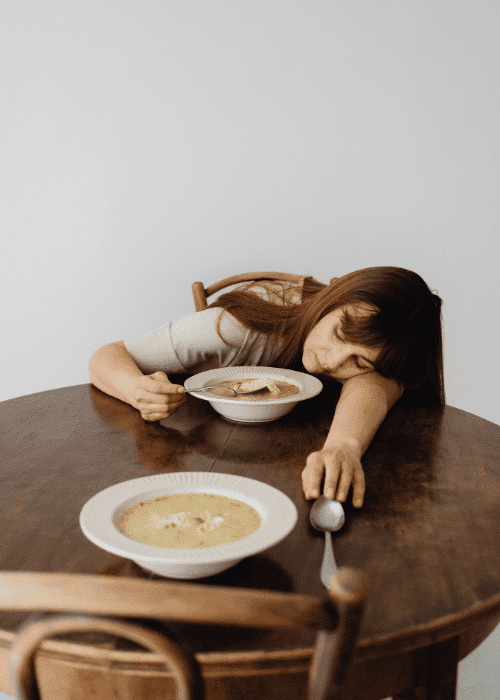
We’ve all been there; the days when you feel sluggish, fatigued, and even demotivated. Energy levels are low; maybe you didn’t get a restful sleep, and you just can’t switch into “get up and go” mode as much as you’d like to.
Life is full of challenges that require our energy and attention. It could be work, parenting, caring for someone – the list goes on. So, to be at our best for ourselves and those we care about, it helps to be well rested and motivated. But sometimes, excessive daytime tiredness goes beyond how much sleep we’ve had.
When low energy becomes persistent, it can seriously affect someone’s day-to-day life. Plus, when fatigue sticks around long-term, research shows that it can reduce motivation, lead to difficulty concentrating, and even cause mood swings. In fact, daytime fatigue and excessive tiredness are some of the most commonly reported symptoms when adults seek support for depression, anxiety, and chronic stress.[1][2]
If daytime tiredness is something you cope with regularly, a mental health professional can assist you in getting to the root of the issue and provide help for low energy. This page can also work as a useful guide for understanding the daytime sleepiness depression and other mental health issues can cause, as it explores:
- What excessive daytime tiredness is
- How daytime fatigue impacts well-being
- Common causes
- Physical and lifestyle factors that contribute to fatigue
- When to seek a sleep evaluation
- Fatigue treatment therapy options
- Coping strategies for chronic exhaustion anxiety
- How Mission Connection can help
Understanding Excessive Daytime Tiredness and Low Energy
Feeling sleepy during the day is something a lot of us experience from time to time, but ongoing daytime fatigue is more complex. It’s described as feeling exhausted, but the tiredness doesn’t improve with rest.
In fact, clinicians often differentiate sleepiness from fatigue. Sleepiness is defined as a physiological urge to sleep, whereas fatigue is described as a persistent lack of energy or motivation. Adults dealing with mental health conditions such as depression or anxiety typically report both sleepiness and fatigue at the same time.[3]
Moreover, depression in particular is strongly linked with decreased activity and chronic fatigue.[4] Many people with depression report feeling “heavy” or slowed down, often leading to a reluctance to carry out day-to-day tasks or even get out of bed.
Anxiety-related fatigue, on the other hand, often results from constant stimulation, where the mind and body stay on high alert, draining energy throughout the day.[5] For example, a demanding job that requires multitasking and constantly being “on” can often send people home feeling spent, like they’re unable to make a meal or do routine evening chores.
How Daytime Fatigue Impacts Mental and Emotional Well-Being
Thinking about how fatigue affects productivity is often a go-to, but what about our well-being outside of our work? Fatigue has an impact on how we think and feel, and moreover, how we socialize and relate to others. In short, it affects all aspects of life.
In fact, research shows that fatigue can impair working memory, slow our decision-making abilities, and make us less emotionally resilient. More simply, fatigue makes us more irritable and sensitive, as well as less likely to engage in activities that we used to enjoy.[6]
Healthy habits are important – socialising, exercise, and self-care especially – as these lower the risk of issues like depression and anxiety. But, because fatigue makes us less likely to engage in all these healthy activities, pre-existing mental health conditions can be made worse.[7]
For this reason, understanding the potential causes of fatigue and seeking a professional evaluation when necessary can prevent mental and physical health from declining.[8] In the following section, we explore the potential causes of excessive daytime tiredness in more depth.
Common Mental Health Causes of Daytime Fatigue
Fatigue quite often doesn’t come about on its own. When it’s ongoing, it may be a by-product of a pre-existing mental health condition. The following are some of the fatigue mental health issues adults may experience.
Depression
Depression is a very common mental health condition, and fatigue is one of the core symptoms that clinicians look for when diagnosing it. The daytime sleepiness depression can cause often presents as low motivation, physical exhaustion, and difficulty completing day-to-day tasks.[9]
Research shows that over 90% of people with depression experience significant fatigue, even when their sleep appears normal.[10] The reason why largely comes down to chemicals in the brain that regulate mood. Two key players are serotonin and dopamine – these are often described as “mood boosting” or “happy” chemicals. With depression, the regulation of these chemicals is affected. So naturally, mood and energy are changeable and often low in these people with this condition.[11][12]
Anxiety Disorders
Feelings of anxiety happen when the body is on high alert. The condition is an evolutionary natural response to perceived threats – a state called “fight or flight.” In fight or flight, heart rate and breathing become elevated, priming us to react quickly. Of course, this response was useful for our ancient ancestors in the time of legitimately dangerous threats like predators. But nowadays it can still become activated by everyday stressors, such as work, conflict, and so on.
For people with chronic anxiety, this system is activated repeatedly throughout the day. As a result, cortisol – known as the “stress hormone” – becomes elevated. Over time, this leads to muscle tension, restless nights, and low energy, which goes hand in hand with fatigue. In other words, the low motivation anxiety can cause often initially stems from a state of overwhelm.[13]
Burnout and Chronic Stress
Fortunately, in a time of greater awareness around work-life balance, burnout is increasingly recognised. It’s a state of emotional and physical exhaustion that’s brought about by prolonged stress, usually in work or in caregiving roles.
Burnout exhaustion symptoms include poor concentration, tiredness that doesn’t get better with rest, and emotional sensitivity.[14] What’s more, chronic stress leads to elevated release of cortisol (the stress hormone we talked about earlier), which can disrupt the body’s natural sleep-wake cycle. So, if you’re prone to stress long-term, then it’s likely that daytime sleepiness may become an issue.[15]
Trauma and Post-Traumatic Stress
Post-traumatic stress disorder (PTSD) is as it sounds – a stress condition that occurs as a result of a traumatic experience. Unpleasant triggering memories or environments can lead to emotional responses and states of intense distress in people with this condition.
As a result, many of those affected spend a lot of time in a hyperaroused state, meaning they’re constantly on their guard for threats associated with their past trauma. Sleep can also be disrupted for the same reasons, as symptoms of PTSD include nightmares, insomnia, and being easily startled.[16] So, the link between trauma and fatigue is quite clear.
Physical and Lifestyle Factors That Contribute to Fatigue
While the above mental health conditions are a common cause of fatigue, physical and lifestyle factors can’t be ruled out. Sometimes it’s as simple as unhelpful habits or a poor sleep routine.
We discuss some of these physical and lifestyle factors in the following sections.
Sleep Disorders
Several sleep disorders can cause excessive daytime tiredness. These include:
- Insomnia: This is a difficulty initiating or maintaining sleep, leading to “sleep debt.” Or, to put it more simply, being so underslept that your body craves the hours of sleep you lost to be restored by further rest.[17] Insomnia is often linked to mental health conditions like anxiety, depression, and PTSD.
- Obstructive sleep apnea: Breathing disruptions during sleep, which cause repeated awakenings during the night, and are often characterized by snoring and reduced oxygen intake.[18]
- Restless legs syndrome: This is a condition characterized by jerking and twitching of the leg muscles at night. These uncomfortable sensations often disrupt sleep quality.[19]
As sleep disorders often overlap with mental health conditions, a full evaluation by a healthcare provider can be especially important.
Medical Conditions
If you have a pre-existing medical condition and are noticing symptoms of chronic tiredness, then the two may be linked. Some common conditions that are associated with fatigue include:[20]
- Thyroid disorders
- Anaemia
- Chronic pain disorders
- Viral infections
- Autoimmune diseases
Alternatively, daytime sleepiness and fatigue may come down to an unrecognized medical issue, which is why it’s always important to get a checkup.
Lifestyle Patterns
Our daily habits can influence how much rest we get and how tired we feel during the day. But, fortunately, if lifestyle factors are a cause, then recovery from fatigue is well within reach by making simple changes in how we go about our day.
For example, if you’re a coffee lover, it may be time to limit your intake or switch to decaf in the late afternoons, as high caffeine consumption is linked to fatigue.[21] Dehydration is also linked to fatigue, so it’s a good idea to keep a flask of water topped up and within reach when you’re out and about.[21] Irregular eating habits, like having heavy meals later at night, can also worsen fatigue.[21]
Assessment and Sleep Disorder Evaluation
If fatigue persists for more than a few weeks and day-to-day functioning is affected, then a fully comprehensive mental health evaluation with your healthcare provider is a good idea to identify potential underlying issues.
In fact, when daytime sleepiness is a persistent and prominent feature, the American Academy of Sleep Medicine recommends a full sleep evaluation.[22] This assessment might involve:
- A mental health evaluation to identify underlying mental health conditions
- A medical check-up or blood tests to investigate potential medical causes
- Sleep questionnaires, as these can give an in-depth picture of someone’s particular sleep pattern and quality of sleep
Once the causes of daytime sleepiness and fatigue are identified, your doctor and mental health provider can discuss a suitable treatment plan for your needs.
Evidence-Based Treatment Options for Daytime Fatigue
Fortunately, recovery from daytime fatigue is possible with the right coping strategies and treatment. How someone’s treatment plan looks will typically depend on the cause of fatigue. Yet, typically, most people benefit from a combination of therapy, medication, and behavioural approaches, which we’ll break down further below.
Cognitive Behavioral Therapy (CBT)
CBT is well researched for depression and anxiety, and studies have shown its effectiveness in improving mood and energy levels.[23]
With the assistance of a qualified therapist, unhelpful thinking patterns and thoughts are identified. For example, someone who is prone to low mood might make a mistake at work and tell themselves I’m bad at my job. By reframing thought patterns that tend to be negative or presumptuous, someone can achieve more balanced, realistic self-talk, like I made a mistake, I’m only human, and I’ll learn from it.
Medication
For some adults, antidepressant or anti-anxiety medications can help regulate mood and fatigue.
We mentioned the mood-boosting chemical serotonin earlier. SSRIs (selective serotonin reuptake inhibitors) help maintain levels of serotonin in the body. As a result, people often see positive changes in emotional stability and fatigue, especially when depression is present.[24]
Lifestyle Adjustments
Regular physical activity, consistent sleep-wake schedules, balanced nutrition, and reduced caffeine late in the day can all help to support energy regulation. In fact, moderate exercise, around 30 minutes per day of activity that increases heart rate, has been shown to reduce fatigue and enhance sleep quality, even for those living with depression.[25]
Therapy for Trauma or Stress
Trauma-focused therapies have shown effectiveness for treating the symptoms of fatigue related to trauma and PTSD.
For example, eye movement desensitisation and reprocessing (EMDR) is a form of trauma-focused therapy that is carried out under the supervision of a qualified healthcare professional. It involves recalling specific traumatic events while a therapist prompts controlled eye movements to aid in emotional processing. This, in turn, can reduce someone’s hyperarousal or sense of being “high alert,” reducing daytime fatigue.[26]
Further, CBT can also be adapted to process past traumas and promote emotional resilience in the face of triggers and painful memories.
Practical Coping Strategies for Managing Daytime Fatigue
While long-term treatment targets the underlying cause, day-to-day coping tools can help us manage our energy more effectively, so we don’t burn ourselves out. These strategies include:[27]
- Breaking tasks into smaller steps: To make them feel more manageable and achievable, which in turn can reduce feelings of overwhelm
- Use gentle movement: Like stretching, yoga, or walking to boost alertness
- Create a consistent sleep routine: This may involve a wake time that complements your daytime plans. For example, rising early enough to enjoy a good breakfast, and commuting to work early to avoid traffic. A sleep routine also should involve a set bedtime and limited screen use at night
- Limit caffeine after midday: To reduce stimulation and protect nighttime sleep
- Schedule rest breaks: During periods of high stress, rest can prevent overwhelm and physical “crashes”
These strategies complement therapeutic interventions and support daily functioning, especially during recovery.
Mission Connection: Find Help for Tiredness and Exhaustion
Even when daytime fatigue feels like it’s dragging you down, healthy coping mechanisms, therapy, and medication can all help reduce its impact. Fortunately, recovery is entirely possible with the right support.
Mission Connection provides comprehensive, compassionate treatment for adults experiencing chronic fatigue. Our team specializes in evidence-based therapies that are considerate of the individual and possible underlying causes of fatigue – ensuring that the chosen treatment plan is tailored to you.
Our telehealth services also mean that you can fit therapy for daytime fatigue into your schedule flexibly, allowing you to receive care from the comfort of your home.
By also offering comprehensive medication monitoring alongside various therapies, Mission Connection can be a guiding light toward overcoming chronic fatigue. If you’re ready to explore our treatment options, contact us today or complete our confidential contact form for more information.
References
- Hofmann, S. G. et al. (2012). The efficacy of cognitive behavioral therapy: a review of meta‑analyses. Cognitive Therapy and Research, 36(5), 427–440. https://doi.org/10.1007/s10608-012-9476-1
- Cuijpers, P. et al. (2008). Psychotherapy for depression in adults: a meta‑analysis of comparative outcome studies. Journal of Consulting and Clinical Psychology, 76(6), 909–922. https://doi.org/10.1037/a0013075
- Vercoulen, J. H., Bazelmans, E., Swanink, C. M., Fennis, J. F., Galama, J. M., van der Meer, J. W., et al. (1998). The persistence of fatigue in chronic fatigue syndrome and multiple sclerosis: development of a model. Journal of Psychosomatic Research, 45(6), 507–517. https://doi.org/10.1016/S0022-3999(98)00006-5
- Chalder, T., Berelowitz, G., Pawlikowska, T., Watts, L., Wessely, S., Wright, D., et al. (1993). Development of a fatigue scale. Journal of Psychosomatic Research, 37(2), 147–153. https://doi.org/10.1016/0022-3999(93)90081-P
- Twomey, C., O’Reilly, G., & Byrne, M. (2020). Effectiveness of cognitive behavioural therapy for anxiety and depression in primary care: a meta-analysis. European Psychiatry, 30. https://doi.org/10.1016/S0924-9338(15)31860-5
- Bower, J. E. (2014). Cancer‑related fatigue — mechanisms, risk factors, and treatments. Nature Reviews Clinical Oncology, 11(10), 597–609. https://doi.org/10.1038/nrclinonc.2014.127
- Wichniak, A. et al. (2013). Sleep as a biomarker for depression. International Journal of Molecular Sciences, 14(5), 9947–9970. https://doi.org/10.3390/ijms14059947
- American Academy of Sleep Medicine (2021). International classification of sleep disorders (3rd ed.). American Academy of Sleep Medicine.
- Harvey, A. G. (2008). Sleep and circadian rhythms in bipolar disorder: seeking synchrony, harmony, and regulation. Journal of Clinical Psychology, 64(10), 1420–1433. https://doi.org/10.1002/jclp.20561
- Morin, C. M., & Benca, R. (2012). Chronic insomnia. The Lancet, 379(9821), 1129–1141. https://doi.org/10.1016/S0140-6736(11)60750-2
- Pigeon, W. R. et al. (2013). Sleep and depression: a potential bidirectional relationship. Dialogues in Clinical Neuroscience, 15(1), 115–123.
- Twomey, C., O’Reilly, G., & Byrne, M. (2020). Effectiveness of cognitive behavioral therapy for anxiety and depression in primary care: a meta-analysis. European Psychiatry, 63, e14. https://doi.org/10.1192/j.eurpsy.2020.14
- Maslach, C., & Leiter, M. P. (2021). Burnout research and implications: a 2020‑2021 update. Annual Review of Psychology, 72, 397–422. https://doi.org/10.1146/annurev-psych-062520-122557
- Melamed, S., Kushnir, T., & Shirom, A. (1992). Burnout and risk of cardiovascular disease: evidence, possible causal paths, and promising research directions. Psychological Bulletin, 116(2), 343–359. https://doi.org/10.1037/0033-2909.116.2.343
- Shirom, A. et al. (2006). Burnout and health review: current knowledge and future research directions. International Review of Industrial and Organizational Psychology, 21, 269–309.
- Doering, B. K. et al. (2013). Burnout and depressive symptoms: differential relationships but overlapping features. Journal of Affective Disorders, 146(3), 447–454. https://doi.org/10.1016/j.jad.2012.08.009
- Doering, B. K. et al. (2004). Does burnout or mental health contribute to the discrepancy between self-perceived health and medical status in general practice? Psychosomatics, 45(3), 189–194. https://doi.org/10.1176/appi.psy.45.3.189
- Southwick, S. M. et al. (1999). Role of norepinephrine in the pathophysiology and treatment of posttraumatic stress disorder. Biological Psychiatry, 46(9), 1192–1204. https://doi.org/10.1016/S0006-3223(99)00219-9
- Germain, A. (2013). Sleep disturbances as the hallmark of ptsd: where are we now? American Journal of Psychiatry, 170(4), 372–382. https://doi.org/10.1176/appi.ajp.2012.12040432
- Kobayashi, I., Boarts, J. M., & Delahanty, D. L. (2007). Polysomnographically measured sleep abnormalities in ptsd: a meta-analytic review. Psychophysiology, 44(4), 660–669. https://doi.org/10.1111/j.1469-8986.2007.00532.x
- Richards, J. M., & Josh, C. J. (2016). Cognitive fatigue: a meta-analysis of mechanisms, measurement, and intervention. Neuropsychology Review, 26(1), 132–152. https://doi.org/10.1007/s11065-016-9320-8
- Edinger, J. D., & Means, M. K. (2005). Cognitive-behavioral therapy for primary insomnia. Clinical Psychology Review, 25(5), 539–558. https://doi.org/10.1016/j.cpr.2005.04.003
- Cheng, P., & Dizon, J. (2012). Cognitive behavioral therapy for insomnia (cbt‑i): a systematic review and meta-analysis. Journal of General Internal Medicine, 27(11), 1480–1486. https://doi.org/10.1007/s11606-012-2048-6
- Trauer, J. M. et al. (2015). Cognitive behavioral therapy for chronic insomnia: a systematic review and meta-analysis. Annals of Internal Medicine, 163(3), 191–204. https://doi.org/10.7326/M14-2841
- Tworoger, S. S., Yasui, Y., Vitiello, M. V., et al. (2005). Effect of exercise on sleep quality in women. Journal of Psychosomatic Research, 59(4), 239–244. https://doi.org/10.1016/j.jpsychores.2005.03.008
- Babson, K. A., & Feldner, M. T. (2010). Temporal relations between sleep problems and both traumatic event exposure and ptsd: a critical review of the empirical literature. Journal of Anxiety Disorders, 24(1), 1–15. https://doi.org/10.1016/j.janxdis.2009.08.002
- National Institute for Health and Care Excellence (NICE) (2022). Depression in adults: treatment and management. National Institute for Health and Care Excellence. https://www.nice.org.uk/guidance/ng222