
What Happens During Panic Attacks
Panic attacks aren’t just extreme anxiety, they’re a specific and intense physiological response that typically peaks within minutes. Your body activates its emergency system, flooding with adrenaline and triggering the fight-or-flight response when there’s no actual danger present.
Your breathing becomes shallow, heart rate increases dramatically, and muscles tense as your body prepares for a threat that doesn’t exist. This physical response creates a cascade of uncomfortable sensations that can include chest tightness, dizziness, tingling extremities, and even feelings of unreality.
What makes panic attacks particularly distressing is how your thoughts amplify these sensations. The physical symptoms often trigger catastrophic thinking, believing you’re having a heart attack, about to faint, losing your mind, or even dying.
These thoughts create more fear, which intensifies the physical symptoms, creating a vicious cycle that escalates the panic. This is precisely why Cognitive Behavioral Therapy (CBT)’s dual focus on both thoughts and physical responses makes it so effective for breaking this cycle.
How CBT Tackles Panic Attacks
The Thought-Feeling Connection
At the core of CBT is understanding how your thoughts directly influence your feelings and physical sensations. When you misinterpret normal body sensations as dangerous (like thinking a racing heart means cardiac arrest), you create fear that amplifies those very sensations.
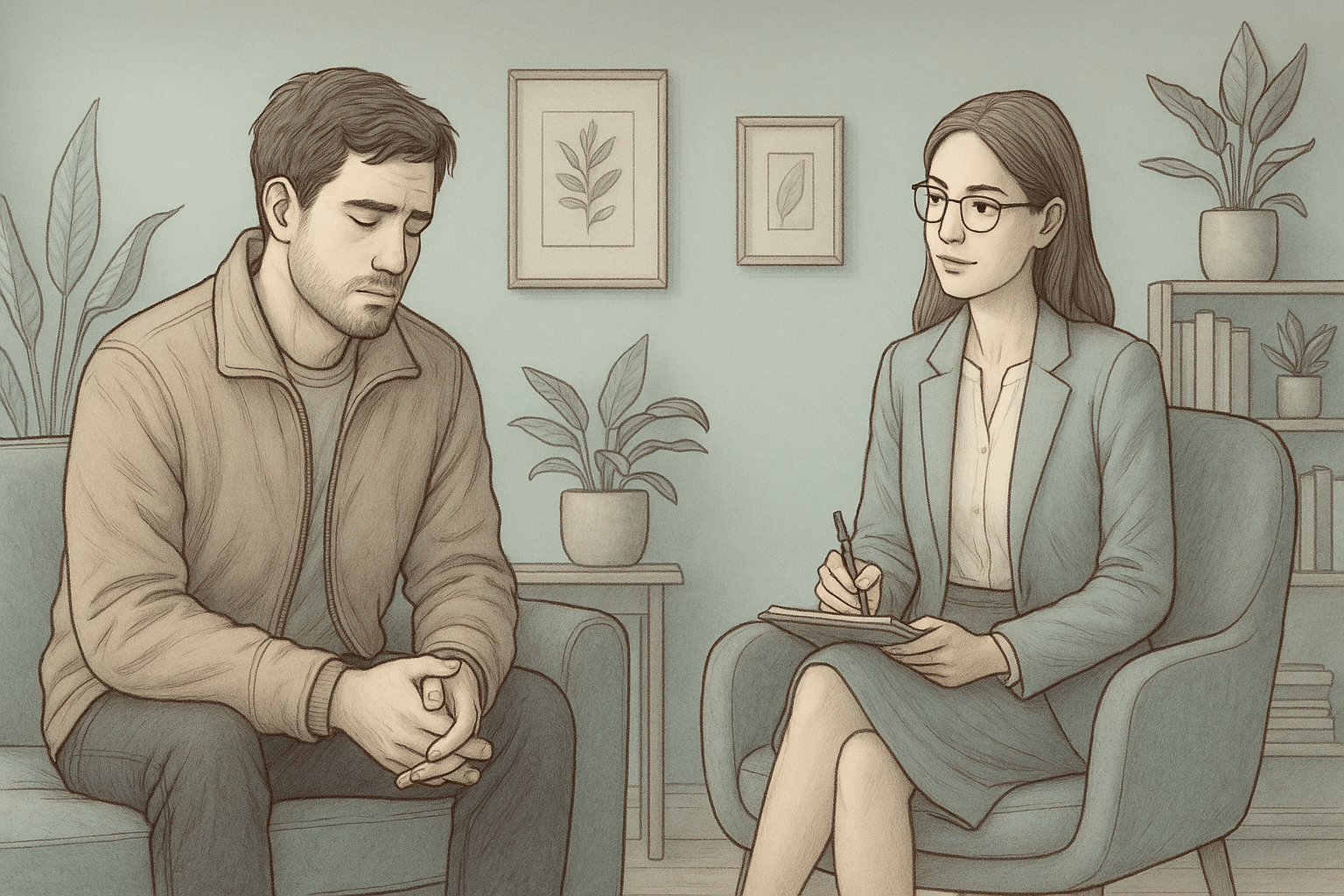
A cognitive behavioral therapist helps you identify these automatic thought patterns and recognize them as thoughts rather than facts. This critical distinction creates space between experiencing a sensation and catastrophizing about it.
Breaking the Panic Cycle
CBT works by disrupting the self-perpetuating cycle of panic at multiple points. When you experience a trigger (like a racing heart), CBT helps you avoid the cascade of catastrophic thoughts that normally follow.
By challenging these thoughts and providing alternative explanations for physical sensations, it helps reduce the fear response. Additionally, by teaching you to tolerate physical discomfort without fear, CBT helps desensitize you to the very sensations that previously triggered panic.
Essential CBT Techniques
1. Cognitive Restructuring
Cognitive restructuring is the process of identifying, challenging, and changing the unhelpful thought patterns that fuel panic.
The process involves several steps: first, identifying the automatic thoughts that arise during or before panic; second, examining the evidence for and against these thoughts; and finally, developing more realistic interpretations.
For example, if you think “I’m going to faint” during panic, you might examine: Have I ever actually fainted during panic? What’s more likely happening in my body? What would be a more balanced thought? Through repetition, these new thought patterns become more automatic, reducing panic’s cognitive fuel.
2. Breathing Exercises
Many people unknowingly hyperventilate during panic, which can cause lightheadedness, tingling sensations, and chest tightness, all symptoms that can be misinterpreted as dangerous and escalate panic.
CBT teaches controlled breathing techniques that help regulate oxygen and carbon dioxide levels, directly addressing these physical symptoms. The most effective technique is diaphragmatic breathing, where you breathe slowly and deeply into your abdomen rather than shallowly into your chest.

3. Progressive Muscle Relaxation
Progressive muscle relaxation (PMR) addresses the physical tension that accompanies panic attacks. This technique involves systematically tensing and then releasing different muscle groups throughout your body, helping you recognize the difference between tension and relaxation.
During panic, many people don’t realize how tense their muscles have become, which contributes to physical discomfort and feeds the cycle of anxiety. Go through a full-body PMR sequence, starting with the feet and working up to the face and head. Each muscle group is tensed for about 5–7 seconds, then released while focusing on the sensation of relaxation.
With regular practice, you’ll become more sensitive to early signs of tension in your body and can apply relaxation techniques before panic escalates.
4. Grounding Methods
Grounding techniques help bring your attention back to the present moment when panic makes you feel detached or overwhelmed.
The most effective method is the 5-4-3-2-1 technique, which engages all five senses: identify 5 things you can see, 4 things you can touch, 3 things you can hear, 2 things you can smell, and 1 thing you can taste.
This exercise interrupts catastrophic thinking by redirecting your focus to concrete, neutral observations about your environment.
5. Gradual Exposure
Avoidance reinforces panic by preventing you from learning that feared situations or sensations are actually safe. Exposure therapy involves gradually and systematically facing feared situations or bodily sensations in a controlled way.
For example, if you avoid exercise because it causes heart racing similar to panic, we might develop a program where you gradually increase physical activity while practicing your CBT skills.
Interoceptive exposure specifically targets fear of internal bodily sensations. This might involve deliberately creating sensations similar to panic (like spinning in a chair to induce dizziness or hyperventilating to create lightheadedness) in a safe environment with your therapist.
By repeatedly experiencing these sensations without avoidance, you learn they’re uncomfortable but not dangerous, reducing their power to trigger panic.
Practical CBT Worksheets
Thought Record Charts
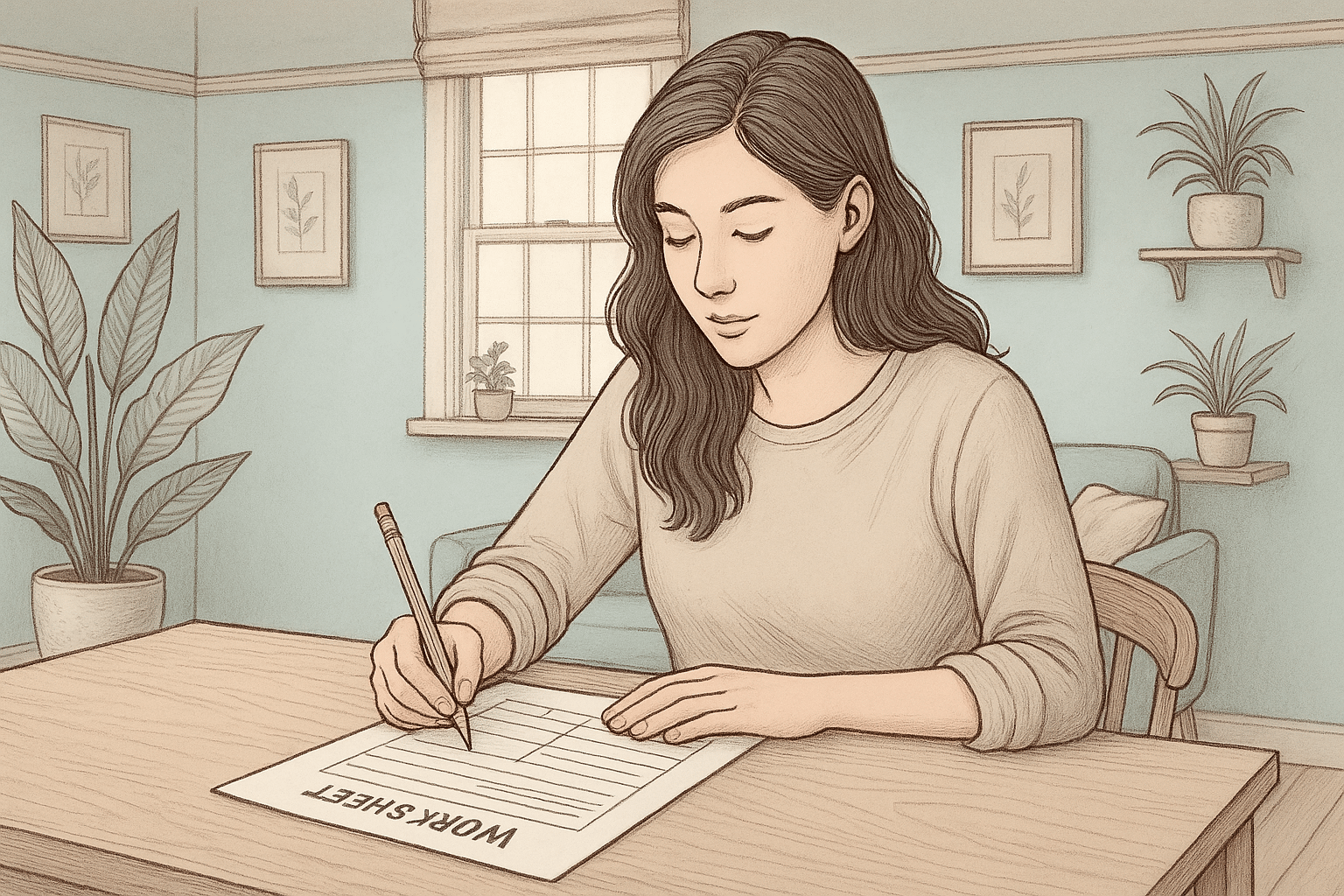
Thought record charts are important tools in cognitive restructuring. These worksheets help you identify and challenge panic-inducing thoughts in a systematic way.
The typical format includes columns for the situation, your automatic thoughts, the emotions and physical sensations experienced, evidence supporting and contradicting the thought, and a space to develop alternative, more balanced perspectives. By documenting these thought patterns, you’ll begin to recognize recurring themes and develop more effective responses.
Panic Attack Diary
Tracking your panic attacks provides crucial information about triggers, patterns, and progress. A panic diary worksheet includes spaces to record the date, time, severity (0–10), duration, situation, physical symptoms, thoughts, behaviors (what you did), and outcome.
This detailed documentation helps identify less obvious triggers and provides concrete evidence of improvement over time. Many individuals find it empowering to see attacks becoming less frequent or intense as they implement their CBT skills.
Fear Hierarchy Template
For exposure therapy to be effective, it must be structured and gradual. A fear hierarchy worksheet helps you create a personalized ladder of feared situations or sensations, ranked from least to most anxiety-provoking.
Each step includes a SUDS rating (Subjective Units of Distress Scale, 0–100) to measure anxiety intensity. Working with your therapist, you’ll progress through this hierarchy at a pace that challenges you without overwhelming your coping skills.
Each successful exposure builds confidence and provides evidence that contradicts catastrophic beliefs, gradually diminishing panic’s power.
When to Seek Professional Help
While many CBT techniques can be practiced independently, working with a qualified mental health professional offers significant advantages: personalized guidance, accountability, troubleshooting when techniques aren’t working, and helping you identify thought patterns you might not recognize yourself.
Professional help is particularly important if panic attacks are severely impacting your life, occurring frequently, or if you’ve developed significant avoidance behaviors that restrict your activities.
Remember, seeking help is a sign of strength, not weakness; early intervention typically leads to better outcomes.
Start Your Recovery Journey with Mission Connection
At Mission Connection, our specialized therapists understand that every individual’s experience with panic is unique. That’s why we provide personalized CBT treatment plans that address your specific triggers, symptoms, and goals.
Our comprehensive approach combines proven techniques with compassionate support, ensuring you receive both the clinical expertise and emotional understanding necessary for lasting recovery.
Our outpatient mental health services offer flexible scheduling options, including telehealth sessions, making it easier than ever to access the help you need.

If you’re experiencing your first panic attack or have been struggling with panic disorder for years, our team is equipped with the knowledge and tools to guide you toward freedom from fear.
Don’t let panic attacks control another day of your life. Contact Mission Connection today to learn how our evidence-based CBT programs can help you reclaim your confidence and peace of mind.
Frequently Asked Questions (FAQ)
How quickly can CBT reduce panic attacks?
Most people begin noticing some improvement within 3–4 weeks of consistent CBT practice, though this varies based on panic severity and individual factors. Initially, you might notice that attacks become less intense or shorter in duration before they decrease in frequency.
Complete treatment typically requires 12–16 sessions, though many continue practicing techniques independently afterward. Be patient with the process, significant improvement is possible, but rarely happens overnight.
Can I practice CBT techniques without a therapist?
Yes, many CBT techniques can be learned and practiced independently using books, apps, or online resources. Self-directed CBT can be effective, particularly for milder cases of panic.
However, working with a therapist offers several advantages: personalized guidance, accountability, troubleshooting when techniques aren’t working, and expert help identifying thought patterns you might not recognize yourself.
Many clients find that combining professional therapy with self-help materials provides the most comprehensive approach.
Will CBT techniques work during severe panic attacks?
CBT techniques can be effective even during severe panic attacks, though they may be more challenging to implement in the moment.
This is why regular practice during calmer periods is crucial; it builds the neural pathways that make these skills more accessible during intense anxiety.
Can CBT permanently eliminate panic attacks?
While CBT can dramatically reduce both the frequency and intensity of panic attacks, complete and permanent elimination isn’t a realistic goal for most people.
Even after successful treatment, most individuals experience occasional panic symptoms during periods of high stress or significant life changes.
However, these episodes typically become less severe, shorter in duration, and far less disruptive to daily life.
How do I know which CBT technique is best for me?
The most effective technique varies from person to person based on your specific panic triggers, symptoms, and learning style.
Some people respond best to cognitive strategies that address thinking patterns, while others find greater relief from somatic techniques like controlled breathing. At Mission Connection, we provide personalized CBT treatment plans that address your specific triggers, symptoms, and goals.