
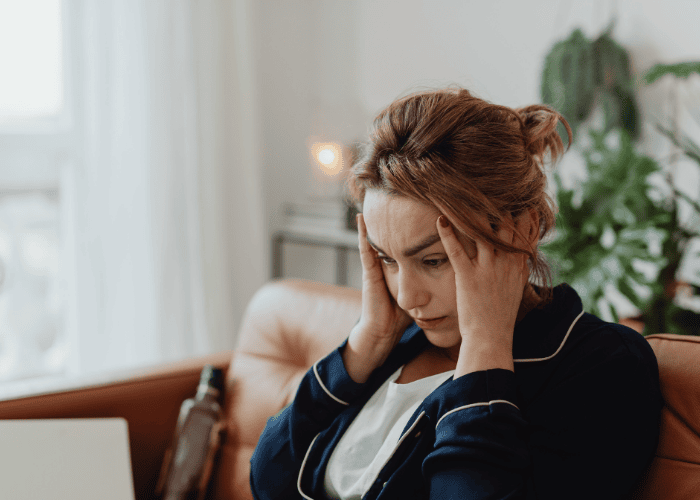
The fight-or-flight response is a normal biological tool meant to keep you safe from harm. This may be beneficial in some situations if you are in danger. However, it becomes a concern when it is constantly activated.[1]
Most people feel tense after a difficult day or find themselves unable to relax when they have a lot on their minds. The problem is when your body stays on alert even after the stressful thing has passed.
When this defence system remains activated for long periods, it creates a chronic stress response that can make anxiety symptoms progressively worse.[1]To understand why this happens, and how you can start to resolve anxiety, this article will explore:
- How the fight-or-flight response works.
- Why anxiety keeps it switched on.
- What happens when the nervous system can’t calm itself.
- How trauma and anxiety are linked.
- Practical coping strategies and treatment options for anxiety symptoms.
Anxiety and the Stress Response
Everyone has the fight-or-flight system in their body. It is activated when physical or psychological danger is present, and it is a natural stress response.[1]
To understand why anxiety changes the fight-or-flight response, it helps to first understand how the system normally works in people without chronic anxiety symptoms:[1][2]
- The part of the brain that recognizes danger (the amygdala) detects a “threat” (real or imagined) in the environment.
- This sends a warning signal to another part of the brain, the hypothalamus.
- The hypothalamus activates the sympathetic nervous system, which then sends emergency signals around the body.
- These emergency signals cause the hormone adrenaline to increase, which leads to physical shifts in the body. These include muscle tension, increased heart rate, and hypervigilance. All of these changes prepare your body to ensure safety.
- Once the threat has passed, the parasympathetic nervous system activates. This is often referred to as the “rest-and-digest” response, as it counteracts fight-or-flight. This system returns your body to a resting state.
- However, if you experience anxiety, your parasympathetic nervous system isn’t always as effective at doing this. Your body’s natural calming response doesn’t work the way it should, and this may result in increased anxiety.[3]
This anxiety can also cause physical symptoms, which put additional stress on the body. It can affect your breathing and sometimes cause hyperventilation (breathing faster and deeper than your body requires). As a result, you may become dizzy, feel your chest tighten and tingle, and even feel like you can’t breathe.[4] These physical symptoms can then feel very frightening, adding more fear to a system that’s already activated.
If you are experiencing these physical anxiety symptoms, it may be due to the fight-or-flight response as opposed to a medical emergency. However, if these symptoms feel constant, this could be a sign of something more complex.
Anxiety and Nervous System Dysregulation
Nervous system dysregulation is when your body struggles to keep its natural balance between fight-or-flight and rest-and-digest. If your body just won’t relax, it may be a sign that you have become used to living in a constant cycle of anxiety.[5][1]
When your natural calming system (the parasympathetic nervous system) is less effective, the physiological arousal from fight-or-flight lasts longer, causing you to feel constantly “on edge.”[3][1] Physiological arousal is your body’s state of readiness for action.
If your body can’t rely on its own stress relief process, this can create a cycle:[6][3][1]
- A worrying thought, memory, or experience activates the stress response.
- This brings on physical anxiety symptoms such as dizziness, sweating, and shortness of breath.
- Your brain interprets these symptoms as proof that there is danger around.
- This increases fear, which then activates the fight-or-flight response once again. This makes it even harder for your body to relax.
With an anxiety disorder, this cycle runs even when nothing bad is happening. Symptoms occur even when there is no actual threat present.[6] You may try to push the panic down, knowing there is no real danger. But suppressing anxious thoughts keeps attention on them, which can heighten distress and prolong symptoms.[5]
It may be that the link between anxiety and the stress response goes back to something traumatic. This can be difficult to come to terms with, and you may wonder whether you will always feel this way.
Feeling Stuck After Trauma
If you have experienced something traumatic and feel like you’re struggling to move forward, that’s a common response to an overwhelmed nervous system.
Trauma and anxiety can often feed into one another. If you are living with post-traumatic stress disorder (PTSD), your natural alert systems are likely extremely sensitive. This is known as hypervigilance, and it means your nervous system is constantly activated as if there is a threat around every corner.[6]
Hypervigilance is a common but unhelpful response to trauma. Without realizing it, you may:
- Become quickly unsettled by loud noises or unexpected movements.
- Repetitively scan your environment for danger.
- Have difficulties with sleep.
- Avoid situations that feel unsafe.
- Become irritable or feel overwhelmed.
These behaviors can make it incredibly difficult to relax, socialize meaningfully, and engage with everyday life.[6]
Deactivating the Stress Response
Anxiety cannot be forced away, and the nervous system cannot simply be turned off. However, coping strategies can bring you back to the present and tell your brain that you’re safe in this moment. This gives the body’s calming systems the chance to take over.[7] There are several different coping strategies that can be effective.
Journaling
Writing your stressful thoughts down can help organize them.[8] It’s an easy way to practice mindfulness, which can reduce anxiety symptoms.[9]
Breathing Techniques
Controlling your breathing has been linked to the reduction of anxiety symptoms, as it lowers your heart rate and brings your attention to the present.[10] Breathing is one of the few parts of the stress response you can control directly. Slowing it down sends a signal to your nervous system that you are safe.
One example is the physiological sigh. First, breathe in through your nose to fill your lungs. Next, take another quick, small breath through your nose. Then, slowly breathe out through your mouth to empty your lungs. Repeat as many times as necessary.[11]
Physical Movement
By engaging in physical exercise, you can manage any strong emotions that come up. Do whatever form of exercise feels right for you to reduce those feelings of distress. It can also help you with nervous system dysregulation and bring you back to a state of calm.[12]
Treatment for a Chronic Fight-or-Flight Response
When coping strategies are not enough, there is a wide range of therapies that can be effective for chronic and severe anxiety.
Cognitive Behavioral Therapy (CBT)
Cognitive behavioral therapy (CBT) is a popular talk therapy that encourages you to identify and challenge unhelpful thinking patterns. By working with the therapist, you can figure out how to change your thoughts, as they can affect both your feelings and your behavior, resulting in anxiety symptoms. CBT has been shown to effectively treat anxiety disorders.[13]
Exposure Therapy
Exposure therapy slowly reintroduces you to your fears in a safe and supportive environment. Through slow exposure to the situations and objects that can cause anxiety, you can work to manage and overcome this distress over time. Exposure therapy is an evidence-based treatment for symptoms of anxiety.[14]
Narrative Therapy
Narrative therapy separates you from your trauma to aid your recovery. By looking at your trauma as a separate event from yourself, the aim is to become comfortable reflecting on and shifting your mindset toward it. This can result in you feeling empowered and in improved psychological well-being.[15]
Eye Movement Desensitization and Reprocessing (EMDR)
In Eye Movement Desensitization and Reprocessing (EMDR), you work through painful events and memories in a safe space by using eye movements. It helps process distressing memories that continue to trigger anxiety in the present. EMDR has been found to improve mental well-being if you experience anxiety.[16]
Mental Wellness Designed Around Your Life
Mental Wellness, Wherever You Are
Life keeps you moving, and your care should too. Our virtual program gives you access to a wide range of mental health services from the comfort of your own home, office, or anywhere you feel most at ease. It's the same high-quality care, just with more convenience. Available from anywhere in California, Virginia, and Washington!
Virtual ProgramMental Wellness, With a Human Connection
Sometimes, you just want to talk to someone face-to-face. Our in-person program provides a calm, supportive environment where you can connect with our team and focus on your well-being without distractions. Experience personalized care and build a strong relationship with your provider in a space designed for healing.
In-Person ProgramMental Wellness, The Best of Both Worlds
Can't decide between virtual and in-person? You don't have to. Our hybrid program offers the best of both. Mix and match virtual and in-person sessions to create a schedule that's truly yours.
It's the ultimate flexibility, so you can get the care you need, no matter what your week looks like.
Hybrid ProgramFind Supportive Anxiety Treatment at Mission Connection
If you or someone you care about is struggling with constant anxiety, help is available. At Mission Connection, we offer personalized outpatient treatment tailored to your unique needs. Our expert clinical team provides medication management in conjunction with a range of other mental health treatment approaches.
In addition to standard outpatient care at our locations in California, Virginia, and Washington, we also offer more intensive levels of care, such as a partial hospitalization program (PHP) or an intensive outpatient program (IOP). We treat a variety of mental health conditions and are in-network with most major insurance providers.
To find out more about our in-person, virtual telehealth, or hybrid program that combines in-person and virtual care, call us at 866-833-1822. You can also get started online.
References
- Chrousos, G. P. (2009). Stress and disorders of the stress system. Nature Reviews Endocrinology, 5(7), 374–381. https://doi.org/10.1038/nrendo.2009.106
- Porges, S. W. (2007). The polyvagal perspective. Biological Psychology, 74(2), 116–143. https://doi.org/10.1016/j.biopsycho.2006.06.009
- Cheng, Y.-C. et al. (2022). Heart rate variability in patients with anxiety disorders: a systematic review and meta-analysis. Psychiatry and Clinical Neurosciences, 76(6), 292–302. https://doi.org/10.1111/pcn.13356
- Meuret, A. E., & Ritz, T. (2010). Hyperventilation in panic disorder and asthma: empirical evidence and clinical strategies. International Journal of Psychophysiology, 78(1), 68–79. https://doi.org/10.1016/j.ijpsycho.2010.05.006
- Campbell-Sills, L. et al. (2006). Effects of suppression and acceptance on emotional responses of individuals with anxiety and mood disorders. Behaviour Research and Therapy, 44(9), 1251–1263. https://doi.org/10.1016/j.brat.2005.10.001
- American Psychiatric Association. (2022). Diagnostic and statistical manual of mental disorders (5th ed., text rev.). American Psychiatric Association Publishing. https://doi.org/10.1176/appi.books.9780890425787
- Hölzel, B. K. et al. (2011). How does mindfulness meditation work? proposing mechanisms of action from a conceptual and neural perspective. Perspectives on Psychological Science, 6(6), 537–559. https://doi.org/10.1177/1745691611419671
- Baikie, K. A., & Wilhelm, K. (2005). Emotional and physical health benefits of expressive writing. Advances in Psychiatric Treatment, 11(5), 338–346. https://doi.org/10.1192/apt.11.5.338
- Dunning, D. L. et al. (2019). Research review: the effects of mindfulness-based interventions on cognition and mental health in children and adolescents—a meta-analysis of randomized controlled trials. Journal of Child Psychology and Psychiatry, 60(3), 244–258. https://doi.org/10.1111/jcpp.12980
- Balban, M. Y. et al. (2023). Brief structured respiration practices enhance mood and reduce physiological arousal. Cell Reports Medicine, 4(1), Article 100895. https://doi.org/10.1016/j.xcrm.2022.100895
- Shared Health. (2023). Wellbeing strategies: grounding and breathing exercises. Manitoba Health Services. https://sharedhealthmb.ca/wp-content/uploads/wellbeing-strategies-grounding-and-breathing-exercises.pdf
- Stubbs, B. et al. (2017). An examination of the anxiolytic effects of exercise for people with anxiety and stress-related disorders: a meta-analysis. Psychiatry Research, 249, 102–108. https://doi.org/10.1016/j.psychres.2016.12.020
- James, A. C. et al. (2015). Cognitive behavioural therapy for anxiety disorders in children and adolescents. Cochrane Database of Systematic Reviews, 2015(2), Article CD004690. https://doi.org/10.1002/14651858.CD004690.pub4
- Ougrin, D. (2011). Efficacy of exposure versus cognitive therapy in anxiety disorders: systematic review and meta-analysis. BMC Psychiatry, 11, Article 200. https://doi.org/10.1186/1471-244X-11-200
- Gonçalves, M. M. et al. (2016). Narrative innovations predict symptom improvement: studying innovative moments in narrative therapy of depression. Psychotherapy Research, 26(4), 425–435. https://doi.org/10.1080/10503307.2015.1035355
- Yunitri, N. et al. (2020). The effectiveness of eye movement desensitization and reprocessing toward anxiety disorder: a meta-analysis of randomized controlled trials. Journal of Psychiatric Research, 123, 102–113. https://doi.org/10.1016/j.jpsychires.2020.01.005