
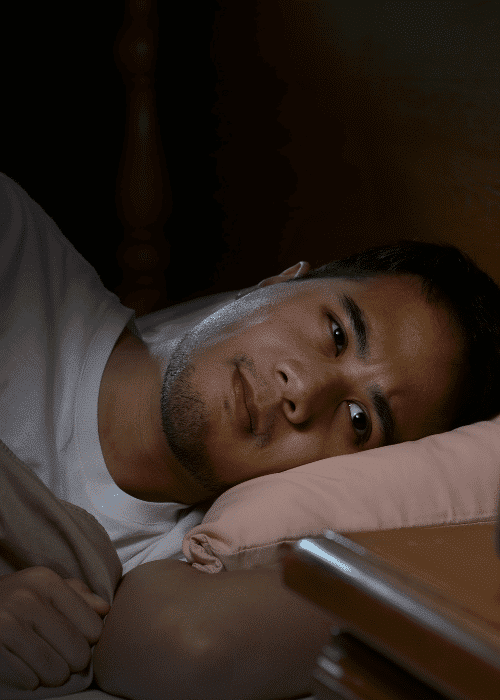
Most of us know what a bad night’s sleep feels like; it goes far beyond being tired. That’s because sleep cycles and mental health are deeply intertwined. But it isn’t just an issue of how sleep affects mood. Poor sleep can make you irritable, foggy, and unable to cope with stress. These effects compound over time, making anxiety, depression, and other mental health disorders more likely to develop.
Understanding this relationship starts with exploring what sleep actually is, because far more goes on than closing your eyes and dreaming. Sleep is a purpose-driven, structured process essential to your well-being, so getting enough quality sleep is one of the best ways to look after your overall health. This guide explores:
- The structure of sleep
- How sleep affects mood
- The link between sleep cycles and mental health
- Why insomnia and mental health disorders often co-occur
- Sleep disorders and mental health treatment
- How to improve sleep for mental health
Sleep Architecture Explained
You may think of sleep as a passive state, but it’s actually a time of highly coordinated brain activity. Throughout the night, your brain cycles through different stages, each with specific functions. You complete 4-6 cycles each night, each lasting about 90 minutes.[1].[2] Each cycle includes two very different types of sleep: NREM (non-rapid eye movement) and REM (rapid eye movement).[3]
The Two Types of Sleep Your Brain Depends On
Each sleep cycle alternates between NREM and REM sleep. Early cycles are primarily NREM, while later cycles shift to more REM sleep.[2]
NREM has three stages:[4]
- N1, the transitional stage moving from wakefulness to sleep
- N2, the largest portion of the sleep cycle, has restorative and sleep-protective functions
- N3, deep slow-wave sleep; it is the most physically and neurologically restorative stage
Deep sleep and brain health are very closely related. The N3 stage is strongly associated with processes that support physical restoration and waste removal in the brain. It clears metabolic byproducts, including proteins linked to Alzheimer’s disease.[4] When your sleep is disrupted, this process is greatly impacted. The N3 stage is when memory consolidation occurs in the hippocampus. It is when your experiences from the day are transferred from short-term storage to long-term storage.[5]
REM sleep performs a different function: processing your emotions. During this stage, your brain activity resembles wakefulness and is characterized by muscle atonia (where you’re paralyzed to prevent acting out dreams).[6] Other functions are occurring as well:[7]
- The day’s experiences are replayed, processed, and integrated.
- Noradrenaline (the primary stress-response chemical in your brain) drops to its lowest levels of the day. This appears to support the processing of emotional memories without fully reactivating your stress response.
Since NREM and REM sleep serve different purposes, they are equally important. Your brain requires both in the appropriate sequence and proportions. If not, you may suffer diminished mental health if any portion of the cycle is disrupted.[7]
Why Sleep Timing Matters, Not Just Sleep Length
Sleep is regulated by a two-process model: sleep pressure and the circadian clock. Think of sleep pressure as the drive to sleep getting stronger the longer you’re awake, much like how hunger increases the longer you don’t eat. The circadian clock is your body’s internal 24-hour timer that’s linked to the Earth’s rotation.[2] Light is the primary signal for this clock: morning light triggers hormonal release to get you going, and when light fades in the evening, it triggers production of melatonin to prepare you for sleep.[8]
These processes must be aligned for sleep to perform the restorative functions described earlier. Moreover, there’s a relationship between the circadian rhythm and depression: If the system isn’t aligned, you could experience fluctuations in your emotional state over the course of the day. Over time, this could contribute to the development of depression symptoms.[3],[8]
Other factors affect sleep timing and length as well:
- Social jetlag (your daily social responsibilities, work, school, etc.) often interferes with your biological need for sleep.[9]
- Your chronotype (your body’s preferred natural sleep timing preference) determines if you’re an early riser or night owl.[1]
Understanding how sleep is built, and why timing matters as much as duration, gives the next question urgency: What happens to your mood when you don’t get good sleep?
How Sleep Affects Mood
Decades of sleep research make clear that sleep loss does far more harm than just making you tired. Poor sleep and brain function are closely linked, impacting your mood, emotional functioning, and increasing anxiety. In fact, negative effects on mood can occur even after just 1-2 hours of sleep loss.10
REM Sleep and Depression
The relationship between sleep and emotional regulation runs deeper. The heart of this process lies in the prefrontal cortex and the amygdala. The prefrontal cortex is responsible for emotional control, rational thought, and impulse control. Without proper sleep, it loses its ability to control the amygdala, which is your brain’s threat-detection center.[7]
The result is that the amygdala becomes hyperreactive to negative stimuli. Your brain’s emotional brake (the prefrontal cortex) fails, negative events feel much more threatening, and your brain registers positive events less frequently.[5]
Furthermore, REM sleep is critical for taking the emotional charge out of difficult memories. This is why you feel better the morning after a quality night’s sleep, even if it’s after a tough day; you wake with a better perspective and a greater ability to manage your emotions. But when your sleep is disrupted, you don’t feel that same relief; the emotional weight of challenging events carries over into the next day.[7]
This is where the REM and depression relationship comes in. Dysregulated REM sleep is a hallmark feature of depression. The brain starts REM sleep too quickly, it’s concentrated earlier in the night, and there is more rapid eye movement. But this pattern isn’t just a symptom of depression; it actively maintains the depressive state when it’s chronically disrupted.[10]
The Circadian Clock and Mood Disorders
REM sleep isn’t the only sleep factor linked to mood disorders. The circadian rhythm and depression are also closely connected. For example, the severity of depression can increase with a greater degree of circadian misalignment: the more your internal clock is out of sync with the external environment, the worse your symptoms can be.[3]
Your chronotype impacts the likelihood of developing a mood disorder, too. Night owls are particularly at risk for higher rates of depression. Not only that, but the late chronotype is associated with more severe depressive episodes, reduced response to antidepressants, and a higher risk of suicidality.[11] However, your chronotype alone doesn’t determine your susceptibility to depression. A key study at Stanford found that people, regardless of their chronotype, experience improved mental health when they go to bed early and wake early, so the timing of when you go to bed is also crucial.[12]
This phenomenon is also present in bipolar disorder. During a manic phase, the circadian clock shifts dramatically earlier (by up to seven hours). During a depressive phase, the clock shifts significantly later (by four to five hours). When mood stabilizes, the circadian clock returns to normal timing.[3]
The involvement of light in this process is a paradox. On one hand, morning light resets your circadian clock and can help reduce misalignment with your internal bearings. On the other hand, light can also exacerbate misalignment. For example, exposure to artificial light from devices at night can delay your circadian clock, suppress melatonin production, and make you more vulnerable to mood changes.[3],[8]
Insomnia and Mental Health Disorders
It used to be assumed that insomnia was a symptom of psychiatric disorders. This is no longer the case. Insomnia is now understood to have its own mechanisms that require it to be treated as a separate disorder.[13]
However, this doesn’t mean that insomnia and mental health disorders aren’t closely linked. Some research found that people with insomnia are five times more likely to develop depression and 20 times as likely to develop panic disorder. When people have insomnia and a mood disorder, insomnia is the preceding condition 41 percent of the time.[13] Insomnia can therefore be both a standalone issue and a leading indication of other mental health disorders.
There’s a cyclical relationship here, too. Poor sleep suppresses emotional regulation. The less capability you have to regulate your emotions, the worse your mood gets. As your mood worsens, sleep is disrupted even more. Breaking that loop requires treating insomnia as its own disorder, not just as a side effect of something else.[5],[7] Therapy for insomnia in adults, particularly CBT-I, addresses this cycle directly by targeting the sleep problem itself.
How Sleep Disruption Affects Anxiety, PTSD, and Bipolar Disorder
The link between sleep deprivation and anxiety is particularly strong. Poor sleep has serious implications for numerous anxiety-related disorders:[5],[13]
- Up to 90 percent of people with generalized anxiety disorder have a significant sleep problem.
- REM disruption in people with PTSD reduces the brain’s ability to determine that a past threat is no longer an issue, which explains why memories can seem so traumatic and vivid.
- Insomnia is one of the most reliable warning signs of an upcoming manic episode.
The Adolescent Sleep Crisis and Mental Health
Additional sleep issues are evident among young people. Many teens are chronically in sleep debt because fixed school schedules, particularly those that require adolescents to get up earlier than they otherwise would, increase their social jetlag.[12]
Additionally, depression in adolescents has risen significantly since 2020, with chronic sleep deprivation one of several contributing factors. Many adolescents are night owls, too, which is associated with greater chances of depression, anxiety, and suicide.[11]
Sleep Disorders and Mental Health Treatment
Sleep issues don’t have to be permanent. Sleep and mood are both treatable, and treating one often improves the other.
Specifically, cognitive-behavioral therapy for insomnia (CBT-I) is effective for reducing depression scores and reducing the risk of relapse as well. Moreover, improvements in sleep from CBT-I predict improvements in mood: As sleep gets better, your mood gets better as well.[3],[13]
CBT-I is a first-line treatment and is often recommended before medication.[13],[14]
Chronotherapy and Light
Chronotherapy and light are also key treatments for sleep disturbances. For example, morning bright light therapy for 30 minutes shows antidepressant effects in people with depression, seasonal affective disorder, and bipolar disorder.[8],[11]
Meanwhile, Interpersonal and Social Rhythm Therapy (IPSRT), a structured treatment that targets your daily routine and sleep-wake timing, helps people with bipolar disorder reduce relapse and improve mood stability.[11]
Medications and Sleep Architecture
Most current medications for mental health disorders affect sleep architecture. Perhaps the best example of this is SSRIs (serotonin-specific reuptake inhibitors). SSRIs decrease REM sleep and increase REM latency as part of their mechanism for treating depression. Early SSRI treatment might worsen your sleep initially before it stabilizes, along with your mood.[5]
Newer medications are available to treat insomnia as well. Some block signals that wake you, helping you lengthen restful sleep. Others help realign your circadian rhythm.[5] A conversation with your medical provider is a great place to start to determine which medications (if any) are most appropriate for your situation.
How to Improve Sleep for Mental Health
Improving your sleep isn’t about perfection; it’s about helping your brain’s natural systems function properly by giving them the sleep they need to do their job effectively. Here’s how to do that.
Building a Sleep-Protective Daily Routine
Making key adjustments to your daily routine can have tremendous effects on how much sleep you get and the quality of that sleep:
- Wake up and go to sleep at consistent times, even on weekends. That consistency helps anchor the circadian clock and build reliable sleep pressure.[2]
- Get 10-30 minutes of natural light after you wake up. Doing so tells your circadian clock that the day has started and helps set the timing of everything that follows, including melatonin release to signal bedtime that night.[8]
- Limit screen time and bright light at least one hour before bed to avoid suppressing the release of melatonin.[15]
- Get regular exercise (but avoid exercising too close to bedtime). Even low-intensity exercise increases NREM sleep, reduces the REM/NREM ratio associated with low mood and stress, and extends REM latency.[16]
- Keep your bedroom cool and dark, and limit external stimuli (e.g., use blackout curtains to block light and a white noise machine to drown out sounds). Doing so helps rebuild your brain’s association between your bedroom and sleep.[17]
Seeking Professional Help With Mission Connection
If you have persistent sleep problems that are affecting your mood or daily functioning, it’s worth taking seriously. Your healthcare provider can assess you for insomnia, circadian rhythm disorders, sleep apnea, and other issues that negatively impact your sleep, and refer you for CBT-I or other interventions as appropriate.
Struggling with sleep, mood, or both can feel isolating, especially if you don’t know where your sleep problems end and mental health difficulties begin. You don’t have to figure it out alone, though. At Mission Connection, we provide compassionate, evidence-based care that treats the whole person, not just your symptoms. When you’re ready to reach out, we’re here.
References
- National Heart, Lung, and Blood Institute (NHLBI) (2022). How sleep affects your health. https://www.nhlbi.nih.gov/health/sleep-deprivation/health-effects
- Epstein, L. & Hassan, S. M. (2020). Why your sleep and wake cycles affect your mood. https://www.health.harvard.edu/blog/why-your-sleep-and-wake-cycles-affect-your-mood-2020051319792
- Meyer, N. et al. (2024). The sleep–circadian interface: a window into mental disorders. https://doi.org/10.1073/pnas.2214756121
- Pase, M. P. et al. (2023). Sleep architecture, obstructive sleep apnea, and cognitive function in adults. https://doi.org/10.1001/jamanetworkopen.2023.25152
- Hyndych, A. et al. (2025). Sleep and psychiatric disorders: bidirectional interactions and shared neurobiological mechanisms. https://doi.org/10.1371/journal.pmen.0000531
- Hasegawa, E. & Lazarus, M. (2024). The rem sleep paradox in depression. https://doi.org/10.1016/j.cub.2024.06.053
- Vandekerckhove, M. & Wang, Y. (2018). Emotion, emotion regulation and sleep: an intimate relationship. https://doi.org/10.3934/Neuroscience.2018.1.1
- Walker, W. H. et al. (2020). Circadian rhythm disruption and mental health. https://doi.org/10.1038/s41398-020-0694-0
- American Psychiatric Association (2023). Making sleep a priority for mental well-being. https://www.psychiatry.org/news-room/apa-blogs/making-sleep-a-priority-for-mental-well-being
- Eidelman, P. et al. (2010). Sleep architecture as correlate and predictor of symptoms and impairment in inter-episode bipolar disorder. https://pmc.ncbi.nlm.nih.gov/articles/PMC2965266/
- Dollish, H. et al. (2024). Circadian rhythms and mood disorders: time to see the light. https://doi.org/10.1016/j.neuron.2023.09.023
- Tompa, R. (2025). How sleep affects mental health (and vice versa): what the science says. https://med.stanford.edu/news/insights/2025/08/sleep-mental-health-connection-what-science-says.html
- Khurshid, K. A. (2018). Comorbid insomnia and psychiatric disorders: an update. https://pmc.ncbi.nlm.nih.gov/articles/PMC5906087/
- Harvard Medical School Division of Sleep Medicine (2021). Sleep and mood. https://sleep.hms.harvard.edu/education-training/public-education/sleep-and-health-education-program/sleep-health-education-87
- Cummings, S. (2018). 5 sleep tips that can help with depression. https://www.nami.org/blog/5-sleep-tips-that-can-help-with-depression/
- Cummings, S. (2018). 5 sleep tips that can help with depression.
- Zapalac, K. et al. (2024). The effects of physical activity on sleep architecture and mood in naturalistic environments.