
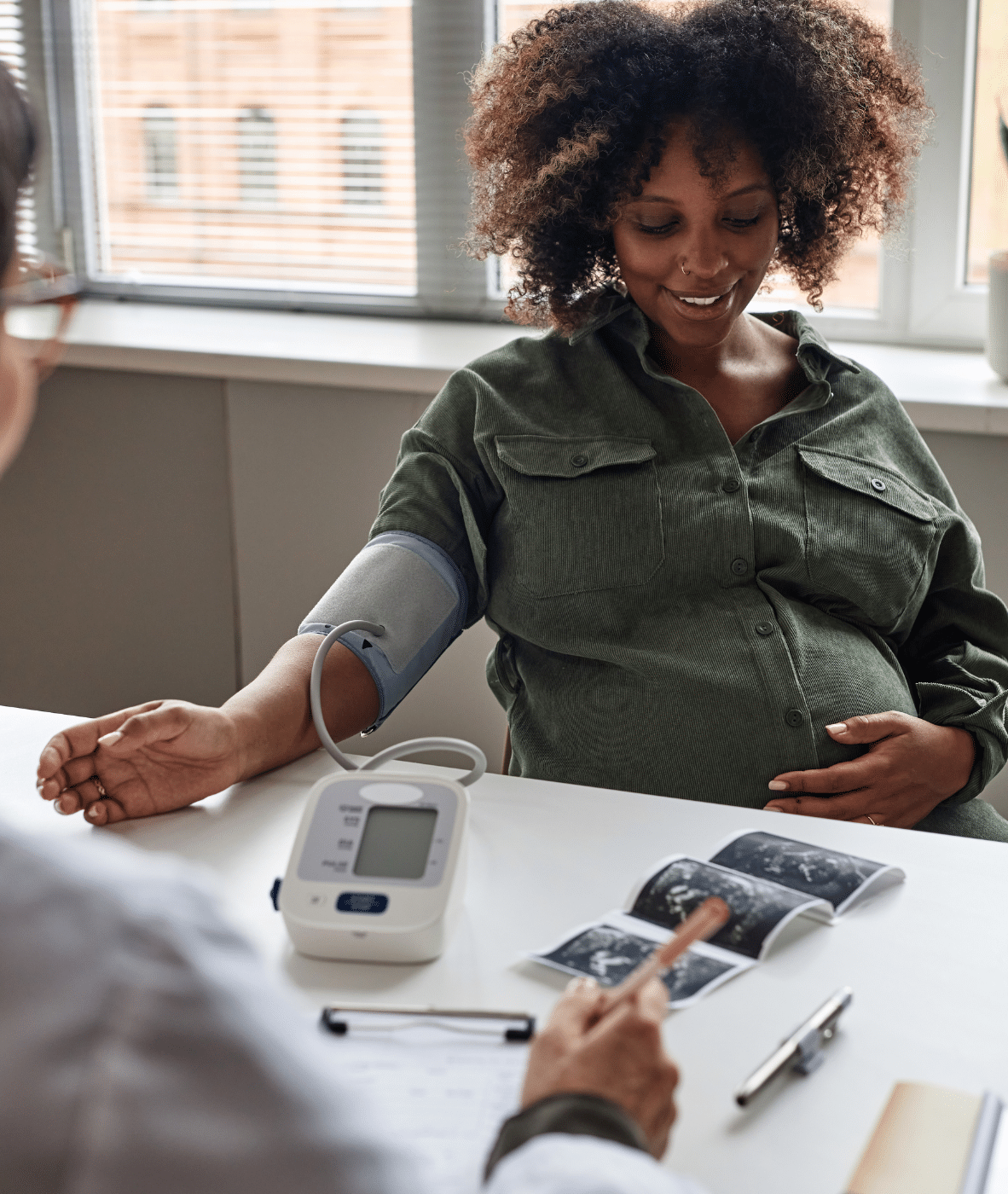
You’ve spent hours researching strollers, baby names, and birthing plans. But what about your mental health? Pregnancy is a time of significant change, both physically and emotionally. Our best advice: If something feels off, trust your instincts. Talking to your OB-GYN about your well-being can be one of the most important steps you take for the health of yourself and your baby.
Whether you feel anxious, low, or just not like your usual self, it’s ok to say something. Your OB-GYN isn’t just there to check your baby’s health – they are there to support your emotional, physical, and psychological well-being, too. Starting the conversation and sharing how you feel may seem scary right now, but talking to your doctor is the first step to feeling more like yourself again.
This page is here to guide you through these conversations, starting with why perinatal mental health matters. We’ll walk you through the signs to watch out for when it comes to mental health struggles and give you tips on how to talk to your OB-GYN about your mental health.
Discussing mental health during pregnancy isn’t anything to feel ashamed about. It’s essential for the health of you and your baby. Keep reading to discover the ins and outs of talking to OB-GYN about mental health.
Why Mental Health Matters During Pregnancy
Mental health conditions are pretty common during pregnancy and after giving birth, with one in five women affected.1 And when you think about it, it makes sense. You’re experiencing huge hormonal shifts that affect your mood as well as creating the right conditions for growing your baby. Physical changes are rife, worries about pregnancy, responsibility, and life changes creep up, your sleep gets disrupted, and let’s not even get started on morning sickness. With so much happening, your moods are bound to be affected.
Pregnancy-related mental health conditions are called ‘perinatal mood and anxiety disorders’, a.k.a ‘PMADs’. Some of the most common to experience pre- and post-pregnancy are:
- Perinatal anxiety
- Perinatal depression
- Postpartum depression
- Perinatal obsessive-compulsive disorder
- Perinatal bipolar mood disorders
Everybody has mental health, and it’s totally normal to struggle with it, especially at this pivotal time in your life. However, you may be wondering why it matters. Sure, it affects how you feel emotionally, but that’s all, right? Well…it’s not quite that simple.
If you have a mental health condition and don’t get treatment, you can be left struggling to manage the symptoms, which can feel tough. But the impact goes beyond this – your child could be affected, too. Research shows that maternal mental health conditions that aren’t treated can lead to an increased risk of pregnancy complications, miscarriage, preterm birth, low birth weight of your child, and brain development issues.[1][2]
We don’t share this information to create fear or anxiety, but more to demonstrate why discussing perinatal mood disorders with doctors involved in your care is so important. Talking to OB-GYN about mental health is an essential step in getting the care and support you deserve.
Recognizing the Signs and When to Seek Help
Mood changes and PMADs are frequently experienced during pregnancy and postpartum. Knowing the signs to look out for can help you get the support and treatment you need, for you and your baby. Some of the most common symptoms of PMADs are:[3]
- Feeling deeply sad
- Feeling very irritable
- Feeling excessively anxious
- Difficulty bonding with your child
- Appetite changes
- Sleep problems
- Having upsetting thoughts
- Thinking you should never have become a parent
- Worries that you may harm yourself or your baby
- Feeling overwhelmingly out of control, rather than in the usual new parent sense
If you can relate to any of these, know that treatment and help is available. If you are feeling extremely anxious, talking to your doctor about anxiety during pregnancy opens up the conversation to mental health treatment and recovery. The key is knowing how to ask for help during pregnancy. We’ve got some tips coming up on how to start that conversation with your doctor about perinatal mental health concerns.
Perinatal Mental Health Communication Tips: Preparing to Speak to Your OB-GYN
Before you start talking to OB-GYN about mental health, you may want to do some preparation. Don’t worry – it’s nothing too strenuous. But if you think you may want or need help supporting your well-being, having some points jotted down can help you with the conversation. Some things you may wish to consider are:
1. Journaling
Write in a notepad, journal, or notes app on your phone your symptoms and how you’ve been feeling. Mood tracker apps are available for free that you could use to keep track of your emotions or symptoms if you prefer. That way, you can enter the conversation prepared with details on how you feel and how long it’s been happening.
2. Questions
You probably have some questions about mental health and pregnancy, right? Each time one pops into your mind, jot it down somewhere so that you remember. It’s easy to forget things, especially with ‘baby brain’, and writing them down means you’ll have them to hand for the conversation. And who better to discuss pregnancy with than your OB-GYN?
3. Talking Points
You may want to write down a few prompts for yourself to take to your appointment. It can make the conversation easier, and you don’t have to worry about forgetting something important you wanted to say. For example, you may write down ‘symptoms’, ‘treatment medication’, ‘side effects’, and ‘time’ to remind yourself to talk through your symptoms, ask about medication and side effects, and how long until treatment kicks in and you start feeling better.
4. Bring Support
If you feel nervous about bringing up the subject, would you feel better bringing someone with you? Perhaps you’d like your partner or a close friend or family member to come and support you. It’s pretty common to bring someone to these appointments, though you may want to check with the clinic beforehand just to be sure.
A little preparation can go a long way and help steel your nerves for addressing mental health concerns with OB-GYN.
Talking to Your OB-GYN About Mental Health
Still wondering how to approach mental health discussions with your doctor or OB-GYN? We’ve got some practical tips and ideas for you in this section. Keep reading to find out how to start the conversation and what to say.
How to Start the Conversation
If you feel nervous about bringing up the conversation, make sure you have your notepad of talking points with you. That way, when they ask “How are you doing?” you can say something like “Actually, I’ve not been doing so well. I’ve got some questions here in my notebook, could we talk about them?”
You can then bring your notepad out and read from there. Your OB-GYN will listen to your concerns, ask you questions, and find the best ways to support you. The appointment is for you as well as your baby, and your mental health affects your child. You’re entitled to ask any healthcare questions you want to and to receive the support you need to allow you to heal.
How to Talk About Your Mental Health
1. Be Honest
Describe your symptoms, when they started, how they affect you, and how often they happen. Don’t downplay your symptoms, just be honest. That way you can be sure to get the help you need. And if you think you may have a condition, it’s ok to come out and say it. For instance:
- “I think I may be experiencing postpartum depression.”
- “I’m struggling with anxiety more than usual.”
- “I’ve been having horrible obsessive thoughts since giving birth, could I have OCD?”
- “My mood swings seem to be extreme. I’ve heard of something called bipolar disorder. Could it be related?”
- “I’m finding it hard to cope with everything, and I’m worried about my mental health. Could you help me find some help?”
2. Be Specific
Rather than saying “I feel tired a lot,” try to say a bit more. For example, “I feel exhausted all day even though I’m sleeping well at night”. Or, instead of “I feel worried about things,” try to be more detailed about the worries.
For instance, “I have the horrible thought pop into my head many times a day that something awful will happen to my child when I’m not there.” Being detailed will help your healthcare provider determine what type of condition you may have, and what treatment would benefit you the most.
3. Use ‘I’
When you are describing your symptoms, remember to use ‘I’. For example:
- “When small things don’t go to plan, I feel very irritated.”
- “I feel like I’m on the edge of tears all day long.”
- “I can swing from pure joy to complete rage within the space of a few minutes.”
- “I’ve been feeling very anxious for the past few weeks for no reason.”
- “I don’t know how to explain it, but something feels off. Could we talk about it? I’m worried I might have a mental health issue.”
4. Refer to Your Notes
You wrote them for a reason. They are great prompts to help you get the most out of your conversation. It’s absolutely fine to refer to them or to say something like “I have a question here about…” to keep the conversation going.
Pregnancy Mental Health Support From an OB-GYN
Talking to OB-GYN about postpartum depression or any mental health concerns can feel strange to start with, especially if you aren’t used to talking about your well-being. However, OB-GYNs are typically trained to handle these conversations with kindness and compassion.
Mental health conditions during pregnancy are fairly regular occurrences, so it won’t be the first time they’ve heard someone express their concerns. You probably won’t even be the first person that day to tell them you aren’t feeling that great. They are there to support you and your baby with no judgment.
The good news is that OB-GYNs are in a great position to help you. They can make referrals to services, provide initial assessments, screen for mental health conditions, and hook you up with valuable resources. Talking to OB-GYN about mental health can lead to pregnancy mental health consultations, diagnosis, and effective treatments. They may also share details of local support groups, or be able to refer you for therapy.
If you want to find out more about any of these, check out our free resources below:
- Screening Tools for Mental Health Assessments
- Best Therapy Options for Perinatal Mental Health
- Using Antidepressants During Pregnancy and Beyond
- Finding Support Groups for Perinatal Mental Health
Remember: Bringing a baby into the world and becoming a new mom is a life-changing experience. It can be a rough rollercoaster ride of emotional ups and downs, which is why support is available: To help you enjoy the ride as much as possible. And if you’re not quite there yet, that’s ok. Lean on the professionals around you for support whenever possible.
Finding Professional Support
Remember that mental health challenges are common during pregnancy and after birth. You are not alone, and you don’t have to face it by yourself. Talking to your OB-GYN is an important first step, but your support doesn’t have to end there.
Here at Mission Connection, we offer compassionate and confidential treatment for perinatal mental health. Whether you’re feeling overwhelmed, low, or anxious, we’re here to listen and support you. With services including therapy, medication management, and 24/7 care, you will have a tailor-made treatment plan that fits your schedule and needs.
We’re also very aware that when you’re about to bring a baby into the world, or have recently become a new parent, you may be hard up on cash. That’s why we offer a range of ways to pay. From insurance payments to sliding-scale fees, we can support you, no matter your financial situation.
Reach out today to learn more about our services or to book a free, no-pressure consultation with one of our experts.
References
- Wu, Y., De Asis-Cruz, J., & Limperopoulos, C. (2024). Brain structural and functional outcomes in the offspring of women experiencing psychological distress during pregnancy. Molecular Psychiatry, 29(7), 2223–2240. https://doi.org/10.1038/s41380-024-02449-0
- Schofield, Z., & Kapoor, D. (2019). Pre-existing mental health disorders and pregnancy. Obstetrics Gynaecology & Reproductive Medicine, 29(3), 74–79. https://doi.org/10.1016/j.ogrm.2019.01.005
- Policy Center for Maternal Mental Health. (2025). About maternal mental health disorders. Policy Center for Maternal Mental Health. April 28. https://policycentermmh.org/mmh-disorders/