
Not every veteran feels drawn to traditional therapy. For some, the idea of talking through trauma with a stranger who doesn’t understand their experiences just doesn’t sit right. They may even flinch at the idea of being in a room full of strangers, openly sharing their emotions. Others might have tried medication and still feel like something’s missing. This is where the idea of holistic therapy for veterans care comes in.
Holistic therapy for veterans considers the full person, not just the symptoms. For instance, a recent review found that mind-body tools can ease symptoms of PTSD when practiced regularly.¹ Further evidence even suggests that mindfulness practices can change the structure and function of the brain, which in turn improves overall mental health.² In other words, holistic care can support veterans dealing with PTSD, anxiety, or long-term stress – offering a quiet kind of steadiness that builds over time.
If you’ve been considering your options for veterans’ mental health recovery, a mental health professional can talk you through holistic treatment options. This guide can also help, as it covers the following veterans’ holistic wellness areas of interest:
- The mental health concerns veterans experience
- The benefits of holistic mind-body health treatments
- Types of holistic treatments available to veterans
- Where to find mind-body treatments for veterans
Types of Holistic Treatments Available to Veterans
Holistic approaches to mental health include all aspects of the mind, body, and spirit in treatment instead of focusing on just one. There are several holistic forms of alternative therapies for PTSD, anxiety, and stress in veterans, including the following:
Mindfulness and Meditation for Veterans’ Mental Health
Most people don’t speak of veterans and mindfulness in the same breath, but research has shown that mindfulness is promising as a non-trauma-focused approach to treating PTSD. ⁷
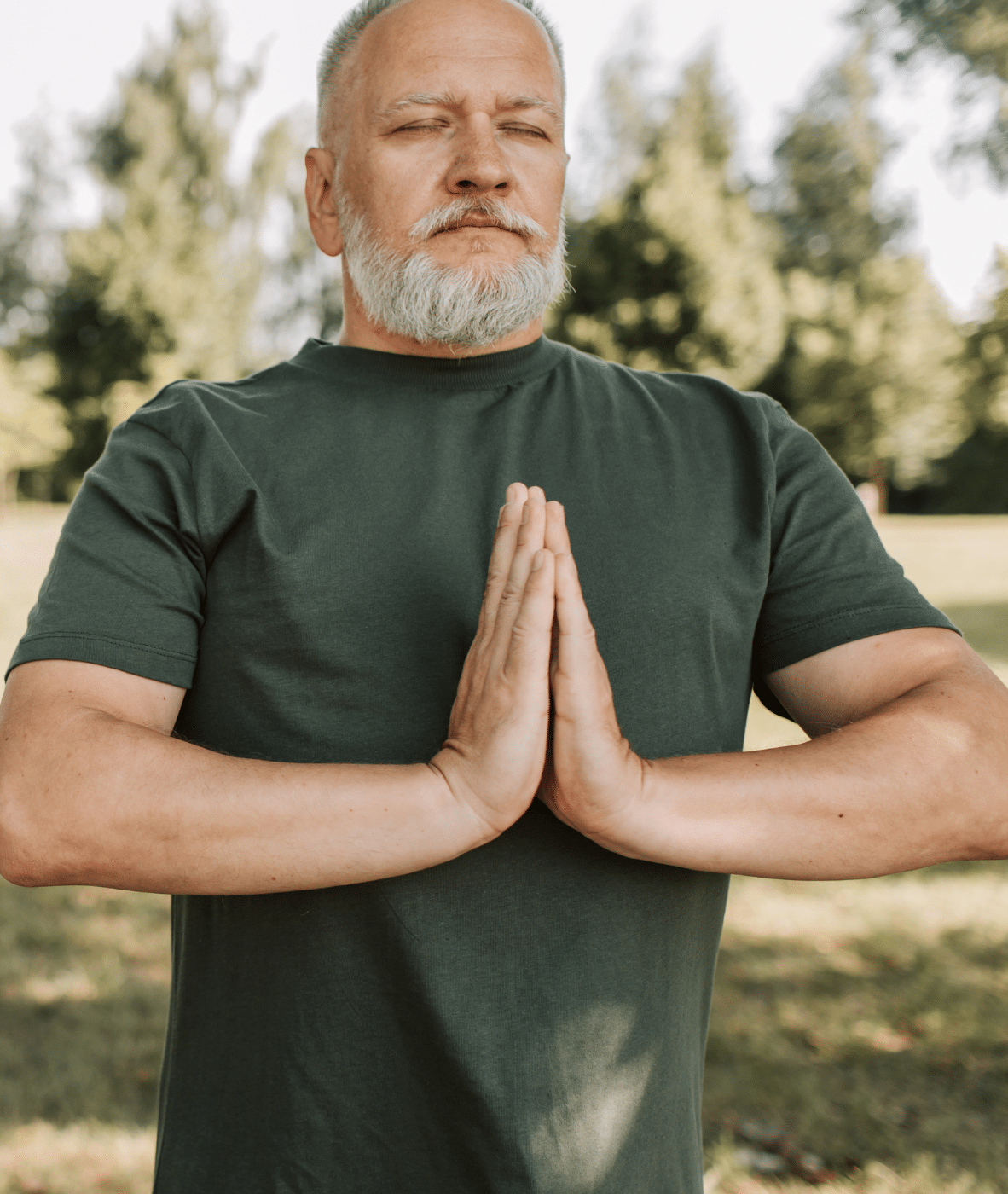
Mindfulness and meditation for veterans’ mental health give the mind something steady to hold onto. For many veterans, this steadiness becomes a doorway out of spirals and autopilot, and back into the body. Veterans mental health and meditation is not about achieving perfection or silence. It’s simply about presence.
For instance, sitting with a slow breath and noticing a tense jaw or a racing thought without needing to run from it are small practices that help retrain the nervous system. Plus, mindfulness is especially helpful when used alongside trauma-informed therapy, allowing awareness to become less effort and more instinctive.
The benefits of meditation for veterans often include better sleep, reduced anxiety, and a greater sense of control over intrusive thoughts.⁸ Regular mindfulness practice can also improve focus and emotional regulation, especially for those recovering from trauma.
Movement-Based Therapies and Yoga for Veterans
Yoga is one of the more popular alternative therapies for PTSD, and for good reason. Some veterans find that their body no longer feels the same after service. Aches and pains may linger, and muscles may stay tense. This is because the nervous system can remain on edge long after a threat is gone. However, movement-based therapies like yoga can help to ease the body into a therapeutic rhythm.
Movement-based therapy isn’t fast-paced like in the gym. These recovery programs are designed for slow, intentional movements that feel safe for trauma survivors. Over time, yoga can ease chronic tension, improve response inhibition, reduce depression, benefit sleep, and promote life satisfaction. ⁹ It supports emotional regulation by calming the body’s stress response at its root. Additionally, movement-based therapies can be paired with evidence-based therapies like CBT (cognitive behavioral therapy) and EMDR (eye movement desensitization and reprocessing).
Healing through yoga for veterans can also involve reconnecting with physical boundaries, improving breath control, and regaining a sense of strength and autonomy. It becomes more than a physical routine; it’s a way to reclaim the body as a place of safety. Some veterans also find that the consistent rhythm of breath and movement in yoga can serve as a gentle anchor during the ups and downs of recovery. In this way, yoga helps release stored emotion and tension that talk therapy alone might not reach.
Stress Relief for Veterans Through Breathwork
Breathing is something we do without thinking. That is, until issues like anxiety, flashbacks, and even small daily stressors throw the breath off rhythm. When in a state of stress or panic, breath can become shallow, tight, or fast. Yet learning to work with the breath can instill a quiet kind of power for anyone living with trauma or panic.
Breathwork is about noticing your breathing and slowing it down. This allows the nervous system to follow. Simple techniques, practiced regularly, can soften a hair-trigger stress response and help the body feel anchored.
Holistic therapy for veterans with breathwork is one of the most accessible forms of stress relief for veterans, requiring no equipment or special setting – just a few minutes and intention.¹⁰ Some trauma-informed programs now include breathwork as a core part of PTSD treatment with holistic approaches, helping veterans regain a sense of control when the nervous system feels hijacked. This way, breath becomes a tool, not just a reflex. Over time, this steady practice can help shift patterns of chronic tension and improve emotional resilience.
Tai Chi and Qigong
Tai Chi and Qigong use slow, steady motion to bring the body and mind back into sync. For veterans carrying the effects of hypervigilance, sleep disruption, or physical imbalance, this kind of rhythm can be deeply settling. There’s no rush or competition with Tai Chi or Qigong, but rather a quiet return to balance. Additionally, some studies suggest these practices may ease symptoms of PTSD and improve sleep.¹¹
As part of PTSD treatment with holistic approaches, Tai Chi and Qigong offer a body-centered way to process trauma and rebuild internal stability – without revisiting every detail of the past.
Art and Music Therapy
Some experiences live beyond language, and veterans often carry stories that don’t fit neatly into words. Art and music therapy are not about being a skilled painter or a trained musician. They’re about finding another way to express what’s hard to say out loud.
For instance, veterans can use art and music to find a rhythm that matches what the body feels or a color that reflects a memory. For some, making music loosens what’s stuck. For others, drawing brings a moment of calm. Either way, it’s a door that talk therapy sometimes can’t open alone. In this way, creative therapies offer a safe, often surprising path to healing.
Nutrition
Nutrition forms an important part of the various holistic treatment options for PTSD, anxiety, depression, and similar conditions. Food is the fuel that shapes our thoughts, feelings, and even how we handle stress. For this reason, nutrition can quietly influence how veterans’ minds feel and function.
Some nutrition programs take a deeper look at how diet and daily habits affect sleep, energy, and emotional resilience. The idea isn’t to develop an uncomfortable eating plan but to learn more about what helps your system feel steady. A calm gut can lead to a calm mind. And a regular routine of healthy eating can lead to a good night’s rest and better emotional regulation.