
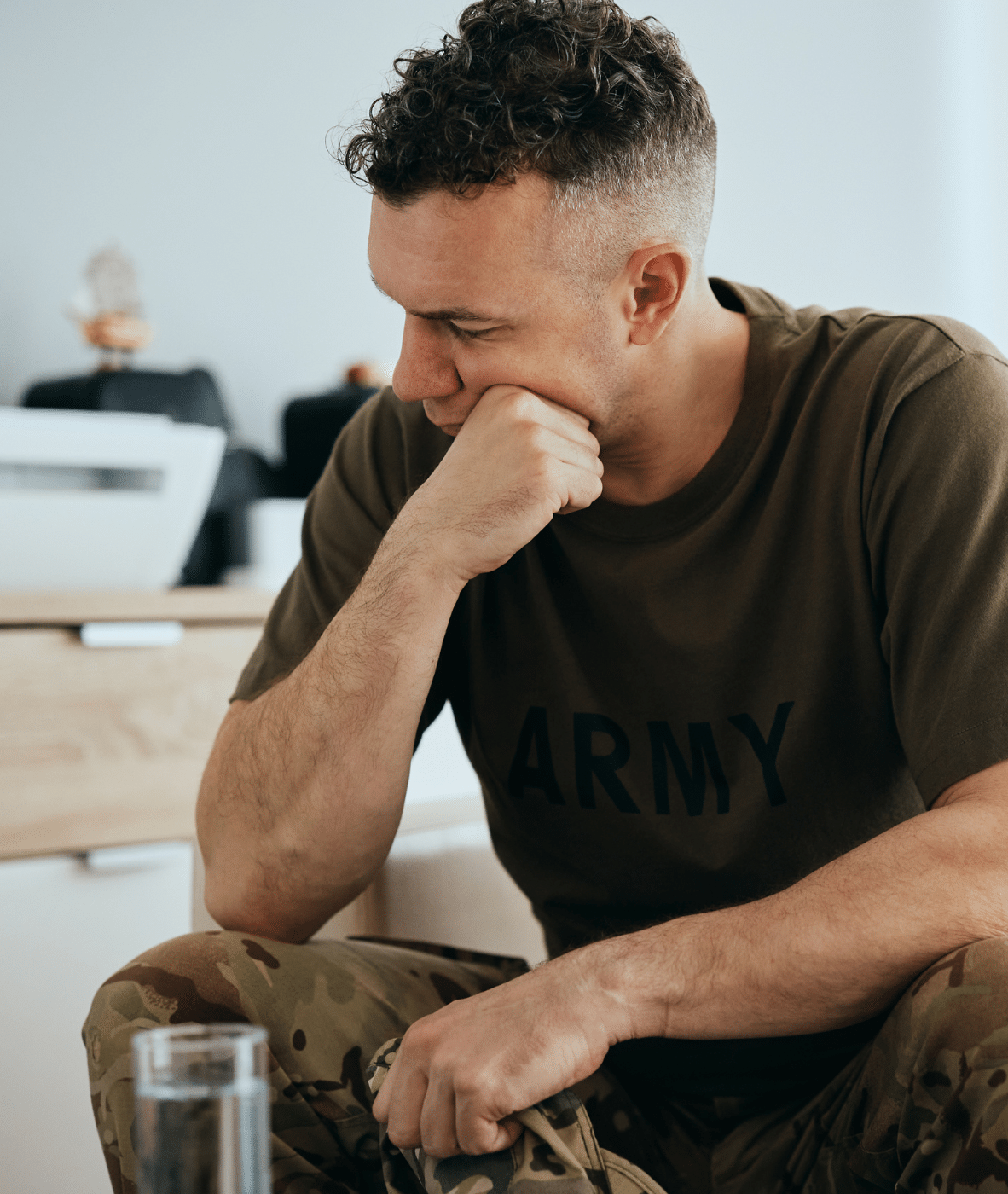
The results from the 2019-2020 National Health and Resilience in Veterans Study show that roughly one-third of veterans with mental health needs don’t receive the treatment when returning home from service.¹ And the reason why may make a lot of sense for many.
For some veterans, the thought of driving to a clinic, sitting in a waiting room, and sharing private details about their lives just doesn’t fit in with their idea of “help.” If this sounds like you, you’re not out of options just because traditional therapy formats aren’t suitable for your needs. On the flipside, you may be a good candidate for investigating mental health treatment online for veterans or signing up for telehealth mental health services instead.
For veterans who live in rural areas, manage chronic issues, or feel uneasy in clinical settings, mental health treatment online can be the difference between getting care and going without. For instance, veterans can get treatment for post-traumatic stress disorder (PTSD), depression, insomnia, anxiety, and more through telehealth therapy.
Research shows that many veterans wait until they reach crisis point before seeking help.² At Mission Connection, we want to change this. Online therapy for veterans removes some of the biggest barriers to receiving care, like travel, time, and stigma, while still offering real support from trained providers who understand military life.
This guide walks through the following aspects of telemedicine for veterans’ mental health:
- What telehealth for veterans is
- What telehealth therapy options are available to veterans
- The pros and cons of telehealth for veterans
- How to get started with telehealth therapy
- How Mission Connection can help veterans get the therapy they need
What Are the Telehealth Therapy Options?
Telehealth for veterans is a form of mental health care that’s not held at a clinic or in an office, but rather via secure video or phone sessions. Veterans can meet with a therapist from home, a quiet space at work, or anywhere that feels private enough for a meaningful conversation.
Telehealth for veterans is similar to traditional in-person sessions. It’s commonly used to unpack trauma, sort through anxious thoughts, build new coping habits, and simply get help adjusting to life outside of service. There’s no one-size-fits-all treatment for veterans, but there are several telehealth therapy options that may be helpful to veterans in need.
These telehealth mental health services options for veterans include:
Individual Therapy
Individual telehealth therapy involves one-to-one sessions held between a therapist and veteran. Most individual sessions involve the likes of cognitive behavioral therapy (CBT), cognitive processing therapy (CPT), or acceptance and commitment therapy (ACT). Each of these is an evidence-based approach, meaning they’re proven to work for relieving mental health issues. ³
Group Therapy
Many veterans feel misunderstood after returning home.⁴ Attending group therapy means veterans don’t have to navigate challenges on their own. The process tends to feel less isolating when you’re sharing space with someone who has a true understanding of your past.
Yet, no one is expected to share their stories and feelings immediately. Often, simply listening is enough at first. With time, many veterans notice a shift. They feel less emotional weight, fewer PTSD symptoms, and a growing sense of connection to others and themselves.⁵
Couple’s and Family Therapy
Military life doesn’t hit pause on relationships, but it can add weight. Deployments, distance, and trauma can quietly reshape how families connect. Some couples drift apart, kids may act out, or perhaps everyone feels like they need to walk on eggshells. For instance, one study shows that when a parent is deployed, children can experience increased behavioral and emotional difficulties.⁶ This can lead to problems further down the line when the parent returns.
Telehealth for veterans provides the tools to navigate these challenges. Virtual therapy for veterans doesn’t fix things immediately, but it starts a conversation. Sessions might focus on building trust, improving communication, or learning how to stay connected through change. And because it’s virtual, partners or family members can join from wherever they are.
Peer Support
Evidence shows that combining peer support with eHealth intervention leads to notable improvements in combat veteran PTSD symptoms.⁷ Telehealth peer support or eHealth is a form of therapy that connects veterans with others who’ve walked a similar path.
These virtual groups are led by trained peers who are fellow veterans offering insight, accountability, and shared understanding. It’s a less clinical approach, offering a conversational way for veterans to feel safe when opening up.
Veterans can use telehealth for PTSD recovery and often benefit from hearing the challenges and progress of their peers. Other benefits of peer support therapy include social support, a sense of purpose and meaning, and normalization of symptoms. ⁸
Medication Management
Check-ins, medication adjustments (for anxiety, insomnia, and depression meds), and discussing side effects are all things that can be done over the phone or online. Telehealth makes it possible for veterans to stay on track with their care by providing convenience and quick access to advice.
What Are the Telehealth Pros and Cons?
By considering the various telehealth pros and cons, you can decide whether telehealth for veterans or traditional in-person therapy is right for you. The following information discusses the possible positives and drawbacks of telehealth for veterans.
Benefits of Telehealth for Veterans:
- No travel required to get to sessions
- Veterans can stay with the same therapist or group, even if they relocate
- Veterans (or peers) from multiple locations can join the same therapy session or group
- Family and spouses from different locations can connect in therapy sessions
- Veterans who would rather avoid stigma or being misunderstood could feel more comfortable in a space of their choosing
Possible Drawbacks of Telehealth for Veterans:
- Some veterans may not have access to a reliable internet connection or device
- Privacy at home may not be possible for some
- Certain therapies, like EMDR, are more difficult to host virtually as lateral eye movements can be difficult to achieve when using a mobile device⁹
- Crisis intervention may prove difficult or impossible
- The therapist can’t always do a full assessment of body language and nuance on a phone or video call¹⁰
Ready to talk? Call us for a free, confidential consultation.
866-833-1822Getting Started with Telehealth Therapy
At Mission Connection, we help veterans choose a treatment path based on their unique symptoms and requirements. If you’ve decided that telehealth mental health services are the right route for you, here’s what you can do to prepare:
1. Choose a Mental Health Provider
Some veterans choose to go through the Department of Veterans Affairs (VA) when getting started with telehealth therapy. This is usually because the VA has existing mental health programs with telehealth options. Others may choose to see a private therapist with a special focus on PTSD, trauma, or military-related transition.
2. Complete Intake Forms
After you’ve chosen a mental healthcare team, you will need to provide your details to the facility and schedule your first virtual therapy for veterans session.
3. Setup for Your Session
Therapists often hold sessions by video, so it’s worth checking which platform they plan to use. Make sure your device is charged, the app is installed if needed, and your internet connection is steady enough to carry a clear call. Some people switch to a phone call if there’s a tech glitch.
4. Preparing for Your Session
Choose a space where you’re guaranteed privacy and comfort for your therapy session. For a video call, you’ll need good lighting and minimal distractions. A comfortable chair in a quiet space should be enough.
Things you may want to bring to your session include:
– A notebook and pen
– A glass of water
Additionally, before your session, it may help to make a note of any questions and topics you’d like to cover with your therapist.
Additional Virtual Mental Health Resources for Veterans
For some veterans, sitting in a waiting room isn’t the easiest way to open up. That’s why telehealth for veterans can make such a difference. At Mission Connection, we offer online therapy that’s designed around the needs of veterans, whether you’re navigating trauma, stress, or the shift back to civilian life.
There are also other virtual mental health resources for veterans worth knowing, such as the VA telehealth services that form part of their veteran programs. For instance, the Veterans Crisis Line (call 988 and press 1), Make the Connection, and your local Vet Center all provide support without pressure. Plus, these resources may be well known to many combat veterans returning to civilian life. Some offer live help, others focus on tools you can use privately, but all of them are built to support veterans in moments that matter.
We're here to help you learn the skills to manage your mental health symptoms. There's no commitment required. Just an honest, confidential conversation about the support you need. Let's take the first step together.
Reach Out to Mission Connection for Telehealth Mental Health Services for Veterans
If you’ve been wondering whether virtual mental health care for veterans could work for you, Mission Connection makes it easy to find out. We offer support that fits around real life – no long drives, no waiting rooms, and no need to explain your background. Just straightforward, compassionate care designed with veterans in mind.
The benefits of telehealth for veterans often go beyond convenience. For many, it’s about having space to talk without pressure. It’s also about privacy, comfort, and the freedom to reach out when it matters most.
At Mission Connection, we’re here to help you explore what telehealth for veterans’ mental health can look like when it’s built around your story, not the other way around. Contact our team today to find out how we can support the future of your well-being.
References
- Kline, A. C., Panza, K. E., Nichter, B., Tsai, J., Harpaz-Rotem, I., Norman, S. B., & Pietrzak, R. H. (2022). Mental health care use among U.S. military veterans: Results from the 2019–2020 National Health and Resilience in Veterans Study. Psychiatric Services (Washington, D.C.), 73(6), 628–635. https://psychiatryonline.org/doi/10.1176/appi.ps.202100112
- Hitch, C., Toner, P., & Armour, C. (2023). Enablers and barriers to military veterans seeking help for mental health and alcohol difficulties: A systematic review of the quantitative evidence. Journal of Health Services Research & Policy, 28(3), 197–211. https://journals.sagepub.com/doi/full/10.1177/13558196221149930
- Watkins, L. E., Sprang, K. R., & Rothbaum, B. O. (2018). Treating PTSD: A review of evidence-based psychotherapy interventions. Frontiers in Behavioral Neuroscience, 12, 258. https://pmc.ncbi.nlm.nih.gov/articles/PMC6224348/#:~:text=Conclusion,and%20values%20and%20clinician%20expertise.
- Markowitz, F. E., Kintzle, S., & Castro, C. A. (2023). Military-to-civilian transition strains and risky behavior among post-9/11 veterans. Military Psychology: The Official Journal of the Division of Military Psychology, American Psychological Association, 35(1), 38–49. https://pmc.ncbi.nlm.nih.gov/articles/PMC10013504/
- Sloan, D. M., Unger, W., Lee, D. J., & Beck, J. G. (2018). A randomized controlled trial of group cognitive behavioral treatment for veterans diagnosed with chronic posttraumatic stress disorder: Group cognitive behavioral treatment for PTSD. Journal of Traumatic Stress, 31(6), 886–898. https://pmc.ncbi.nlm.nih.gov/articles/PMC6295345/
- Creech, S. K., Hadley, W., & Borsari, B. (2014). The impact of military deployment and reintegration on children and parenting: A systematic review. Professional Psychology: Research and Practice, 45(6), 452–464. https://pmc.ncbi.nlm.nih.gov/articles/PMC4383395/
- Possemato, K., Johnson, E. M., Emery, J. B., Wade, M., Acosta, M. C., Marsch, L. A., Rosenblum, A., & Maisto, S. A. (2019). A pilot study comparing peer supported web-based CBT to self-managed web CBT for primary care veterans with PTSD and hazardous alcohol use. Psychiatric Rehabilitation Journal, 42(3), 305–313. https://psycnet.apa.org/doiLanding?doi=10.1037%2Fprj0000334
- Hundt, N. E., Robinson, A., Arney, J., Stanley, M. A., & Cully, J. A. (2015). Veterans’ perspectives on benefits and drawbacks of peer support for posttraumatic stress disorder. Military Medicine, 180(8), 851–856. https://pubmed.ncbi.nlm.nih.gov/26226526/
- Strelchuk, D., Turner, K., Smith, S., Bisson, J., Wiles, N., & Zammit, S. (2023). Provision of online eye movement and desensitisation therapy (EMDR) for people with post-traumatic stress disorder (PTSD): A multi-method service evaluation. European Journal of Psychotraumatology, 14(2), 2281182. https://pmc.ncbi.nlm.nih.gov/articles/PMC10990439/#:~:text=During%20online%20EMDR%2C%20therapists%20were,eye%20movements%20during%20bilateral%20stimulation.
- Ong, T., Wilczewski, H., Soni, H., Ivanova, J., Barrera, J., Cummins, M., Welch, B., & Bunnell, B. (2023). Therapist perspectives on telehealth-based virtual reality exposure therapy. Research Square. https://pmc.ncbi.nlm.nih.gov/articles/PMC10371164/