
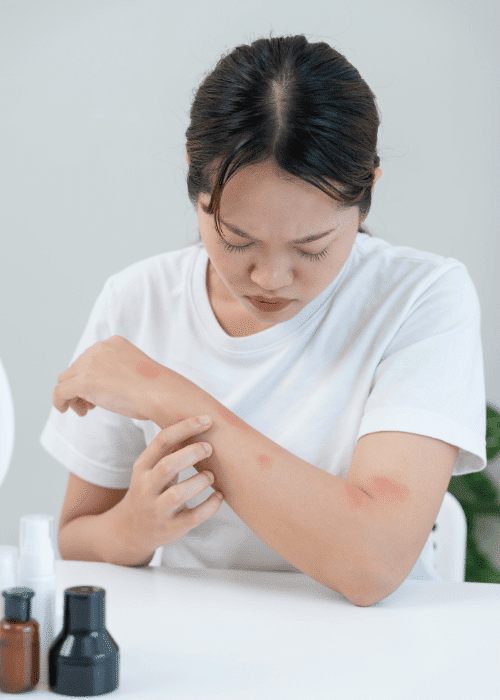
Have you ever sat in front of the TV or at your desk, and noticed yourself picking at your skin? Perhaps your arms, legs, fingers, or even your face? Maybe you notice a spot or bump on your skin and can’t help but pick away at it, even if that means leaving your skin worse off than when you started.
If this sounds familiar, it may be that you’re struggling with skin picking in adults. Skin picking is a mental health condition characterized by compulsive picking of the skin. While it may sound harmless on the surface, skin picking can lead to long-term damage to the skin and can even negatively influence a person’s social or professional life.
So, if you or someone you know is dealing with skin picking disorder, it’s important to know what this condition involves and the support options available. Our guide below will help you get a better understanding of what this condition looks like. We’ll also discuss potential causes and how skin picking recovery can help a person heal.
What Is Skin Picking Disorder in Adults?
Skin picking disorder (SPD), also called dermatillomania or excoriation disorder, is a mental health condition that causes people to injure their skin by compulsively picking at it.[1] The head, arms, and legs tend to be the main points of picking. However, it can involve any area of the body that’s easily reached with your hands.
Skin picking in adults can lead to scarring, sores, skin ulcers, and infection. But often, the harm from SPD extends beyond the physical into the emotional. Many people live with increased anxiety and elevated stress related to their picking. The feelings of guilt, shame, and embarrassment that can come with skin picking often lead to social withdrawal and isolation. In turn, social isolation can aggravate stress, anxiety, and depression.
Dermatillomania often begins before the age of 20. Unlike obsessive-compulsive disorder (OCD), skin picking does not include intrusive thinking. Instead, SPD is primarily driven by irresistible urges to pick and a release of tension afterward.[2]
Types of Picking
There are two main types of picking: Automatic and focused.
Automatic picking involves picking unconsciously, without deciding you’re going to do it. When a person picks automatically, they often ‘scan’ the area of skin to find raised or ‘different’ areas of skin, which they then pick.
Focused picking, on the other hand, involves picking a specific area for a long period, sometimes for hours. Focused picking often causes more severe damage to the skin.
Signs and Symptoms of Skin Picking Disorder
Skin picking disorder is included within the Diagnostic and Statistical Manual of Mental Disorders, 5th Edition (DSM-5). The DSM-5 is a classification system clinicians use to diagnose mental health conditions, and states that skin picking disorder involves:[3]
- Repeated skin picking, resulting in skin damage
- Multiple attempts to stop or reduce skin picking, to no avail
- Skin picking causes distress and impacts a person’s social and professional life
- The skin picking behavior doesn’t link to:
- A medical condition (such as scabies)
- Substance misuse
- Symptoms of another mental health condition, such as psychosis.
This being said, skin picking disorder can look different from person to person. Other signs of SPD to look out for could include, but aren’t limited to:
- Picking with fingernails, tweezers, scissors, teeth, pins, etc.
- Picking at spots, moles, freckles, or anything deemed as an “imperfection”
- Picking in periods of stress or anxiety
- Picking skin in idle moments, such as while watching TV or sitting at a desk
Triggers and Causes of Skin Picking Disorder
It’s not possible to give a definitive answer to the “cause” of skin picking disorder. However, studies show us certain factors that may increase a person’s risk of having skin picking disorder. These include:
1. Genetic Factors
Skin picking disorder often runs in families, suggesting a genetic link. Twin studies show us that genes may account for around 40-50% of a person’s risk of skin picking disorder. Animal studies support this, as certain gene changes in mice cause them to groom excessively, which can lead to bald patches or sores.[4][5]
2. Brain and Nervous System Factors
Research shows that people with skin picking disorder may struggle with impulse control, meaning the ability to stop themselves once an urge starts. Brain imaging studies suggest differences in areas that regulate habits, decision-making, and emotional control. In simple terms, the brain’s “brake system” is less effective, making it harder to resist the urge to pick, especially when you’re anxious or bored.[4]
3. Emotional Triggers for Skin Picking
Many people say that picking helps them cope with difficult emotions like stress, anxiety, anger, or frustration. Some people pick without realizing it (as we spoke about earlier), while others pick to relieve tension or “fix” what they believe are imperfections. The temporary relief picking gives reinforces the habit, creating a cycle that’s difficult to break.[4]
4. Environmental and Sensory Triggers
Skin picking often begins with a small bump, scab, or uneven patch of skin. However, situations that allow idle time, such as watching TV or sitting at a desk, can increase the likelihood of picking. Over time, picking can become habitual.[4]
It’s important to note that most experts agree that skin picking disorder isn’t black and white – it’s likely to develop from a combination of these (and potentially other) factors, rather than a single cause. You may have a biological sensitivity to stress and a genetic predisposition, which may link anxiety and skin picking together.
Treatment Options for Skin Picking Disorder
Just like skin picking disorder differs from person to person, so too does the best course of treatment for the condition. Fortunately, there are multiple options of treatment for repetitive behaviors like skin picking.
Behavioral Therapy for Skin Picking
Therapy for skin picking often includes “talking therapy,” where a person meets with a therapist who can help them identify their triggers for picking. A therapist will also help the person learn to identify the thoughts, feelings, and behavior patterns associated with their picking. A few types of helpful approaches in therapy include:[1][5][6]
- Cognitive-Behavioral Therapy (CBT): A highly structured form of therapy that teaches coping mechanisms to help a person manage their thoughts and behaviors.
- Habit Reversal Training (HRT): Increases a person’s awareness of their behaviors in order to break the habits surrounding skin picking disorder.
- Acceptance and Commitment Therapy: Helps people accept the negative feelings that may be fueling their skin picking.
Medications That Can Help
There’s no “one-pill knockout” for dermatillomania treatment. However, there are some very helpful medications that can reduce anxiety and help manage stress. Antidepressants, anticonvulsants, antipsychotics, and nutraceuticals are also often recommended by experts.[1] A supplement called acetylcysteine (NAC) has also had some positive results, indicating it may help control compulsive skin picking.[3]
It’s important to note that medication works best when combined with therapy, not by itself.
Support From Others
Skin picking disorder can leave a person feeling alone and isolated. That’s why skin picking support groups are important. Talking with others who understand your struggle can help you feel connected and part of a caring community.
Coping Strategies for Skin Picking Disorder in Adults
Recovery from skin picking disorder usually rests on professional dermatillomania treatment. Still, there are also small changes you can make throughout your life that can make a real difference, such as:
- Pay close attention to when, where, and why you are picking.
- Replace the urge to pick with a harmless, competing behavior, such as squeezing a stress ball or stress toy, like a fidget spinner.
- Keep skin clean and moist with petroleum jelly to prevent scabs, which can trigger more picking.
- Keep tools like tweezers out of sight.
- Practice deep breathing to manage stress and anxiety.
- Identify emotional states like stress or anxiety that precede picking and find new ways to manage them.
These practical strategies won’t make picking urges disappear overnight, but they can help.
Mission Connection: Get Support for Skin Picking Disorder
If you or someone you know is struggling with skin picking disorder, Mission Connection offers a range of mental healthcare options to support your needs. We offer weekly outpatient therapy, both in-person and virtually, if you’d like therapeutic support that fits around your schedule. Or, if you need more than traditional, once-a-week therapy, we provide partial hospitalization or inpatient programmes.
We also provide experiential and group therapy to support your healing through the power of connection and community. Our unique therapeutic model is delivered by licensed therapists and clinicians specializing in helping our clients build tools to support lasting healing.
Get in contact today to learn more about how we can support you.
References
- Cleveland Clinic (2022). Dermatillomania (skin picking): symptoms & treatment. Cleveland Clinic. https://my.clevelandclinic.org/health/diseases/22706-dermatillomania-skin-picking
- Fineberg, N. A. et al. (2022). The global assessment of ocd. Comprehensive Psychiatry. https://doi.org/10.1016/j.comppsych.2022.152342
- Substance Abuse and Mental Health Services Administration Table 3.28, excoriation (skin picking) disorder – impact of the dsm-iv to dsm-5 changes on the national survey on drug use and health. NCBI Bookshelf. https://www.ncbi.nlm.nih.gov/books/NBK519704/table/ch3.t28/
- Grant, J. E. et al. (2012). Skin picking disorder. American Journal of Psychiatry, 169(11), 1143–1149. https://doi.org/10.1176/appi.ajp.2012.12040508
- Monzani, B. et al. (2012). Prevalence and heritability of skin picking in an adult community sample: a twin study. American Journal of Medical Genetics Part B: Neuropsychiatric Genetics, 159B(5), 605–610. https://doi.org/10.1002/ajmg.b.32067
- Khan, S., Hughes, S., & Hill, O. (2024). N-acetyl cysteine supplementation to alleviate skin picking disorder: a case report. Cureus, 16(2), e53440. https://doi.org/10.7759/cureus.53440