
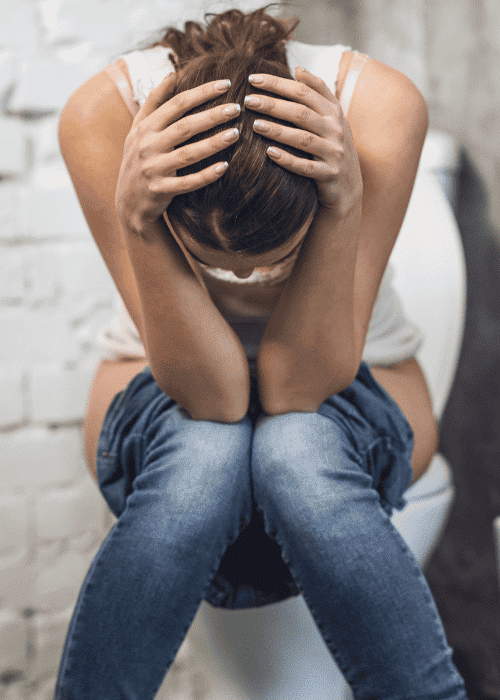
Stress and anxiety almost always cause physical symptoms. For instance, people commonly experience restlessness, excessive sweating, or a fast heart rate when under stress. However, some people experience urinary symptoms, too, as they may have an overactive bladder or incontinence.[1]
These symptoms can be extremely distressing and disrupt normal daily activities. They can also lead to secondary anxiety, causing people to worry about urinating throughout the day and the things they can do to manage their symptoms.
Frequent urination anxiety may be explained by tension in the bladder and pelvic floor muscles, as well as inflammation in the body due to chronic stress. A mental health professional can help you or a loved one get to the root of your symptoms and devise appropriate treatment approaches.
This article can also help you better understand frequent urination anxiety by exploring:
- What stress-related urinary symptoms are
- How stress causes bladder issues
- Tips for coping with anxiety symptoms
- Lifestyle changes that could resolve bladder issues
- How cognitive-behavioral therapy (CBT) can address urinary symptoms
- Where to find professional support
Stress-Related Urinary Symptoms
Urinary symptoms are a common stress-related issue; over 50% of people with overactive bladders are found to have anxiety.[1]
However, when people experience chronic stress, bladder symptoms can vary. For example, while one person’s stress response might cause urinary issues like incontinence, others may feel an increase in frequency.
The following sections explore what an overactive bladder is, the different symptoms people may experience, and when it may be time to seek support.
What Is an Overactive Bladder?
An overactive bladder can manifest in a few different ways. Generally, it’s when adults with high levels of stress report more frequent bathroom trips.[2] However, they may also describe the following sensations:[1]
- Increased urgency to urinate, even when they’ve done so recently
- Having a persistent urge to urinate regardless of how frequently they go
- Feeling as though they haven’t fully emptied their bladder
- Losing bladder control or a sense that they can’t “hold it in”
An overactive bladder is different from incontinence, though it’s easy to confuse the two, and they only sometimes overlap.
Types of Incontinence
While an overactive bladder involves a more frequent or stronger urge to urinate, incontinence is when someone experiences an involuntary leak of urine. While incontinence can be caused by stress, there are many other possible medical explanations.
Some people may confuse the two and worry that they have a serious health problem. It’s crucial that you talk with your doctor and have any necessary tests to distinguish between medical vs anxiety urination issues.[3]
If you are experiencing incontinence, there are a few different types to be aware of. The three main types are:[3]
- Stress incontinence: This category is focused on how physical stress puts pressure on your bladder; it has nothing to do with emotion. You may have stress incontinence if urine leaks out when you cough, laugh, or jump. It’s most likely caused by the damage to or weakening of pelvic floor muscles or the urethral sphincter.
- Urge incontinence: This is otherwise known as an “overactive bladder.” It involves having a strong urge to pee even though your bladder isn’t full. It occurs when your bladder muscle contracts and signals a need to urinate to the brain. There are many possible medical causes for urge incontinence, including bladder stones, neurological diseases, and infections.
- Mixed incontinence: As the name suggests, this type occurs when people experience both stress and urge incontinence symptoms.
Health symptoms such as incontinence can cause a great deal of worry, but there are ways to determine what bladder issues are caused by. Always speak to your primary healthcare provider if you’re worried about an underlying health condition.
When to Worry About Frequent Urination
If frequent urination is impacting your life in a negative way, you should seek the support that you need. It’s not up to anyone else to say that overactive bladder stress isn’t worth worrying about. If anxiety and bathroom urgency are on your mind a lot, or influencing your daily activities, you should seek out support for these issues.
Consulting a primary care physician can help rule out any physical issues. Plus, a doctor can also refer you to a mental health professional if the causes are related to stress or anxiety.
How Can Stress Cause Urination Issues?
When people first encounter urination issues, they may jump to the conclusion that they have a physical health problem. However, many may be surprised to learn that stress can cause difficulties with urination.
Experts have some evidence that explains why chronic psychological stress can cause symptoms like urinary frequency, incontinence, urgency, and pelvic pain, but this link is not entirely confirmed. Yet it’s known that symptoms could be caused by stress-induced inflammation, whereby certain chemicals are released into the bloodstream and cause bladder dysfunction and pain.[4]
The idea is that while some people carry stress in their neck, shoulder, or back muscles, other people carry it elsewhere in the body. For some, it’s their pelvic floor muscles that become weakened due to stress. So these people are more likely to experience incontinence or an overactive bladder than others.[2]
You may be experiencing chronic stress if, alongside urination issues, you are also experiencing some of the following physical symptoms of stress:
- Agitation or fidgeting
- Teeth grinding
- Faintness
- Frequent minor illnesses
- Tingling sensations
- Headaches
- Chronic fatigue
- Loss of appetite
- Muscle tension
- Nausea
If you’re not sure about the cause of your symptoms, you can take a self-test to learn more.
Support for Stress-Related Urinary Urgency or Frequency
Fortunately, there are many forms of support for anxiety and health worries. Ranging from personal strategies to cope with anxiety, lifestyle changes, and psychotherapy, there are a few ways you can begin to resolve your symptoms. The following sections explore different forms of support.
Coping With Anxiety Symptoms
The following strategies can be helpful for taking back control of the anxiety you may be experiencing:1
- Notice when you catastrophize: Anxiety typically leads us to come to the worst conclusions. For example, we may assume our bladder issues are the result of a serious illness and spiral into further distress. Looking at other evidence (such as noticing you’ve drunk a lot of fluids that day or are under a great deal of stress) can provide alternative explanations.
- Practice mindfulness: An overactive bladder may cause us to hyperfocus on physical sensations or catastrophizing thoughts. Mindfulness, meditation, and deep breathing can provide positive distractions, as they can reduce our fixation on our bladders and slow down anxious thoughts.
- Identifying your unique responses: If you notice that, when anxious or stressed, you tend to have an overactive bladder, this awareness can help you cope. For instance, you may be able to expect it to flare up during times of stress and, therefore, fixate on it less. Being knowledgeable about our triggers and bodily responses can increase our sense of control.
Practical Bladder Control Support
Stress-induced bladder issues may be relieved by certain practical lifestyle changes. For example:[5]
- Reducing how much caffeine and alcohol you consume
- Drinking less liquid in the hours before bedtime to reduce nighttime trips to the toilet
- Increasing physical exercise
- Losing weight if you’re overweight
- Eating more fibre to decrease constipation
- Stopping smoking (smoking can result in chronic coughing that puts pressure on your bladder, but it’s also bad for your general health and stress levels overall)
- Training your bladder to hold more urine by urinating on a schedule and gradually lengthening the time between bathroom visits
- Strengthening your pelvic floor muscles with Kegel exercises (both men and women can benefit from these)
There’s also evidence to suggest that certain foods can aggravate your bladder, while others could help stop frequent urges to urinate. This is because traces of the foods and drinks we consume can end up in our bladders, irritating them and causing things like spasms, leaks, and urgency.6
People will have different sensitivities to certain foods, but there are some common items that tend to aggravate overactive bladders. These include:[6]
- Alcohol
- Sports drinks
- Tea and coffee
- Tomatoes
- Citrus juice and fruits
- Milk and milk products
- Spicy food
- Soy sauce
- Vinegar
- Vitamins buffered with aspartame
Plus, those with overactive bladders may benefit from incorporating more fibre-rich foods, whole grains, nuts, and fruits such as bananas, apples, coconut, and watermelon.[6]
Cognitive-Behavioral Therapies for Overactive Bladders
If you want to seek mental health therapy specifically for your physical symptoms of stress, cognitive-behavioral therapy (CBT) is often an appropriate route. CBT examines both thoughts and behaviors, provides education for specific psychological processes, and challenges people to think and behave differently.
CBT differs from other forms of therapy in that it doesn’t dwell much on past experiences. So if you have had certain traumatic experiences that may underpin your present-day stress or anxiety, it could suit you better to pursue a psychodynamic or humanistic therapy.
CBT specifically for people with overactive bladders may involve some of the following methods to reduce anxiety and physical symptoms:[7]
- Providing education about the bladder, how stress impacts the bladder, and how CBT works
- Identifying lifestyle factors that worsen someone’s physical and emotional symptoms, and how they can be modified
- Documenting someone’s typical “vicious cycle” experience in which situations, thoughts, feelings, physical sensations, and behaviors interconnect and influence each other
- Scoring different situations according to how much anxiety they provoke (for instance, 0-100%)
- Inviting people to engage with anxiety-provoking situations gradually. For example, challenging them to not pee for two hours at home and building up to not urinating for three hours outside of the home
Mission Connection: Get Support for Stress-Related Symptoms Today
Physical symptoms of anxiety, like bladder issues, can take a significant toll on your daily life. However, they can be managed, and the right forms of treatment can provide relief.
At Mission Connection, we prioritize providing personalized and flexible mental health care to fit your unique needs and lifestyle. If you feel it’s time to find a therapist for your anxiety or other symptoms, feel free to browse our facilities or read about the mental health conditions we treat.
Contact our team today to learn more about what we offer and how we can help.
References
- Lane, P. (2025). Overactive mind, overactive bladder. Psychology Today. https://www.psychologytoday.com/gb/blog/am-i-dying/202508/overactive-mind-overactive-bladder
- Jenkins, S. (2022, December 21). The surprising effects of stress on your bladder. National Association for Continence. https://nafc.org/bhealth-blog/the-surprising-effects-of-stress-on-your-bladder/
- Harvard Health Publishing. (2014, December 28). Types of urinary incontinence. https://www.health.harvard.edu/bladder-and-bowel/types-of-urinary-incontinence
- Lane, P. (2025). Overactive mind, overactive bladder. ”LUTS: Psychology Today. https://www.psychologytoday.com/gb/blog/am-i-dying/202508/overactive-mind-overactive-bladder
- NIDDK. (2021, July). Treatments for bladder control problems (urinary incontinence). https://www.niddk.nih.gov/health-information/urologic-diseases/bladder-control-problems/treatment
- Jenkins, S. (2022, May 9). The overactive bladder diet. National Association for Continence. https://nafc.org/bhealth-blog/the-overactive-bladder-diet/
- Funada, S. et al. (2020). Cognitive behavioral therapy for overactive bladder in women: study protocol for a randomized controlled trial. BMC Urology, 20(1). https://doi.org/10.1186/s12894-020-00697-0