
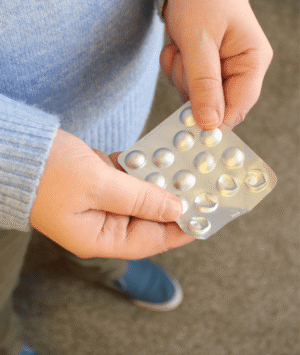
Second-generation atypical antipsychotics (AAPs) have been the mainstream choice for treating psychosis since the 1990s. They’re distinct from first-generation typical antipsychotics (FGAs) that were created in the 1950s. Though AAPs come with fewer adverse side effects, there are several considerations and risks it’s important to be aware of.[1]
If you’ve been prescribed an AAP, it’s natural to have some questions about how it will impact your life. Despite the positive outcomes of (perhaps, finally) being treated for a mental health condition, starting a new medication can be scary.
This page will clarify:
- Some common questions people have about AAPs.
- How AAPs work.
- How they differ from FGAs.
- Side effects to be aware of.
- How to withdraw from AAPs safely.
- Using AAPs long-term.
What Are Second-Generation Antipsychotics Used For?
On the whole, second-generation antipsychotics are used to treat patients with:[1]
- Schizophrenia.
- Depression.
- Mania.
- Agitation.
There are some off-label uses, too, which we’ll explore later.
The list below outlines each type of second-generation atypical antipsychotic and their FDA-approved uses:[1]
- Aripiprazole: Schizophrenia, bipolar 1 disorder, treatment-resistant major depressive disorder, irritability associated with autism, and Tourettes.
- Asenapine: Schizophrenia and bipolar 1 disorder.
- Cariprazine: Schizophrenia, bipolar 1 disorder, and major depressive disorder
- Clozapine: Schizoaffective disorder, treatment-resistant schizophrenia, and suicidal behavior in schizophrenia.
- Iloperidone: Schizophrenia.
- Lumateperone: Schizophrenia and bipolar 1 disorder.
- Lurasidone: Schizophrenia and bipolar 1 disorder.
- Olanzapine: Schizophrenia, bipolar 1 disorder, and managing acute agitation in both.
- Paliperidone: Schizophrenia and schizoaffective disorder.
- Pimavanserin: Psychosis associated with Parkinson’s disease.
- Quetiapine: Schizophrenia, bipolar 1 disorder, and major depressive disorder.
- Risperidone: Schizophrenia, bipolar 1 disorder, and irritability and aggression associated with autism.
- Ziprasidone: Schizophrenia, bipolar 1 disorder, and managing agitation in schizophrenia.
Which Antipsychotic Is Best for You?
Each of these AAPs works slightly differently and causes different side effects. Your prescription will depend on your condition, unique symptoms, and doctor’s discretion.
Atypical antipsychotics for depression like aripiprazole, cariprazine, and quetiapine are likely to be prescribed if you haven’t responded well to traditional antidepressants like selective serotonin reuptake inhibitors (SSRIs). If you suffer from depression as well as insomnia, you may be prescribed an AAP due to their sedative effects.
Similarly, prescribing atypical antipsychotics for anxiety will likely only happen if you’ve already tried SSRIs and not found them effective. The best AAPs for anxiety appear to be quetiapine, olanzapine, risperidone, and aripiprazole, with 50% of people tolerating the side effects. With adverse effects being a great burden for half of the people taking them, AAPs are not ideal for long-term anxiety management and should be part of a larger treatment plan.[2]
Evidently, second-generation atypical antipsychotics are primarily used for treating schizophrenia. Since the different types target psychosis, agitation, insomnia, and depression in different degrees, the ‘best’ AAP for your schizophrenia will depend on the way your condition impacts you.
In a similar vein, the best atypical antipsychotic for bipolar disorder will be the one that you tolerate most easily. Side effects and contraindications (health reasons that make a medication unsuitable for you) will likely slim down your options. Plus, some AAPs need to be taken with food or at a particular time of day; these lifestyle factors may make some AAPs more preferable than others.
Off-Label Uses for Second-Generation Antipsychotics
Off-label uses for second-generation antipsychotics include but are not limited to:[3]
- Dementia.
- Depression.
- Anxiety.
- Insomnia.
- Drug abuse.
- Personality disorders.
- Obsessive-compulsive disorder (OCD).
- Post-traumatic stress disorder (PTSD).
- Eating disorders.
Even though these uses aren’t FDA-approved, that doesn’t mean they’re unsafe. Your doctor should take research, their own experience, and your individual needs into account when prescribing off-label.
How Do Second-Generation Antipsychotics Work?
On the whole, second-generation antipsychotics work by targeting chemical messengers like dopamine and serotonin, which influence mood, thoughts, and behavior. But they also interact with other brain systems that control things like:[1]
- Energy.
- Appetite.
- Sleep.
- Muscle movement.
You’ll know your antipsychotic medication is working when you experience an alleviation of your symptoms, e.g., less disorganized thoughts, reduced hallucinations and delusions, and a more stable mood.
Second-Generation Antipsychotic Side Effects
Though they vary between different antipsychotics, some common side effects include:[1]
- Sedation.
- Weight gain.
- High blood sugar.
- Increase or decrease in blood pressure.
- Diabetes.
- Sexual and menstrual dysfunction.
- Cataracts.
- Myocarditis.
- Extrapyramidal effects.
- Urinary retention.
- Tachycardia.
- Hyperthermia.
- Delirium.
To learn about the specific side effects associated with your AAP prescription, you might like to check out our other articles on:
We’ll explore some commonly talked about side effects here.
Second-Generation Antipsychotics and Sedation
Not all AAPs cause the same amount of sedation, though this is a common side effect. The sedation you’ll experience will depend on how much your particular prescription interacts with histamine receptors in your brain, which are involved in sleep regulation.
Studies suggest the least sedative antipsychotics could be risperidone, with clozapine causing the greatest sedation, and quetiapine causing moderate sedation.[4]
It could be that your sleep quality improves from taking an AAP, but your doctor will be able to adapt your prescription if it’s negatively impacting you.
Atypical Antipsychotics and Weight Gain
Weight gain is an understandable concern. AAPs carry this risk because they increase your appetite. Even though it varies across antipsychotics, significant weight gain is observed in trials, particularly in the first few weeks of treatment, and can negatively impact your quality of life.[5]
In addition, weight gain comes with subsequent risks to your health. The main way the risk of weight gain can be reduced during antipsychotic treatment is through monitoring you throughout and providing support for diet and exercise.
In addition, your doctor may change your dose and type of antipsychotic, or prescribe a formulation of olanzapine with samidorphan, a combination that will alleviate the risk of weight gain without reducing the antipsychotic efficacy.[1]
Risk of Diabetes With Antipsychotics
Alongside weight gain, antipsychotics can also impact the way your body metabolizes glucose, increasing your risk of developing diabetes.[[5 This risk is higher with AAPs like clozapine, olanzapine, and risperidone, and lower with AAPs like lurasidone and aripiprazole.[6]
If you’re worried about developing diabetes or feel that you are at higher risk of this, speak to your doctor. They should be able to support you in managing this risk or adapting your prescription.
Severe and Rare Side Effects
A severe side effect of antipsychotic medication is the development of movement disorders, occurring in around 5% of patients.[7] Some of these can be resolved by reducing or discontinuing medication immediately, but others can be permanent. Extrapyramidal symptoms can emerge as Parkinsonism or dystonia, where people experience tremors, rigidity, and sudden muscle contractions.
A potentially irreversible effect is tardive dyskinesia (TD), which shows up as involuntary movements of the face and limbs. It can be prevented with cautious prescription, regular screenings, and changing medications.[8]
It’s important to also be aware of the risk of developing neuroleptic malignant syndrome (NMS), a rare but life-threatening reaction to antipsychotics where you experience fever, rigidity, and changes in mental state e.g., confusion or delirium. More than 90% of people can fully recover from NMS, but this is with early detection.[9]
Quetiapine could be the safest second-generation antipsychotic when it comes to the prevalence of movement disorders.[7] However, there is a much greater risk of these kinds of side effects with first-generation antipsychotics.
Speak to your doctor about any concerns you have, they will be able to reassure you and monitor your health throughout your treatment to ensure your body is responding optimally.
Second-Generation vs First-Generation Antipsychotics
While second-generation AAPs are serotonin-dopamine antagonists, first-generation antipsychotics only antagonize dopamine receptors.2 The blocking of serotonin receptors by AAPs lessens the impact on movement, which is why AAPs carry less risk of extrapyramidal side effects compared to FGAs.[1]
FGAs are more effective at treating ‘positive’ symptoms, e.g., hallucinations and delusions. Meanwhile, AAPs work well to reduce ‘negative’ symptoms like withdrawal and ambivalence.[10] On the whole, AAPs outperform FGAs, with lower discontinuation rates and less risky side effect profiles.[11]
Aside from significant extrapyramidal side effects, there are other side effects associated with FGAs:[10]
- Dry mouth
- Constipation
- Urinary retention
- Sedation
- Increased susceptibility to seizures
- Abnormal heart rhythm
- Sudden cardiac death
- Low blood pressure when standing up or sitting down
- Sexual and menstrual dysfunction
- Allergic dermatitis and photosensitivity
- Skin and eye discoloration
- Neuroleptic malignant syndrome (NMS)
While both AAPs and FGAs can be effective, your own health, condition, circumstances, and preferences will dictate what works best for you.
Stopping Atypical Antipsychotics
You have a right to withdraw from antipsychotics if you choose to. However, it’s always advised that you do so with help from your prescriber.
Atypical Antipsychotic Withdrawal Symptoms
Though you may feel positive changes like clearer thinking and increased energy, withdrawing from antipsychotics can be a difficult experience. You may experience negative symptoms such as:
- Anxiety.
- Agitation.
- Headaches.
- Nausea.
- Tremors.
- Extreme emotions.
- Insomnia.
- Psychotic symptoms.
It’s recommended that you withdraw from antipsychotics carefully and slowly. You can do this by gradually reducing your daily dose until the difference between your final dose and no dose is minor.[12]
Long-Term Use of Atypical Antipsychotics
Instead of long-term, treating people with antipsychotic medications is recommended to last 1-3 years (known as ‘mid-term) as the benefits vs risks analysis is less clear beyond the 3-year mark.
Research is hesitant to fully recommend long-term use of AAPs. On one hand, long-term use of antipsychotics has been linked to lower mortality and it can be risky to discontinue antipsychotics. However, their efficacy may decline after several years and those taking them are at greater risk of developing adverse effects.
What we do know is that most people should be prescribed AAPs instead of FGAs. They should be continually monitored for adverse reactions and it could also be better to receive your doses via injection and receive therapy alongside medication.[13]
Get Comprehensive Mental Health Treatment at Mission Connection
 Whether you’re currently prescribed an antipsychotic medication or wondering if you may need one for your mental health symptoms, whole-person care is available.
At Mission Connection, we offer personalized outpatient treatment tailored to your unique needs. Our expert clinical team provides medication management in conjunction with a range of other evidence-based mental health treatment approaches.
We offer outpatient care at our locations in California, Virginia, and Washington, including more intensive levels of care, such as a partial hospitalization program (PHP) or an intensive outpatient program (IOP). We treat a variety of mental health conditions and are in-network with most major insurance providers.
To find out more about our in-person, virtual telehealth, or hybrid program that combines in-person and virtual care, call us at 866-833-1822. You can also get started online.
Second-Generation Antipsychotics FAQs
What is the strongest antipsychotic?
With a significant profile of side effects, Clozapine is reserved for patients who have not responded well to other antipsychotic options. Though all antipsychotics will have a strong effect, Clozapine is perhaps the most significant.[11]
How do you avoid weight gain on antipsychotics?
With or without antipsychotics, the best way to avoid weight gain is by having a healthy diet and staying active. However, it will be harder for people taking antipsychotics due to the impact these drugs can have on appetite.
Alongside healthy lifestyle choices, patients should monitor their weight and talk to their doctors about concerns. Your doctor may be able to give you a lower-risk medication. For example, the combination of Olanzapine and Samidorphan we mentioned earlier.[5]
What is the best antipsychotic for anxiety?
As mentioned before, antipsychotics aren’t usually the first choice for treating anxiety. However, your doctor might give you a low dose of quetiapine, olanzapine, risperidone, or aripiprazole, depending on the way you’ve responded to other treatment.[2]
References
- Willner, K., Vasan, S., & Abdijadid, S. (2024, May 1). Atypical antipsychotic agents. PubMed; StatPearls Publishing. https://www.ncbi.nlm.nih.gov/books/NBK448156/
- Hershenberg, R., Gros, D. F., & Brawman-Mintzer, O. (2014). Role of atypical antipsychotics in the treatment of generalized anxiety disorder. CNS Drugs, 28(6), 519–533. https://doi.org/10.1007/s40263-014-0162-6
- Driessen, J., Baik, S. H., & Zhang, Y. (2016). Trends in off-label use of second-generation antipsychotics in the medicare population from 2006 to 2012. Psychiatric Services, 67(8), 898–903. https://doi.org/10.1176/appi.ps.201500316
- Miller, D. D. (2024). Atypical antipsychotics: sleep, sedation, and efficacy. Primary Care Companion to the Journal of Clinical Psychiatry, 6(suppl 2), 3. https://pmc.ncbi.nlm.nih.gov/articles/PMC487011/
- Dayabandara, M. et al. (2017). Antipsychotic-associated weight gain: management strategies and impact on treatment adherence. Neuropsychiatric Disease and Treatment, 13(13), 2231–2241. https://doi.org/10.2147/ndt.s113099
- Holt, R. (2019). Association between antipsychotic medication use and diabetes. Current Diabetes Reports, 19(10). https://doi.org/10.1007/s11892-019-1220-8
- Desai, N. et al. (2017). Prevalence and pattern of antipsychotic induced movement disorders in a tertiary care teaching hospital in india – a cross-sectional study. International Journal of Psychiatry in Clinical Practice, 22(2), 101–108. https://doi.org/10.1080/13651501.2017.1381268
- Stegmayer, K., Walther, S., & van Harten, P. (2018). Tardive dyskinesia associated with atypical antipsychotics: prevalence, mechanisms and management strategies. CNS Drugs, 32(2), 135–147. https://doi.org/10.1007/s40263-018-0494-8
- Simon, L. V., Hashmi, M. F., & Callahan, A. L. (2023, April 24). Neuroleptic malignant syndrome. Nih.gov; StatPearls Publishing. https://www.ncbi.nlm.nih.gov/books/NBK482282/
- Chokhawala, K., & Stevens, L. (2023, February 26). Antipsychotic medications. National Library of Medicine; StatPearls Publishing. https://www.ncbi.nlm.nih.gov/books/NBK519503/
- Zhang, J.-P. et al. (2013). Efficacy and safety of individual second-generation vs. first-generation antipsychotics in first-episode psychosis: a systematic review and meta-analysis. International Journal of Neuropsychopharmacology, 16(6), 1205–1218. https://doi.org/10.1017/s1461145712001277
- Read, J. (2022). The experiences of 585 people when they tried to withdraw from antipsychotic drugs. Addictive Behaviors Reports, 15. https://doi.org/10.1016/j.abrep.2022.100421
- Correll, C. U., Rubio, J. M., & Kane, J. M. (2018). What is the risk-benefit ratio of long-term antipsychotic treatment in people with schizophrenia? World Psychiatry, 17(2), 149–160. https://doi.org/10.1002/wps.20516