
Key Takeaways
- A depression mood tracker is a tool that helps you document and analyze your emotional states over time, allowing you to identify patterns, triggers, and potential solutions to improve your mental health.
- There are various mood-tracking tools available, both digital and paper-based, each with unique features to suit individual needs.
- Using a mood tracker in daily life works best when you build a routine, review your entries, and share insights with a mental health professional when needed.
- Mood-tracking data can support depression management by revealing connections between mood, habits, stressors, sleep, and daily activities.
- At Mission Connection Healthcare, we integrate mood tracking into our comprehensive depression treatment plans, providing professional guidance to help you interpret your emotional patterns and develop effective coping strategies.
Depression Mood Tracker Basics
A depression mood tracker is a simple log, kept in an app or a paper journal, that records your daily mood alongside notes on sleep, activity, or stress. Most people rate their mood once a day on a one-to-ten scale, which takes under a minute and reveals clear patterns within two to three weeks. From there, the value comes from reviewing those entries and noticing what shifts your mood.
While collecting mood data is useful, understanding what those patterns mean is often the bigger challenge. Mission Connection helps individuals use mood-tracking insights as part of a broader depression treatment approach, combining evidence-based therapies, skill development, and professional support to address the underlying causes of symptoms.
What Is a Depression Mood Tracker?
Functioning as a diary for your emotions, a depression mood tracker is a tool that helps you record your mood at different times of the day or week so that you can become more aware of your emotional fluctuations. It lets you see if some specific patterns or triggers influence your mood, which can make a real difference.
Tools to track your mood range from simple pen-and-paper diaries to sophisticated digital apps. Digital apps often provide reminders, analytical tools, and even integration with other health apps to give you a comprehensive view of your mental health.
If you find yourself experiencing frequent mood swings, unexplained sadness, or difficulty in identifying what triggers your depressive episodes, a mood tracker might be useful. It can also be helpful if you’re starting a new treatment or therapy because it gives you a baseline to measure your progress.

Choosing the Best Depression Mood Tracker
Paper Options
Paper journals give you a tactile experience and allow for more creative expression. They don’t rely on technology, which can be a plus if you prefer to unplug or have concerns about data privacy.
Bullet journals, structured mood diaries, and creative journals all offer different approaches to paper tracking. Many people find that customizing their journals with colors, stickers, or drawings makes the process more engaging and sustainable long-term.
Ultimately, the choice between digital and paper depends on your personal preferences and lifestyle.

Digital Options
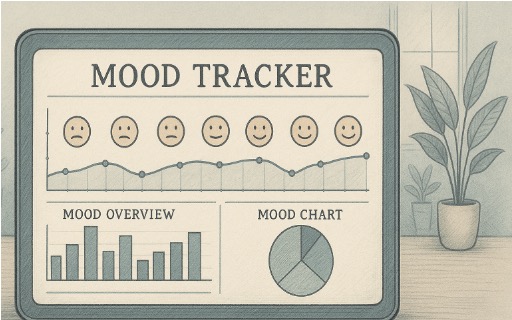
Digital mood trackers, such as apps and online platforms, are convenient and easily accessible. They often come with features like mood graphs, reminders, and the ability to track other health metrics simultaneously. These can be particularly useful if you like having everything in one place.
Some advanced apps even employ machine learning algorithms that detect patterns and provide personalized insights about your mood fluctuations, potentially identifying triggers before you recognize them yourself.
App Feature Considerations
When choosing a digital mood tracker, consider the features that are most important to you. Here are some common features to look for:
- Reminders: Ensure you never miss an entry.
- Graphs and Charts: Visualize your mood patterns over time.
- Note-Taking: Add context to your mood entries with notes.
- Customization: Personalize your tracker to fit your needs.
- User-friendly: A mood tracker should feel like an extension of yourself, not a chore. Choose one that feels intuitive and easy to integrate into your life.
Consider trying a few different options to see which one works for you. It’s okay to switch if one doesn’t meet your needs.
Popular Depression Mood Tracker Choices
Here are some popular mood trackers that have been well-received by users:
- Daylio: A micro-diary app that allows you to track moods and activities with just a few taps.
- Moodpath: Provides insights and assessments to help you understand your emotional health.
- Moodfit: Gives you a comprehensive approach to mood tracking, gratitude journaling, and habit tracking.
How Can You Use a Depression Mood Tracker in Daily Life?
Routine Building
To build a routine, try linking mood tracking with an existing habit. For example, you could log your mood after brushing your teeth or before bed. This makes it easier to remember and ensures it becomes a natural part of your daily activities.
Besides that, consider setting aside a few minutes each week to review your entries. Reflecting on your mood patterns can provide valuable insights and help you make informed decisions about your mental health.
Sharing Insights with Others
Sharing your mood-tracking insights with others can help significantly. Whether it’s with a mental health professional, a trusted friend, or a support group, discussing your findings can provide new perspectives and support.
Professionals can offer guidance and help interpret your data, while friends and family can offer emotional support and understanding.
Adapting Over Time
Mood tracking is a process that should evolve as you do. Over time, you might find that certain methods or tools no longer serve you as well as they once did.
Be open to adapting your approach. This might mean trying a new app, changing your tracking frequency, or focusing on different aspects of your mood and behaviors.
Find Lasting Relief From Depression With Mission Connection

A mood tracker only helps if you use it consistently and review what it shows you. Over a few weeks, those entries reveal the triggers and rhythms behind your depression. Still, depression is rarely something to manage alone, and a trained professional can help you turn those patterns into real treatment.
At Mission Connection Healthcare, we have treatment facilities (in-person, virtual, and hybrid) for depression across California, Virginia, and Washington. We help you choose a tracking method, interpret your patterns accurately, and build a treatment plan around your life, combining therapy, skill-building, and ongoing support. Start your depression recovery journey with Mission Connection today.
Frequently Asked Questions (FAQs)
How often should I update my mood tracker?
Ideally, you should update your mood tracker daily. Consistent daily entries provide the most accurate picture of your emotional patterns.
However, if daily tracking feels overwhelming, aim for at least a few times a week. Regularity matters most, since this will yield the most useful data. Set reminders or link the habit to a daily routine to ensure consistency.
Can mood trackers replace therapy?
No, mood trackers are not a replacement for therapy; they’re complementary tools that can enhance your therapeutic experience. While they provide valuable insights and self-awareness, therapy offers professional guidance, support, and intervention strategies that a tracker alone cannot.
Are digital mood trackers better than paper ones?
Both digital and paper mood trackers have their advantages. Digital trackers offer convenience, features like reminders, and easy data analysis. Paper trackers provide a more tactile experience and can be more customizable.
The best choice depends on your personal preference and lifestyle. Try both methods to see which one works better for you.
How does Mission Connection incorporate mood tracking into depression treatment?
At Mission Connection Healthcare, we integrate mood tracking as part of our comprehensive depression treatment approach. Our mental health professionals help you select an appropriate tracking method, teach you how to identify meaningful patterns, and use your tracking data to inform and adjust your personalized treatment plan.
This collaborative approach ensures that your treatment evolves based on your unique emotional patterns and needs.