
Key Takeaways
- ADHD stimming is a repetitive, self-soothing behavior that shows up when the nervous system is overstimulated, under-stimulated, or stressed.
- Stimming becomes a problem when it turns harmful, compulsive, or starts interfering with work, sleep, or relationships, especially when paired with anxiety or skin-picking disorder.
- The most effective way to stop ADHD stimming is to identify triggers, swap harmful stims for safer alternatives, build focus and routine, and add professional support when self-help isn’t enough.
- For severe or compulsive stimming, outpatient therapy combining CBT, DBT, and mindfulness-based approaches addresses the root causes instead of just managing surface behaviors.
- Mission Connection provides flexible in-person and telehealth outpatient care for adults with ADHD, giving you consistent, evidence-based support that fits around work and daily life.
How Can You Stop ADHD Stimming?
Stimming is a repetitive, self-soothing behavior, such as nail-biting, leg-shaking, or skin-picking, that the ADHD brain reaches for when it feels overstimulated, under-stimulated, or stressed. You can reduce it by spotting your triggers, swapping harmful stims for safer alternatives, and building enough focus and routine to ease the load on your nervous system.
The right mix depends on how often you stim and what’s driving it. The five techniques below cover everyday strategies most adults can start using today, and the treatment section explains when professional support, such as the outpatient care Mission Connection provides, becomes the smarter next step.
5 Practical Techniques for Stopping ADHD Stimming
1. Identify Your Stimming Triggers
Stimming rarely happens at random. It’s almost always a response to sensory overload, boredom, emotional stress, or social anxiety, so the first step is paying attention to the moments right before you stim. Was it a long Zoom call, a crowded grocery store, or a stretch of silence that felt unbearable?
Keeping a simple trigger log, even just a few notes on your phone, can reveal patterns quickly. Once you know your triggers, you can reduce exposure or prepare coping tools in advance. This single step is the foundation on which everything else builds.
2. Replace Harmful Stims With Less Disruptive Alternatives
You don’t have to eliminate stimming. You just need to redirect it toward something that meets the same sensory need without causing harm.
If you pick at the skin around your fingernails, keep a textured fidget tool or stress ball within reach. If you chew the inside of your cheek, sugar-free gum or chewable jewelry can satisfy the same oral input, and a quiet fidget pad works well for repetitive tapping.
3. Build Focus Strategies to Reduce the Need to Stim
A significant portion of ADHD stimming happens because the brain is under-stimulated. When tasks feel repetitive or passive, the nervous system goes looking for input, and stimming fills that gap.
The Pomodoro Method, which uses focused 25-minute blocks with short breaks, can sustain attention without the brain reaching for stimming as a crutch. Background sound, like brown noise or lo-fi music, adds steady auditory input, and breaking large tasks into smaller steps reduces the cognitive overload that often triggers stimming.
4. Establish a Daily Routine to Lower Stress
Stress and unpredictability amplify stimming. When your day feels chaotic, your nervous system stays in a heightened state, and stimming increases as a result.
You don’t need to schedule every hour. Anchoring your day with three consistent points, like a set wake time, a midday check-in, and a wind-down routine before bed, creates enough structure to make a noticeable difference in how regulated you feel.
5. Develop Healthy Coping Mechanisms for Anxiety & Overwhelm
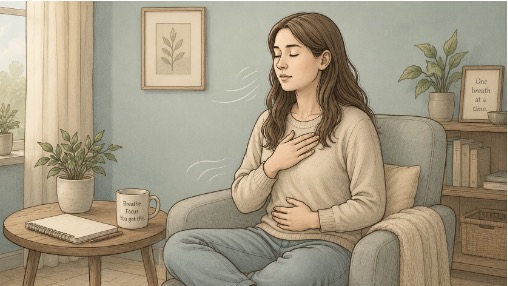
Anxiety and emotional overwhelm are two of the most common stimming triggers, so having go-to coping tools ready makes a real difference. Deep breathing and grounding techniques like the 5-4-3-2-1 sensory method, and progressive muscle relaxation can interrupt the stress response before stimming kicks in.
Physical movement is also highly effective. A short walk, jumping jacks, or five minutes of stretching can discharge the excess energy that would otherwise surface as stimming, giving your nervous system the regulation it’s looking for through a channel that doesn’t cause harm.
Treatment Options That Can Help
For many people with ADHD, behavioral strategies alone aren’t enough to fully manage stimming, especially when it’s severe, compulsive, or tied to co-occurring conditions like anxiety or excoriation disorder (skin-picking disorder). In these situations, professional treatment can make a meaningful difference by addressing the neurological and psychological roots of the behavior, rather than only the surface symptoms.
The two most effective clinical avenues are ADHD medication and therapy. Used together, they tend to produce the strongest outcomes, particularly for stimming behaviors that have become difficult to control on your own.
ADHD Medication
ADHD medications, particularly stimulants, work by increasing dopamine and norepinephrine availability in the brain. This directly improves the brain’s ability to regulate attention, impulse control, and emotional responses. When the brain is better regulated, the neurological drive to stim often decreases naturally.
Non-stimulant options can also be effective, especially for individuals who don’t respond well to stimulants or who experience side effects. Some people benefit from a combination approach, in which a non-stimulant enhances the effect of a lower stimulant dose. Medication decisions should always be made with a qualified psychiatrist or physician who understands your full clinical picture, including any co-occurring conditions.
Therapy & Behavioral Support

Cognitive Behavioral Therapy (CBT) is one of the most well-supported therapeutic approaches for managing ADHD-related stimming, especially when the behavior has become compulsive.
A specific technique called Habit Reversal Training (HRT) is also particularly effective. It works by helping individuals become more aware of their stimming urges and systematically replacing them with competing responses that meet the same underlying need.
For skin-picking specifically, a related approach, the Comprehensive Behavioral Treatment model (ComB), has shown strong results. Working with an ADHD-informed therapist gives you a structured, personalized roadmap for change that self-help strategies alone often can’t provide.
Other Tips for Stopping ADHD Stimming
Beyond the core techniques and treatment options, a few smaller adjustments can quietly take pressure off your nervous system before stimming has a reason to kick in. The goal is to remove low-level friction throughout your day so your brain isn’t constantly fighting its environment for regulation. A handful of practical add-ons can make a real difference here:
- Silence your devices. Putting phones and notifications on silent or fully switching them off cuts out a steady stream of micro-distractions that pull on attention.
- Limit time in overwhelming situations. Capping how long you stay in loud, crowded, or high-stimulation environments prevents your nervous system from hitting its breaking point.
- Watch for strong smells. Heavy perfumes, cleaning products, or food odors can be a quieter sensory trigger that’s easy to miss but worth controlling where you can.
- Use focus-friendly games or apps. Certain video games and brain-training tools may help strengthen overall concentration over time, which can reduce the brain’s pull toward stimming.
Pair these adjustments with self-compassion, which can help manage ADHD-related behaviors. Small environmental and lifestyle tweaks rarely feel dramatic on their own, but stacked together over weeks and months, they compound into real, lasting change in how often and how intensely you stim.
How Can Mission Connection Help Individuals with ADHD?

Stopping ADHD stimming rarely comes down to one fix. It’s a combination of knowing your triggers, redirecting the behavior, building structure into your day, and getting clinical support when the behavior turns compulsive or starts interfering with work, sleep, relationships, or your sense of control.
At Mission Connection, we offer outpatient therapy built around adults with busy lives. Our clinicians use evidence-based approaches like CBT, Dialectical Behavior Therapy (DBT), and mindfulness-based therapy, delivered through in-person and telehealth options, so you get consistent, expert support that fits into your daily routine without pausing the rest of your life. Reach out to Mission Connection today to begin your recovery journey.
Frequently Asked Questions (FAQs)
What triggers ADHD stimming?
ADHD stimming is typically triggered by situations that overwhelm, under-stimulate, or stress the nervous system. Common triggers include sensory overload, prolonged tasks that require sustained attention, emotional stress, anxiety, and boredom. Whenever the ADHD brain feels dysregulated, stimming tends to emerge as the nervous system’s attempt to restore balance.
Can stimming be a sign of autism instead of ADHD?
Stimming is strongly associated with autism spectrum disorder (ASD), but it is not exclusive to it. In ASD, stimming often responds to sensory processing differences, while in ADHD it tends to be tied to attention regulation, emotional dysregulation, and managing boredom or stress. ADHD and autism also co-occur at significant rates, so a qualified clinician can help determine what’s driving the behavior in your specific case.
What does stimming in ADHD look like?
ADHD stimming takes many forms, and it often goes unrecognized because so many stims look like everyday fidgeting. Common examples include leg shaking, nail biting, skin picking, hair twirling, cheek chewing, pen clicking, rocking in a chair, humming, and repetitive doodling. The behavior itself matters less than its function: if a repetitive action helps manage focus, reduce anxiety, or process sensory input, it’s likely stimming.
Does stimming mean my ADHD is getting worse?
Not necessarily. An increase in stimming more often signals that your stress load, environmental demands, or emotional regulation challenges have intensified, not that your ADHD itself has worsened. If you notice a significant and unexplained increase, speak with a mental health professional or your prescribing physician, since it can sometimes point to a medication adjustment or a co-occurring condition like anxiety or OCD.
Does Mission Connection treat individuals with ADHD?
Yes. Mission Connection offers specialized mental health treatment for adults living with ADHD, including support for stimming, emotional dysregulation, and executive functioning challenges. Our services include evidence-based therapy modalities like Cognitive Behavioral Therapy and Habit Reversal Training, along with psychiatric support for medication management when appropriate.