

Skip to content
  • Our Treatments
    • Teen Online Therapy
    • Trauma Treatment
      • Treatment for Trauma and Abuse
      • Childhood Trauma
      • Emotional Abuse
      • Domestic Abuse
      • Sexual Abuse
      • Psychological Trauma
      • Physical Abuse
    • Depression Treatment
      • What Is Depression?
        • Depression in Women
        • Depression in Men
        • Depression in Teens
        • Depression in Older Adults
        • Signs and Symptoms of Depression
        • Causes of Depression
        • Types of Depression
        • Major Depressive Disorder
        • Persistent Depressive Disorder
        • Prenatal and Postpartum Depression
        • Treatment-Resistant Depression
      • Depression and Co-Occurring Mental Health Conditions
        • Depression and PTSD
        • Depression vs. Anxiety
        • Trauma and Depression
      • The Best Treatment Options for Depression
        • Therapy for Depression
        • Medication for Depression
        • Online Therapy for Depression
        • Exercise for Depression
        • Holistic Approaches to Treating Depression
        • 10 Self-Care Tips for Managing Depression
      • How to Support Loved Ones With Depression
      • How Does Depression Differ Between Populations?
      • Depression Relapse Prevention
    • Bipolar Treatment
      • Bipolar I Disorder
      • Bipolar II Treatment
      • Cyclothymic Disorder (Cyclothymia)
      • What Is Rapid Cycling Bipolar Disorder?
    • Anxiety Treatment
      • Panic Disorder & Panic Attacks
      • Social Anxiety Disorder
      • Generalized Anxiety Disorder
    •  ADHD
    • Schizophrenia Treatment
    • Psychosis
    • Self-Harm
      • Suicidal Thoughts
    • Anger Treatment
      • Anger Management Issues
      • Anger Management Issues in Relationships
      • Road Rage in Adults
      • Workplace Anger
      • Chronic Anger Issues
      • Conduct Disorder
      • Rage Disorder
      • Oppositional Defiant Disorder
      • Intermittent Explosive Disorder
      • Displaced Anger
      • Suppressed Anger
      • Passive-Aggressive Behavior
    • Outpatient Mental Health Treatment for Pregnant Women
    • Outpatient Mental Health Treatment for Veterans
  • Mental Health
    • Obsessive Compulsive Disorder
      • OCD Symptoms
      • Obsessive-Compulsive Disorder Risk Factors
      • OCD Exposure Therapy
      • Living With OCD: OCD Coping Strategies and Support
    • Seasonal Affective Disorder
      • Seasonal Depression Relief: SAD Coping Strategies
      • Seasonal Depression Treatment
    • Somatic Symptom Disorder
      • Somatic Symptom Disorder vs Conversion Disorder
      • Somatic Symptom Disorder Symptoms
      • Causes of Somatic Symptom Disorder
      • Treatment Approaches for Somatic Symptom Disorder
      • Coping With Somatic Symptom Disorder
    • Eating Disorders
      • Anorexia Nervosa
      • Bulimia Nervosa
      • Eating Disorder Symptoms
      • Binge Eating Disorder
    • Psychosomatic Disorders
      • Psychotherapy for Psychosomatic Disorders
      • Medication Management in Psychosomatic Disorders
      • Living With Psychosomatic Disorders
      • Psychosomatic Disorder Treatment Programs
      • Mind-Body Therapies in Psychosomatic Disorder Treatment
    • Adjustment Disorders
      • Adjustment Disorder Coping Strategies
      • Adjustment Disorder Treatment
      • Types of Adjustment Disorders and Support Options
    • Dissociative Identity Disorder
      • Symptoms of Dissociative Identity Disorder
      • Treatment Approaches for Dissociative Identity Disorder
      • Causes & Risk Factors of Dissociative Identity Disorder
      • DID Co-Occurring Disorders
    • Narcissistic Personality Disorder
      • Causes of Narcissistic Personality Disorder
      • Narcissistic Personality Disorder Symptoms
      • Narcissistic Personality Disorder Impact on Relationships
    • Sleep Problems in Adults
      • Insomnia in Adults
      • Nightmares in Adults
      • Sleep Paralysis in Adults
      • Oversleeping & Hypersomnia in Adults
      • Restlessness in Adults
      • Nighttime Anxiety
      • Parasomnias in Adults
      • Daytime Fatigue & Low Energy in Adults
      • Sleep Disruption in Adults
    • Thought-Related & Cognitive Symptoms in Adults
      • Racing Thoughts in Adults
      • Memory Problems & Brain Fog in Adults
      • Dissociation in Adults
      • Intrusive Thoughts in Adults
      • Indecisiveness in Adults
      • Disorientation & Confused Thinking in Adults
      • Overthinking & Rumination in Adults
      • Stress-Induced Forgetfulness
      • Processing Difficulties
      • False Memories
      • Disturbing Mental Imagery
      • Loss of Objectivity
      • Compromised Judgment Under Stress
      • Black and White Thinking
      • Compulsive Mental Checking in Adults
      • Catastrophic Thinking in Adults
      • Interruptions in Thought Processes
      • Paranoid Thoughts in Adults
      • Distorted Sense of Time in Adults
    • Emotional & Behavioral Symptoms in Adults
      • Mood Swings in Adults
      • Irritability in Adults
      • Crying Spells in Adults
      • Self-Destructive Behavior in Adults
      • Emotional Numbness in Adults
      • Impulsivity in Adults
      • Perfectionism in Adults
      • Excessive Guilt & Shame in Adults
      • Emotional Overreactions in Adults
      • Trauma-Related Emotional Flashbacks
      • Hopelessness in Adults
      • Difficulty Expressing Emotions
      • Anhedonia in Adults
      • Chronic Dissatisfaction
      • Excessive Self-Criticism in Adults
      • Hypomania Symptoms in Adults
      • Avoiding Responsibilities in Adults
      • Self-Isolation After Arguments in Adults
    • Social & Interpersonal Difficulties in Adults
      • Social Withdrawal in Adults
      • Jealousy & Insecurity in Adults
      • Controlling Behavior in Adults
      • Approval-Seeking Behavior in Adults
      • Trouble Trusting Others in Adults
      • Conflict Avoidance in Adults
      • Fear of Abandonment in Adults
      • People-Pleasing Behavior in Adults
      • Codependency in Adults
      • Fear of Rejection in Adults
      • Overcompensating in Adult Relationships
      • Social Comparison in Adults
      • Oversharing in Adults
      • Over-Apologizing in Adults
      • Avoiding Eye Contact in Adults
      • Distrust of Authority in Adults
      • Fear of Intimacy in Adults
      • Refusal to Ask for Help in Adulthood
      • Feeling Like a Burden in Adulthood
    • Physical & Stress-Related Symptoms in Adults
      • Skin Picking in Adults
      • Heart Palpitations & Anxiety in Adults
      • Nausea from Stress or Anxiety
      • Headaches Related to Stress & Anxiety in Adults
      • Chronic Fatigue in Adults
      • Panic Attacks in Adults
      • Stress & Emotional Eating in Adults
      • Loss of Appetite in Adults
      • Hypervigilance in Adults
      • Muscle Tension & Trembling in Adults
      • Dizziness Under Stress
      • Stress-Related Urination
      • Shifts in Sexual Desire in Adults
      • Stress-Induced Sweating
      • Restlessness & Anxiety
      • Bruxism in Adults
      • Low Immunity in Adults
      • Paresthesia Related to Stress
      • Nervous Fidgeting in Adults
  • Our Approaches
    • Cognitive Behavioral Therapy (CBT)
    • Trauma-Focused Therapy
    • Online Talk Therapy
    • Exposure Therapy for Anxiety
    • Mindfulness Therapy
    • Humanistic Therapy
    • Dialectical Behavior Therapy (DBT)
    • EMDR Therapy
    • Emotion-Focused Therapy
    • Transcranial Magnetic Stimulation (TMS)
    • Telehealth for Mental Health
      • How to Prepare for Your First Teletherapy Appointment
      • Technology Barriers in Telehealth Treatment
      • How Effective Is Teletherapy for Severe Mental Illness?
      • How to Get a Psychiatric Evaluation Online
    • Somatic Therapy for PTSD & Anxiety
    • Narrative Therapy for Trauma Recovery
    • Internal Family Systems Therapy
    • Art Therapy for Emotional Expression
    • Mindfulness-Based Cognitive Therapy
    • Acceptance and Commitment Therapy (ACT)
    • Psychodynamic Therapy
  • Cost
    • Payment Options
    • Using Insurance to Cover Mental Health Treatment
      • Aetna
      • Blue Cross Blue Shield
      • Cigna
      • ComPsych
      • Employers Health Network (EHN)
      • First Health Network
      • Halcyon
      • HMC HealthWorks
      • Magellan
      • Kaiser
      • Optum
      • UMR
  • Our Facilities
    • California
      • San Juan Capistrano – CA
    • Virginia
      • Arlington – VA
      • Falls Church – VA
    • Washington
      • Green Lake – WA
      • Bellevue – WA
  • Resources
    • Blog
    • Mental Health Assessments
    • Downloadable PDF’s
      • Teen Outpatient Programs
      • Adult Outpatient Programs
    • Your Legal Rights in Mental Health Treatment
      • Virginia: Emergency Custody Orders and Temporary Detention Orders
      • Washington Crisis Intervention, Court-Ordered Treatment, and Patient Rights
      • California: Involuntary Commitment, Psychiatric Holds, and Legal Protections
      • Community Treatment Orders (CTOs)
      • Confidentiality in Telehealth: Is Virtual Therapy Secure?
      • Patient Confidentiality: HIPAA and Mental Health Treatment
      • The Role of Case Managers in Virtual Mental Health Programs
      • Employment Law and Mental Health: Your Rights in the Workplace
      • Your Rights in Psychiatric Hospitalization
      • Can Employers Discriminate Based on Mental Health?
      • Parental Mental Health and Custody Battles
      • Clinical Negligence in Mental Health
    • Mental Health Interventions: How to Approach a Loved One About Mental Health Treatment
      • When Someone Refuses Help: Resistance to Treatment
      • Panic Attack Intervention Tips for Adults
      • Helping Adults in Abusive Relationships
      • PTSD Interventions for Adults
      • How to Recognize Psychosis in Adults
      • Helping Adults With Severe Depression
    • Family Guide: Joining the Treatment Process
      • Crisis Situations: How to Support a Loved One
      • Setting Boundaries With Someone Having Treatment
      • Supporting Your Spouse With Severe Mental Illness
      • What to Say to Someone in a Mental Health Crisis
      • Talking to Children About a Parent’s Mental Health Condition
      • Financial Planning for Mental Health Treatment
      • Recognizing Co-Dependency: When Support Becomes Enabling
      • Encouraging a Loved One to Stay in Therapy
      • How to Support a Veteran Struggling With Mental Health
    • Innovative Treatments in Mental Health Care
      • What Is Neurofeedback Therapy?
      • What Is Transcranial Magnetic Stimulation? And Does It Work?
    • Resources for Professionals
      • Building a Mental Health Action Plan for Your Workplace
      • Human Resource’s Role in Workplace Mental Health
      • Supporting Employees After Mental Health Leave: Creating a Reentry Plan
      • How Leaders Can Promote Mental Well-Being in the Workplace
      • Supporting Mental Health in High-Stress Professions
      • Mental Health Breakdown at Work
    • Referrals: Confidentiality and Mental Health Referrals
      • Case Workers: Referring Clients for Residential or Outpatient Care
      • How to Refer a Client for Psychiatric Evaluation
      • Coordinating Care in Mental Health Treatment
      • How to Talk to Your Employer About Extended Leave for Mental Health
      • Court-Appointed Mental Health Treatment Referrals
      • Mental Health Referrals From Crisis Hotlines
      • Mental Health Referrals From First Responders
      • Mental Health Referrals From Social Workers
      • Mental Health Referrals From Lawyers
      • Mental Health Referrals From Insurance Case Managers
      • Hospital Mental Health Referrals
      • Mental Health Referrals From Therapists
      • Mental Health Referrals From Probation Officers
      • Mental Health Referrals From Universities
      • Mental Health Referrals From Urgent Psychiatric Care
      • Mental Health Referrals From Interventionists
      • Mental Health Referrals From Pastoral Care
      • Mental Health Referral From Life Coaches
      • Mental Health Referrals From Disability Services
      • Mental Health Referrals From Domestic Violence Centers
      • Employee Assistance Program Mental Health Referrals
      • Mental Health Referrals From Urgent Care Clinics
      • VA Mental Health Referrals: Veteran Affairs Therapy Programs
      • Mental Health Referrals From MAT Physicians
      • Mental Health Referrals From Primary Care Doctors
      • Mental Health Referrals From Child Protective Services
      • Community Mental Health Referrals: From Referral to Recovery
    • Self-Help: How to Build a Self-Care Routine for Mental Wellness
      • Exercise and Mental Health
      • Journaling for Mental Health
      • Grounding Techniques for Anxiety and Panic Attacks
      • Cognitive Behavioral Therapy Techniques You Can Try at Home
      • Mindfulness and Meditation for Stress Reduction
    • Preparing for Mental Health Treatment: Types of Treatment Plans
      • Graduating from an Outpatient Program: Creating a Long-Term Mental Health Plan
      • When to Step Down From PHP to IOP
      • Partial Hospitalization Programs vs. Intensive Outpatient Programs
      • Benefits of Combining Telehealth with In-Person Outpatient Treatment
      • Signs You May Need a Higher Level of Care
      • How to Transition from Inpatient to Outpatient Care: A Step-By-Step Guide
      • How to Set Mental Health Goals During Treatment
    • Mental Health Assessment and Diagnosis for Adults
      • Psychological Testing
      • Personality Assessments
      • Cognitive Assessments
    • Antidepressants: What They Are and How They Work
      • Selective Serotonin Reuptake Inhibitors (SSRIs)
      • Fluoxetine: How Prozac Works and What It Treats
      • Sertraline (Zoloft): What Is Sertraline Used For and How Does It Work?
      • Citalopram: How Celexa Works
      • What Is Escitalopram?
      • What Is Paroxetine?
      • Serotonin Norepinephrine Reuptake Inhibitors (SNRIs)
      • Effexor XR in Mental Health Treatment
      • Cymbalta: What Is Duloxetine?
      • Desvenlafaxine for Mental Health Treatment
      • Tricyclic Antidepressants for Adult Mental Health
      • Wellbutrin in Mental health
      • Mirtazapine (Remeron) in Mental Health Treatment
      • Trazodone for Mental Health Treatment
    • Antipsychotic Medications for Adults
      • What Are Second-Generation Antipsychotics?
      • Risperidone (Risperdal) for Mental Health
      • What Is Quetiapine (Seroquel) Used For?
      • What Is Zyprexa? Olanzapine’s Uses, Benefits, and Side Effects
      • What Is Aripiprazole (Abilify) Used for in Mental Health?
      • Lurasidone and Mental Health
      • What Is Clozapine and What Does It Treat?
      • Typical Antipsychotics for Mental Health
    • Mood Stabilizers For Adults
      • Lithium for Adult Mental Health: What Is Lithium Used For?
      • Depakote for Mental Health
      • Treating Mental Health Issues With Lamotrigine (Lamictal)
      • Carbamazepine for Mental Health
    • Anti-Anxiety Medications for Adults
      • What Are Benzodiazepines and How Do They Work?
      • Lorazepam for Mental Health
      • Clonazepam (Klonopin): What Is Klonopin?
      • Valium for Mental Health
      • What Is Xanax?
    • Stimulants for Mental Health
      • Adderall for Mental Health
      • The Complete Guide to Vyvanse
      • Ritalin for ADHD
      • Concerta for Adults
    • Sleep Aids for Adults
      • Trazodone for Sleep
      • Benefits and Side Effects of Temazepam (Restoril)
      • Zolpidem (Ambien) for Adults
      • Eszopiclone (Lunesta) for Insomnia
    • Mental Health Conditions in Veterans
      • How to File a VA Claim for Mental Health Conditions
      • Post-Traumatic Stress Disorder (PTSD) in Veterans
      • Traumatic Brain Injury and Mental Health in Veterans
      • Military Sexual Trauma (MST) in Veterans
      • Veterans with Co-Occurring Disorders
      • Veterans and Anxiety Disorders
      • Veterans and Depression
      • Veteran Suicide Prevention
      • Transitioning to Civilian Life
      • The Role of Peer Support Groups for Veteran Mental Health
      • Top Evidence-Based Therapies for Veterans
        • CBT for PTSD in Veterans
        • EMDR Therapy for Trauma and PTSD in Veterans
        • Group Therapy for Veterans
      • Telehealth Therapy for Veterans
      • Holistic Mental Health Treatments for Veterans
      • Anger and Irritability in Veterans
    • Guide to Perinatal Mental Health
      • Are Antidepressants Safe During Pregnancy?
      • Baby Blues vs Postpartum Depression
      • Cognitive Behavioral Therapy for Postpartum Depression and Anxiety
      • Holistic Approaches to Mental Health During Pregnancy
      • Dealing With Isolation and Loneliness in Pregnancy
      • OB-GYN Referrals for Perinatal Mental Health Care
      • How Partners Can Support Perinatal Mental Health
      • Early Warning Signs of Perinatal Anxiety in Expecting Mothers
      • How to Recognize Perinatal Bipolar Disorder During Pregnancy
      • What Is Perinatal Depression? Causes, Signs, and Treatment
      • Perinatal OCD: When Intrusive Thoughts Become Distressing
      • What Is Postpartum Anxiety?
      • Postpartum Psychosis: Symptoms and Emergency Support
      • Anger and Irritability During Pregnancy
      • Pre-Existing Mental Health Disorders and Pregnancy
      • Can You Have PTSD After Childbirth?
      • Risk Factors for Mental Illness During Pregnancy
      • Screening Tools for Perinatal Mental Health
      • Self-Care Tips for Managing Perinatal Depression Symptoms
      • Finding Support Groups for Pregnant Women With Depression
      • Talking to Your OB-GYN About Mental Health
      • Mental Health in Teen Pregnancy: What to Know
      • Best Therapy Options for Perinatal Mental Health
    • Understanding Anxiety: Triggers, Warning Signs, and Long-Term Effects
      • Top Breathwork and Grounding Techniques for Immediate Anxiety Relief
      • Daily Anxiety Journal Template
      • What Is High Functioning Anxiety?
      • Somatic Experiencing for Anxiety
    • Adult Attachment Disorder
      • Anxious Attachment Style in Adults
      • Avoidant Attachment Style in Adults
      • Codependency: Signs and Causes of Codependent Relationships
      • Complex PTSD and Attachment Issues
      • Disinhibited Social Engagement Disorder (DSED)
      • Disorganized Attachment in Adults
      • Secure Attachment in Relationships
      • Reactive Attachment Disorder (RAD)
      • Adult Attachment Interventions
      • Attachment Styles and Perfectionism
      • Attachment Styles in the Workplace
      • Raising Securely Attached Kids
      • Avoidant Attachment and Ghosting
      • Limerence Attachment
      • Synchrony in Infant Development
      • C-PTSD and Dismissive Avoidance: Attachment Trauma
      • Abandonment and Attachment Issues
      • Family Enmeshment
      • How to Heal Attachment Styles
      • Institutional Care and Attachment Issues
      • The Attachment Internal Working Model Explained
      • Dating Someone With Avoidant Attachment
      • Dating a Fearful Avoidant Partner
      • Developmental Disorders and Attachment Trauma
      • Attachment Problems in Relationships
      • Eating Disorders and Attachment Trauma
      • Therapeutic Alliance
      • Dismissive Avoidant vs. Fearful Avoidant Attachment
      • Early Maladaptive Schemas in Attachment Theory
      • Insecure Attachment Style in Relationships
    • What Is Borderline Personality Disorder (BPD)?
      • Borderline Personality Disorder vs. Bipolar Disorder
      • What Causes BPD?
      • How Borderline Personality Disorder Affects Relationships
      • Best Treatment Options for Borderline Personality Disorder
      • Types of Borderline Personality Disorder
    • What Is Horticultural Therapy?
      • Horticultural Therapy for Depression and Anxiety
      • Designing a Horticultural Therapy Space
      • Therapeutic Gardening Activities for Groups
      • Using Nature-Based Mindfulness for Stress Reduction
      • Horticultural Therapy for Trauma Recovery
    • What Is a Mental Breakdown?
      • Top Causes of Mental Breakdowns
      • Coping With Post-Breakdown Shame and Self-Loss
      • How to Prevent a Nervous Breakdown
      • Physical Signs of a Mental Breakdown
      • Men and Nervous Breakdowns
      • Mental Breakdown Recovery Guide
      • Religious and Existential Mental Breakdowns
      • How Sleep Deprivation Can Trigger a Mental Breakdown
      • When to Seek Professional Help for a Mental Breakdown
      • Mental Breakdown Triggers in Women
  • About
    • Our Clinical Foundation
    • In The Press
    • Meet The Team
    • Client Outcome Study
  • Get Started
  • Our Treatments
    • Teen Online Therapy
    • Trauma Treatment
      • Treatment for Trauma and Abuse
      • Childhood Trauma
      • Emotional Abuse
      • Domestic Abuse
      • Sexual Abuse
      • Psychological Trauma
      • Physical Abuse
    • Depression Treatment
      • What Is Depression?
        • Depression in Women
        • Depression in Men
        • Depression in Teens
        • Depression in Older Adults
        • Signs and Symptoms of Depression
        • Causes of Depression
        • Types of Depression
        • Major Depressive Disorder
        • Persistent Depressive Disorder
        • Prenatal and Postpartum Depression
        • Treatment-Resistant Depression
      • Depression and Co-Occurring Mental Health Conditions
        • Depression and PTSD
        • Depression vs. Anxiety
        • Trauma and Depression
      • The Best Treatment Options for Depression
        • Therapy for Depression
        • Medication for Depression
        • Online Therapy for Depression
        • Exercise for Depression
        • Holistic Approaches to Treating Depression
        • 10 Self-Care Tips for Managing Depression
      • How to Support Loved Ones With Depression
      • How Does Depression Differ Between Populations?
      • Depression Relapse Prevention
    • Bipolar Treatment
      • Bipolar I Disorder
      • Bipolar II Treatment
      • Cyclothymic Disorder (Cyclothymia)
      • What Is Rapid Cycling Bipolar Disorder?
    • Anxiety Treatment
      • Panic Disorder & Panic Attacks
      • Social Anxiety Disorder
      • Generalized Anxiety Disorder
    •  ADHD
    • Schizophrenia Treatment
    • Psychosis
    • Self-Harm
      • Suicidal Thoughts
    • Anger Treatment
      • Anger Management Issues
      • Anger Management Issues in Relationships
      • Road Rage in Adults
      • Workplace Anger
      • Chronic Anger Issues
      • Conduct Disorder
      • Rage Disorder
      • Oppositional Defiant Disorder
      • Intermittent Explosive Disorder
      • Displaced Anger
      • Suppressed Anger
      • Passive-Aggressive Behavior
    • Outpatient Mental Health Treatment for Pregnant Women
    • Outpatient Mental Health Treatment for Veterans
  • Mental Health
    • Obsessive Compulsive Disorder
      • OCD Symptoms
      • Obsessive-Compulsive Disorder Risk Factors
      • OCD Exposure Therapy
      • Living With OCD: OCD Coping Strategies and Support
    • Seasonal Affective Disorder
      • Seasonal Depression Relief: SAD Coping Strategies
      • Seasonal Depression Treatment
    • Somatic Symptom Disorder
      • Somatic Symptom Disorder vs Conversion Disorder
      • Somatic Symptom Disorder Symptoms
      • Causes of Somatic Symptom Disorder
      • Treatment Approaches for Somatic Symptom Disorder
      • Coping With Somatic Symptom Disorder
    • Eating Disorders
      • Anorexia Nervosa
      • Bulimia Nervosa
      • Eating Disorder Symptoms
      • Binge Eating Disorder
    • Psychosomatic Disorders
      • Psychotherapy for Psychosomatic Disorders
      • Medication Management in Psychosomatic Disorders
      • Living With Psychosomatic Disorders
      • Psychosomatic Disorder Treatment Programs
      • Mind-Body Therapies in Psychosomatic Disorder Treatment
    • Adjustment Disorders
      • Adjustment Disorder Coping Strategies
      • Adjustment Disorder Treatment
      • Types of Adjustment Disorders and Support Options
    • Dissociative Identity Disorder
      • Symptoms of Dissociative Identity Disorder
      • Treatment Approaches for Dissociative Identity Disorder
      • Causes & Risk Factors of Dissociative Identity Disorder
      • DID Co-Occurring Disorders
    • Narcissistic Personality Disorder
      • Causes of Narcissistic Personality Disorder
      • Narcissistic Personality Disorder Symptoms
      • Narcissistic Personality Disorder Impact on Relationships
    • Sleep Problems in Adults
      • Insomnia in Adults
      • Nightmares in Adults
      • Sleep Paralysis in Adults
      • Oversleeping & Hypersomnia in Adults
      • Restlessness in Adults
      • Nighttime Anxiety
      • Parasomnias in Adults
      • Daytime Fatigue & Low Energy in Adults
      • Sleep Disruption in Adults
    • Thought-Related & Cognitive Symptoms in Adults
      • Racing Thoughts in Adults
      • Memory Problems & Brain Fog in Adults
      • Dissociation in Adults
      • Intrusive Thoughts in Adults
      • Indecisiveness in Adults
      • Disorientation & Confused Thinking in Adults
      • Overthinking & Rumination in Adults
      • Stress-Induced Forgetfulness
      • Processing Difficulties
      • False Memories
      • Disturbing Mental Imagery
      • Loss of Objectivity
      • Compromised Judgment Under Stress
      • Black and White Thinking
      • Compulsive Mental Checking in Adults
      • Catastrophic Thinking in Adults
      • Interruptions in Thought Processes
      • Paranoid Thoughts in Adults
      • Distorted Sense of Time in Adults
    • Emotional & Behavioral Symptoms in Adults
      • Mood Swings in Adults
      • Irritability in Adults
      • Crying Spells in Adults
      • Self-Destructive Behavior in Adults
      • Emotional Numbness in Adults
      • Impulsivity in Adults
      • Perfectionism in Adults
      • Excessive Guilt & Shame in Adults
      • Emotional Overreactions in Adults
      • Trauma-Related Emotional Flashbacks
      • Hopelessness in Adults
      • Difficulty Expressing Emotions
      • Anhedonia in Adults
      • Chronic Dissatisfaction
      • Excessive Self-Criticism in Adults
      • Hypomania Symptoms in Adults
      • Avoiding Responsibilities in Adults
      • Self-Isolation After Arguments in Adults
    • Social & Interpersonal Difficulties in Adults
      • Social Withdrawal in Adults
      • Jealousy & Insecurity in Adults
      • Controlling Behavior in Adults
      • Approval-Seeking Behavior in Adults
      • Trouble Trusting Others in Adults
      • Conflict Avoidance in Adults
      • Fear of Abandonment in Adults
      • People-Pleasing Behavior in Adults
      • Codependency in Adults
      • Fear of Rejection in Adults
      • Overcompensating in Adult Relationships
      • Social Comparison in Adults
      • Oversharing in Adults
      • Over-Apologizing in Adults
      • Avoiding Eye Contact in Adults
      • Distrust of Authority in Adults
      • Fear of Intimacy in Adults
      • Refusal to Ask for Help in Adulthood
      • Feeling Like a Burden in Adulthood
    • Physical & Stress-Related Symptoms in Adults
      • Skin Picking in Adults
      • Heart Palpitations & Anxiety in Adults
      • Nausea from Stress or Anxiety
      • Headaches Related to Stress & Anxiety in Adults
      • Chronic Fatigue in Adults
      • Panic Attacks in Adults
      • Stress & Emotional Eating in Adults
      • Loss of Appetite in Adults
      • Hypervigilance in Adults
      • Muscle Tension & Trembling in Adults
      • Dizziness Under Stress
      • Stress-Related Urination
      • Shifts in Sexual Desire in Adults
      • Stress-Induced Sweating
      • Restlessness & Anxiety
      • Bruxism in Adults
      • Low Immunity in Adults
      • Paresthesia Related to Stress
      • Nervous Fidgeting in Adults
  • Our Approaches
    • Cognitive Behavioral Therapy (CBT)
    • Trauma-Focused Therapy
    • Online Talk Therapy
    • Exposure Therapy for Anxiety
    • Mindfulness Therapy
    • Humanistic Therapy
    • Dialectical Behavior Therapy (DBT)
    • EMDR Therapy
    • Emotion-Focused Therapy
    • Transcranial Magnetic Stimulation (TMS)
    • Telehealth for Mental Health
      • How to Prepare for Your First Teletherapy Appointment
      • Technology Barriers in Telehealth Treatment
      • How Effective Is Teletherapy for Severe Mental Illness?
      • How to Get a Psychiatric Evaluation Online
    • Somatic Therapy for PTSD & Anxiety
    • Narrative Therapy for Trauma Recovery
    • Internal Family Systems Therapy
    • Art Therapy for Emotional Expression
    • Mindfulness-Based Cognitive Therapy
    • Acceptance and Commitment Therapy (ACT)
    • Psychodynamic Therapy
  • Cost
    • Payment Options
    • Using Insurance to Cover Mental Health Treatment
      • Aetna
      • Blue Cross Blue Shield
      • Cigna
      • ComPsych
      • Employers Health Network (EHN)
      • First Health Network
      • Halcyon
      • HMC HealthWorks
      • Magellan
      • Kaiser
      • Optum
      • UMR
  • Our Facilities
    • California
      • San Juan Capistrano – CA
    • Virginia
      • Arlington – VA
      • Falls Church – VA
    • Washington
      • Green Lake – WA
      • Bellevue – WA
  • Resources
    • Blog
    • Mental Health Assessments
    • Downloadable PDF’s
      • Teen Outpatient Programs
      • Adult Outpatient Programs
    • Your Legal Rights in Mental Health Treatment
      • Virginia: Emergency Custody Orders and Temporary Detention Orders
      • Washington Crisis Intervention, Court-Ordered Treatment, and Patient Rights
      • California: Involuntary Commitment, Psychiatric Holds, and Legal Protections
      • Community Treatment Orders (CTOs)
      • Confidentiality in Telehealth: Is Virtual Therapy Secure?
      • Patient Confidentiality: HIPAA and Mental Health Treatment
      • The Role of Case Managers in Virtual Mental Health Programs
      • Employment Law and Mental Health: Your Rights in the Workplace
      • Your Rights in Psychiatric Hospitalization
      • Can Employers Discriminate Based on Mental Health?
      • Parental Mental Health and Custody Battles
      • Clinical Negligence in Mental Health
    • Mental Health Interventions: How to Approach a Loved One About Mental Health Treatment
      • When Someone Refuses Help: Resistance to Treatment
      • Panic Attack Intervention Tips for Adults
      • Helping Adults in Abusive Relationships
      • PTSD Interventions for Adults
      • How to Recognize Psychosis in Adults
      • Helping Adults With Severe Depression
    • Family Guide: Joining the Treatment Process
      • Crisis Situations: How to Support a Loved One
      • Setting Boundaries With Someone Having Treatment
      • Supporting Your Spouse With Severe Mental Illness
      • What to Say to Someone in a Mental Health Crisis
      • Talking to Children About a Parent’s Mental Health Condition
      • Financial Planning for Mental Health Treatment
      • Recognizing Co-Dependency: When Support Becomes Enabling
      • Encouraging a Loved One to Stay in Therapy
      • How to Support a Veteran Struggling With Mental Health
    • Innovative Treatments in Mental Health Care
      • What Is Neurofeedback Therapy?
      • What Is Transcranial Magnetic Stimulation? And Does It Work?
    • Resources for Professionals
      • Building a Mental Health Action Plan for Your Workplace
      • Human Resource’s Role in Workplace Mental Health
      • Supporting Employees After Mental Health Leave: Creating a Reentry Plan
      • How Leaders Can Promote Mental Well-Being in the Workplace
      • Supporting Mental Health in High-Stress Professions
      • Mental Health Breakdown at Work
    • Referrals: Confidentiality and Mental Health Referrals
      • Case Workers: Referring Clients for Residential or Outpatient Care
      • How to Refer a Client for Psychiatric Evaluation
      • Coordinating Care in Mental Health Treatment
      • How to Talk to Your Employer About Extended Leave for Mental Health
      • Court-Appointed Mental Health Treatment Referrals
      • Mental Health Referrals From Crisis Hotlines
      • Mental Health Referrals From First Responders
      • Mental Health Referrals From Social Workers
      • Mental Health Referrals From Lawyers
      • Mental Health Referrals From Insurance Case Managers
      • Hospital Mental Health Referrals
      • Mental Health Referrals From Therapists
      • Mental Health Referrals From Probation Officers
      • Mental Health Referrals From Universities
      • Mental Health Referrals From Urgent Psychiatric Care
      • Mental Health Referrals From Interventionists
      • Mental Health Referrals From Pastoral Care
      • Mental Health Referral From Life Coaches
      • Mental Health Referrals From Disability Services
      • Mental Health Referrals From Domestic Violence Centers
      • Employee Assistance Program Mental Health Referrals
      • Mental Health Referrals From Urgent Care Clinics
      • VA Mental Health Referrals: Veteran Affairs Therapy Programs
      • Mental Health Referrals From MAT Physicians
      • Mental Health Referrals From Primary Care Doctors
      • Mental Health Referrals From Child Protective Services
      • Community Mental Health Referrals: From Referral to Recovery
    • Self-Help: How to Build a Self-Care Routine for Mental Wellness
      • Exercise and Mental Health
      • Journaling for Mental Health
      • Grounding Techniques for Anxiety and Panic Attacks
      • Cognitive Behavioral Therapy Techniques You Can Try at Home
      • Mindfulness and Meditation for Stress Reduction
    • Preparing for Mental Health Treatment: Types of Treatment Plans
      • Graduating from an Outpatient Program: Creating a Long-Term Mental Health Plan
      • When to Step Down From PHP to IOP
      • Partial Hospitalization Programs vs. Intensive Outpatient Programs
      • Benefits of Combining Telehealth with In-Person Outpatient Treatment
      • Signs You May Need a Higher Level of Care
      • How to Transition from Inpatient to Outpatient Care: A Step-By-Step Guide
      • How to Set Mental Health Goals During Treatment
    • Mental Health Assessment and Diagnosis for Adults
      • Psychological Testing
      • Personality Assessments
      • Cognitive Assessments
    • Antidepressants: What They Are and How They Work
      • Selective Serotonin Reuptake Inhibitors (SSRIs)
      • Fluoxetine: How Prozac Works and What It Treats
      • Sertraline (Zoloft): What Is Sertraline Used For and How Does It Work?
      • Citalopram: How Celexa Works
      • What Is Escitalopram?
      • What Is Paroxetine?
      • Serotonin Norepinephrine Reuptake Inhibitors (SNRIs)
      • Effexor XR in Mental Health Treatment
      • Cymbalta: What Is Duloxetine?
      • Desvenlafaxine for Mental Health Treatment
      • Tricyclic Antidepressants for Adult Mental Health
      • Wellbutrin in Mental health
      • Mirtazapine (Remeron) in Mental Health Treatment
      • Trazodone for Mental Health Treatment
    • Antipsychotic Medications for Adults
      • What Are Second-Generation Antipsychotics?
      • Risperidone (Risperdal) for Mental Health
      • What Is Quetiapine (Seroquel) Used For?
      • What Is Zyprexa? Olanzapine’s Uses, Benefits, and Side Effects
      • What Is Aripiprazole (Abilify) Used for in Mental Health?
      • Lurasidone and Mental Health
      • What Is Clozapine and What Does It Treat?
      • Typical Antipsychotics for Mental Health
    • Mood Stabilizers For Adults
      • Lithium for Adult Mental Health: What Is Lithium Used For?
      • Depakote for Mental Health
      • Treating Mental Health Issues With Lamotrigine (Lamictal)
      • Carbamazepine for Mental Health
    • Anti-Anxiety Medications for Adults
      • What Are Benzodiazepines and How Do They Work?
      • Lorazepam for Mental Health
      • Clonazepam (Klonopin): What Is Klonopin?
      • Valium for Mental Health
      • What Is Xanax?
    • Stimulants for Mental Health
      • Adderall for Mental Health
      • The Complete Guide to Vyvanse
      • Ritalin for ADHD
      • Concerta for Adults
    • Sleep Aids for Adults
      • Trazodone for Sleep
      • Benefits and Side Effects of Temazepam (Restoril)
      • Zolpidem (Ambien) for Adults
      • Eszopiclone (Lunesta) for Insomnia
    • Mental Health Conditions in Veterans
      • How to File a VA Claim for Mental Health Conditions
      • Post-Traumatic Stress Disorder (PTSD) in Veterans
      • Traumatic Brain Injury and Mental Health in Veterans
      • Military Sexual Trauma (MST) in Veterans
      • Veterans with Co-Occurring Disorders
      • Veterans and Anxiety Disorders
      • Veterans and Depression
      • Veteran Suicide Prevention
      • Transitioning to Civilian Life
      • The Role of Peer Support Groups for Veteran Mental Health
      • Top Evidence-Based Therapies for Veterans
        • CBT for PTSD in Veterans
        • EMDR Therapy for Trauma and PTSD in Veterans
        • Group Therapy for Veterans
      • Telehealth Therapy for Veterans
      • Holistic Mental Health Treatments for Veterans
      • Anger and Irritability in Veterans
    • Guide to Perinatal Mental Health
      • Are Antidepressants Safe During Pregnancy?
      • Baby Blues vs Postpartum Depression
      • Cognitive Behavioral Therapy for Postpartum Depression and Anxiety
      • Holistic Approaches to Mental Health During Pregnancy
      • Dealing With Isolation and Loneliness in Pregnancy
      • OB-GYN Referrals for Perinatal Mental Health Care
      • How Partners Can Support Perinatal Mental Health
      • Early Warning Signs of Perinatal Anxiety in Expecting Mothers
      • How to Recognize Perinatal Bipolar Disorder During Pregnancy
      • What Is Perinatal Depression? Causes, Signs, and Treatment
      • Perinatal OCD: When Intrusive Thoughts Become Distressing
      • What Is Postpartum Anxiety?
      • Postpartum Psychosis: Symptoms and Emergency Support
      • Anger and Irritability During Pregnancy
      • Pre-Existing Mental Health Disorders and Pregnancy
      • Can You Have PTSD After Childbirth?
      • Risk Factors for Mental Illness During Pregnancy
      • Screening Tools for Perinatal Mental Health
      • Self-Care Tips for Managing Perinatal Depression Symptoms
      • Finding Support Groups for Pregnant Women With Depression
      • Talking to Your OB-GYN About Mental Health
      • Mental Health in Teen Pregnancy: What to Know
      • Best Therapy Options for Perinatal Mental Health
    • Understanding Anxiety: Triggers, Warning Signs, and Long-Term Effects
      • Top Breathwork and Grounding Techniques for Immediate Anxiety Relief
      • Daily Anxiety Journal Template
      • What Is High Functioning Anxiety?
      • Somatic Experiencing for Anxiety
    • Adult Attachment Disorder
      • Anxious Attachment Style in Adults
      • Avoidant Attachment Style in Adults
      • Codependency: Signs and Causes of Codependent Relationships
      • Complex PTSD and Attachment Issues
      • Disinhibited Social Engagement Disorder (DSED)
      • Disorganized Attachment in Adults
      • Secure Attachment in Relationships
      • Reactive Attachment Disorder (RAD)
      • Adult Attachment Interventions
      • Attachment Styles and Perfectionism
      • Attachment Styles in the Workplace
      • Raising Securely Attached Kids
      • Avoidant Attachment and Ghosting
      • Limerence Attachment
      • Synchrony in Infant Development
      • C-PTSD and Dismissive Avoidance: Attachment Trauma
      • Abandonment and Attachment Issues
      • Family Enmeshment
      • How to Heal Attachment Styles
      • Institutional Care and Attachment Issues
      • The Attachment Internal Working Model Explained
      • Dating Someone With Avoidant Attachment
      • Dating a Fearful Avoidant Partner
      • Developmental Disorders and Attachment Trauma
      • Attachment Problems in Relationships
      • Eating Disorders and Attachment Trauma
      • Therapeutic Alliance
      • Dismissive Avoidant vs. Fearful Avoidant Attachment
      • Early Maladaptive Schemas in Attachment Theory
      • Insecure Attachment Style in Relationships
    • What Is Borderline Personality Disorder (BPD)?
      • Borderline Personality Disorder vs. Bipolar Disorder
      • What Causes BPD?
      • How Borderline Personality Disorder Affects Relationships
      • Best Treatment Options for Borderline Personality Disorder
      • Types of Borderline Personality Disorder
    • What Is Horticultural Therapy?
      • Horticultural Therapy for Depression and Anxiety
      • Designing a Horticultural Therapy Space
      • Therapeutic Gardening Activities for Groups
      • Using Nature-Based Mindfulness for Stress Reduction
      • Horticultural Therapy for Trauma Recovery
    • What Is a Mental Breakdown?
      • Top Causes of Mental Breakdowns
      • Coping With Post-Breakdown Shame and Self-Loss
      • How to Prevent a Nervous Breakdown
      • Physical Signs of a Mental Breakdown
      • Men and Nervous Breakdowns
      • Mental Breakdown Recovery Guide
      • Religious and Existential Mental Breakdowns
      • How Sleep Deprivation Can Trigger a Mental Breakdown
      • When to Seek Professional Help for a Mental Breakdown
      • Mental Breakdown Triggers in Women
  • About
    • Our Clinical Foundation
    • In The Press
    • Meet The Team
    • Client Outcome Study
  • Get Started

Home | How to Use the 3-3-3 Rule for Anxiety: Worksheet & Tips

How to Use the 3-3-3 Rule for Anxiety: Worksheet & Tips

Carolina Barnum
Published: 09/22/2025 | Updated: 06/26/2026
Authored by: Carolina Barnum, B.A.
Edited by: Ashley Pena, LCSW

Table of Contents

Person using the 3-3-3 grounding technique to manage anxiety symptoms.

Key Takeaways

  • Anxiety pulls your mind toward future worries or past regrets, which is exactly the loop the 3-3-3 rule is built to break.
  • The technique works by naming 3 things you see, 3 sounds you hear, and 3 things you can touch, anchoring you in the present in under a minute.
  • A simple worksheet that tracks your observations and anxiety levels before and after practice can help reinforce the habit and monitor progress.
  • The technique is most effective when practiced regularly, adapted to different environments, and combined with other healthy coping strategies.
  • Mission Connection Healthcare includes grounding techniques like the 3-3-3 rule in anxiety treatment programs that cover therapy, group support, and personalized coping strategies.

Understanding the 3-3-3 Rule for Anxiety

The 3-3-3 rule is a grounding technique that calms anxiety by having you name 3 things you see, 3 sounds you hear, and 3 things you can touch. Unlike breathing exercises that need a quiet space, you can run through it in under 60 seconds during a meeting, commute, or conversation without anyone noticing.

While the technique can be helpful during stressful moments, it works best as part of a broader approach to anxiety management. Mission Connection Healthcare supports adults with anxiety through flexible outpatient programs that include evidence-based therapies, skill-building exercises, and ongoing clinical guidance personalized to individual needs. 

Mission Connection: Outpatient Mental Health Support Care

Mission Connection offers flexible outpatient care for adults needing more than weekly therapy. Our in-person and telehealth programs include individual, group, and experiential therapy, along with psychiatric care and medication management.

We treat anxiety, depression, trauma, and bipolar disorder using evidence-based approaches like CBT, DBT, mindfulness, and trauma-focused therapies. Designed to fit into daily life, our services provide consistent support without requiring residential care.

Start your recovery journey with Mission Connection today!

How Does the 3-3-3 Rule Work for Anxiety Relief?

Anxiety pulls your mind toward future worries or past regrets, away from the present. The 3-3-3 rule interrupts that loop by engaging your sensory system, which only works in the here and now.

When you focus on what you can see, hear, and touch, you signal to your nervous system that you’re safe. That activates the logical part of your brain while calming the areas firing off anxiety responses. It also gives your mind a clear task, so worries fade without you having to fight them.

The rule fits almost any setting. Use it before presentations, during commutes, in social situations, or at medical appointments and job interviews. It also works for general anxiety with no clear trigger, and parents can teach simplified versions to kids.

How to Use the 3-3-3 Rule for Anxiety?
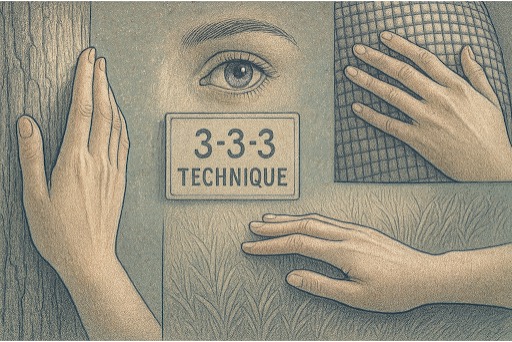
Hands touching different textures while eyes observe surroundings, demonstrating sensory engagement of the 3-3-3 technique.
Taking just a minute to engage your senses through the 3-3-3 rule can shift your entire nervous system from anxiety mode back to calm awareness.
  1. Notice the Anxiety. Recognize when anxiety is building. Common anxiety signs include racing thoughts, physical tension, rapid heartbeat, or feeling overwhelmed. Rather than judging these feelings, simply acknowledge them as your cue to use the technique.
  2. Find 3 Things You Can See. Look around and identify three specific things in your environment. Be detailed: instead of “a tree,” notice “a tall oak tree with bright green leaves moving in the breeze.” This specificity keeps your attention engaged and prevents your mind from wandering back to anxious thoughts.
  3. Identify 3 Sounds You Can Hear. Listen for three distinct sounds around you. These might include traffic outside, the hum of air conditioning, people talking nearby, or even the sound of your own breathing. If you’re in a quiet space, focus on subtle sounds like the rustle of clothing or distant noises.
  4. Notice 3 Things You Can Touch. Focus on three different textures or physical sensations. This could be the smooth surface of your phone, the soft fabric of your shirt, or the cool metal of a doorknob. You can touch these items deliberately or simply notice what you’re already in contact with, like your feet in your shoes or your back against a chair.

3-3-3 Rule Worksheet: A Practical Tool for Practice

Creating a worksheet approach helps you practice the 3-3-3 rule systematically and track your progress over time. Here’s how to structure your practice:

Daily Practice Worksheet:

  • Date and time
  • Anxiety level before (1–10 scale)
  • 3 things I can see: _____, _____, _____
  • 3 sounds I can hear: _____, _____, _____
  • 3 things I can touch: _____, _____, _____
  • Anxiety level after (1–10 scale)
  • Additional notes or observations

Using this worksheet format helps you notice patterns in when and where anxiety occurs, which environments feel most supportive for the technique, and how effectively the 3-3-3 rule works for you in different situations.

Keep your worksheet accessible on your phone or in a small notebook so you can use it anywhere. Regular documentation also reinforces the technique in your memory, making it more automatic when anxiety strikes unexpectedly.

Young woman completing a 3-3-3 rule anxiety worksheet in a calm home environment. 
Structured worksheets make practicing the 3-3-3 rule easier and more consistent.

Tips to Make the 3-3-3 Rule More Effective

1. Practice During Calm Moments

Don’t wait for anxiety to strike before trying the 3-3-3 rule. Practice it when you’re feeling relatively calm so your brain becomes familiar with the process. This preparation makes the technique feel more natural and accessible during anxious moments.

2. Adapt It to Your Environment

Modify the technique based on where you are. In a noisy environment, you might focus more on visual details. In a visually sparse space, pay extra attention to sounds and textures. The key is flexibility while maintaining the core structure of engaging your senses.

3. Use It as a Daily Reset Tool

Incorporate the 3-3-3 rule into your daily routine as a mindfulness practice. Try it when transitioning between activities, taking work breaks, or before important conversations to center yourself proactively.

4. Combine with Deep Breathing

Pair the 3-3-3 rule with slow, intentional breathing for enhanced effectiveness. Take a deep breath before identifying each set of three items, allowing your body to relax as you engage your senses.

5. Create Personal Variations

Develop versions that work best for you. Some people prefer 5-4-3-2-1 (5 things you see, 4 you hear, 3 you touch, 2 you smell, 1 you taste). Others find success with themed variations like focusing on colors, textures, or natural elements.

Get Anxiety Treatment for Adults at Mission Connection Healthcare

A peaceful therapy room at Mission Connection in an open living and dining area with wooden floors, a dining table, sliding glass doors, and a seating area with dark sofas and modern decor.
Mission Connection Healthcare creates supportive environments where anxiety management techniques like the 3-3-3 rule are practiced alongside thorough therapeutic approaches.

The 3-3-3 rule gives you a fast way to interrupt anxiety in the moment, but lasting relief usually takes more than one tool. Pairing grounding with therapy, peer support, and a wider set of coping skills builds the kind of steady, day-to-day calm a single technique can’t deliver on its own.

At Mission Connection Healthcare, we treat anxiety through outpatient programs that combine Cognitive Behavioral Therapy (CBT), mindfulness, and group therapy across California, Virginia, and Washington. Our licensed clinicians help you fold techniques like the 3-3-3 rule into a personal plan, with in-person and telehealth options to fit your schedule. Start your anxiety recovery journey with Mission Connection today.

Start your journey toward calm, confident living at Mission Connection!
Call Today 866-833-1822.

Frequently Asked Questions (FAQs)

How quickly does the 3-3-3 rule work for anxiety?

The 3-3-3 rule often provides immediate relief by interrupting anxiety spirals within 1–2 minutes of practice. However, the technique becomes more effective with regular use as your brain learns to associate the process with calming and safety. Consistent practice over several weeks typically leads to stronger and more lasting anxiety relief.

Can the 3-3-3 rule replace other anxiety treatments?

While the 3-3-3 rule is a valuable coping tool, it works best as part of a thorough approach to anxiety management. For mild anxiety or occasional stress, it may be sufficient on its own. For persistent or severe anxiety, combining it with therapy, other coping strategies, and professional support typically provides the most effective long-term relief.

Does the 3-3-3 rule work for panic attacks?

The 3-3-3 rule can help during the early stages of panic attacks by providing grounding and preventing escalation. However, full panic attacks may require additional techniques or professional support. If you experience frequent panic attacks, working with a therapist to develop a thorough management plan is recommended.

What anxiety services does Mission Connection Healthcare offer?

Mission Connection Healthcare provides individual and group therapy using evidence-based approaches like CBT, mindfulness-based interventions, and exposure therapy. Our programs address anxiety alongside related conditions through personalized treatment plans that include practical coping strategies, therapeutic support, and psychiatric services when beneficial.

Related Articles

An anxious woman covering her mouth with one hand while sitting on a sofa, showing the physical discomfort of an anxiety-triggered gag reflex.

How to Stop Gag Reflex from Anxiety: 5 Techniques to Try

A young adult sitting on a couch with a troubled expression, hands on their temples, representing persistent, anxious, intrusive thoughts and the need to learn how to stop intrusive thoughts

How to Stop Intrusive Thoughts from Anxiety: 5 Strategies to Try

Woman sitting outside office building on step representing amygdala and stress responses

Anxiety and the Amygdala

Man sitting at desk with head in hands needing support with anxiety and blood sugar levels

Blood Sugar and Anxiety

Adult sitting on a couch, gripping their forearm as muscles twitch involuntarily, with a tense expression reflecting anxiety and physical discomfort and the need for learning how to stop anxiety muscle twitching

How to Stop Anxiety Muscle Twitching: 5 Techniques to Try

Man sitting at laptop working with head on hand needing support with anxiety awareness

Anxiety to Advocacy: 10 Ways to Protect Your Mental Health Through Anxiety Awareness

Making your mental health a priority has never been so easy. We offer flexible schedules during the day, in the evening, and on weekends, so you can find the perfect time for you.

866-833-1822

Corporate Office:
30300 Rancho Viejo Rd.
San Juan Capistrano CA 92675

Phone: 866-833-1822
Fax: 714-849-7569

Resources
Approach to Care
Our Facilities
Telehealth Mental Healthcare
Admissions
About Us
Joint Commission Accredited
Certified By CA Department of Healthcare Services
Certified by NAATP Logo
Certified by the National Association for Healthcare Quality
HIPPA Compliant Mental Health Services
Privacy Policy | Terms of Service | Sitemap
Copyright 2026 © Mission Connection. All rights Reserved.